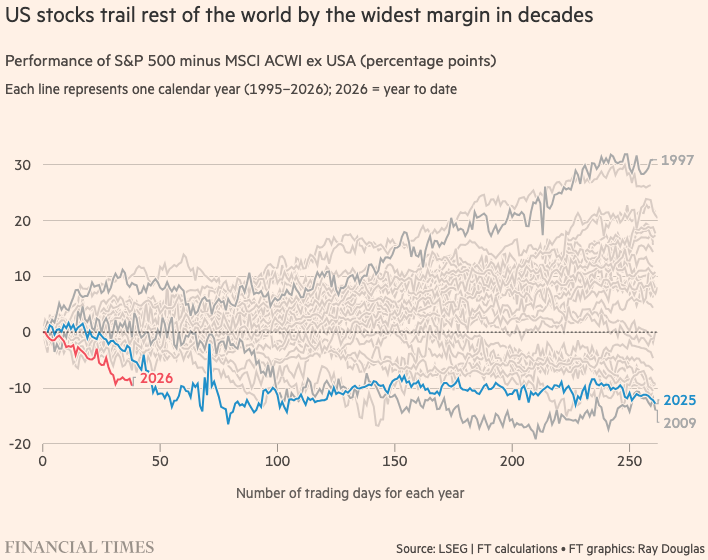
So far this year the US stock market is almost flat, down 0.29%, with international markets up about 4.6%.
The near-term outlook for the economy and stock market includes several encouraging signs for growth and corporate earnings, along with a few warning signals that could develop into larger issues.
On the positive side:
- The US economy continues to grow.
One notable caveat: capital spending by the tech sector accounted for roughly 40–45% of US GDP growth over the past three quarters. This is an increase from less than 5% in the first three quarters of 2023.
- Corporate profits remain near all-time highs.
- Interest rates may decline.
The Federal Reserve is expected to drop rates in 2026, which would lower borrowing costs. However, expectations for those cuts have recently softened as inflation pressures (particularly energy prices) have increased following the situation in Iran.
- Consumer spending (a big part of the US economy) remains resilient.
On the negative side:
- Geopolitical conflict could push inflation higher.
Wars tend to be inflationary, particularly when they involve the Middle East and affect oil markets. Already the price of crude oil up ~50% since the start of the year.
-
- From Carson Research: “February’s Purchasing Managers Index has a ‘prices’ section, which increased by 11.5 points last month to 70.5. This was the highest reading since June, 2022 (when inflation hit the highest level in 40+ years).”
-
- This may be an early sign that inflation pressures are building again. A move back above 3.5 – 4% inflation would present challenges for both households and the Federal Reserve.
- Geopolitical risks may persist longer than expected.
Conflicts often extend beyond initial timelines and can create unintended economic consequences.
- AI bubble/productivity worries.
One question is whether the massive capital spending by large technology companies will translate into productivity gains across the broader economy. At the same time, some investors are concerned about the high valuations of AI companies.
- The labor market has begun to soften.
Hiring has slowed in some sectors, particularly technology (see chart below).
A final thought
Today’s environment reflects a balance: on the one hand you have solid economic growth and strong corporate profits, with inflation risks and geopolitical uncertainty on the other.
Markets are continually “reading the tea leaves,” trying to predict what might happen next. The goal as a long-term investor, however, is not to predict every short-term development. It is to remain properly diversified and invested in a portfolio with an appropriate level of risk; one you can stick with through both good times and bad while still helping you accomplish your financial goals.
Thanks for reading.
- 📊 International Stock Markets Are Doing Well – International stocks have continued the trend we saw in 2025, outperforming U.S. markets so far this year.
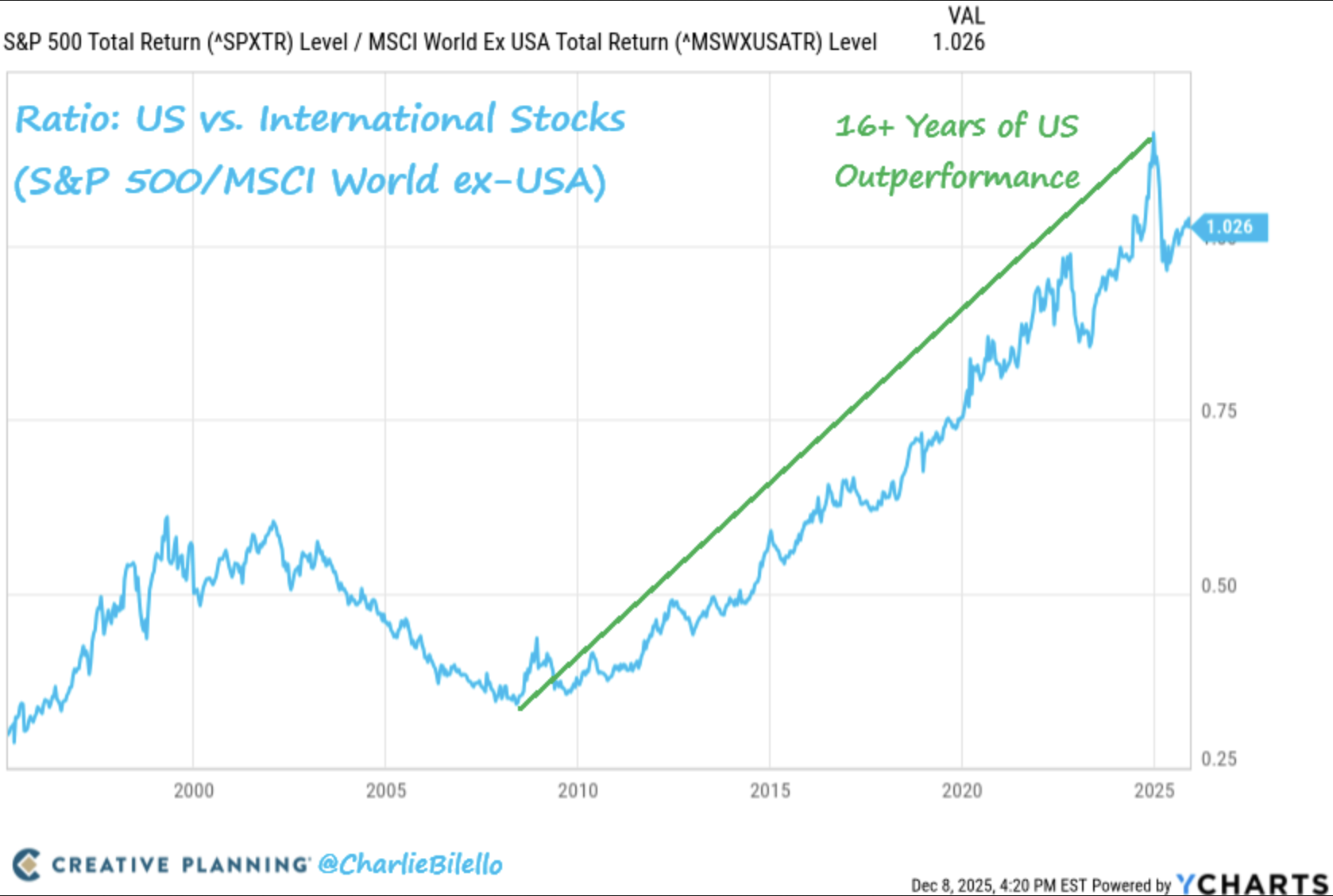
- 🌎 The US Stock Market Had a Great Run – For 16 years the US stock market outperformed non-US markets. That ended in 2025.
- “From 2009 to 2024, the S&P 500 generated 3.6x the return of the MSCI World ex-US Index. In 2025 the US finally underperformed most equity markets.” — Michael Cembalest
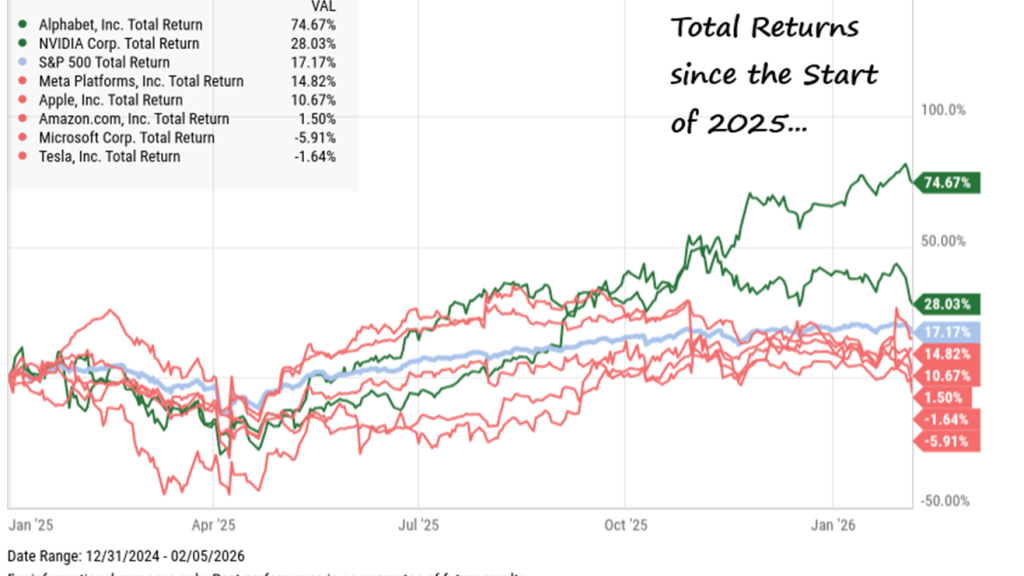
- 🤖 Some Big Tech Not Performing As Well – Here’s a surprising statistic: since the beginning of 2025, only Google and Nvidia have outperformed the S&P 500.
- This reminds me of another remarkable data point from Hendrik Bessembinder, a professor at Arizona State University.
- He found that among all publicly traded American companies from 1925 to 2023, most had negative lifetime returns. Less than 3% of stocks accounted for the entire increase in shareholder wealth during that time.
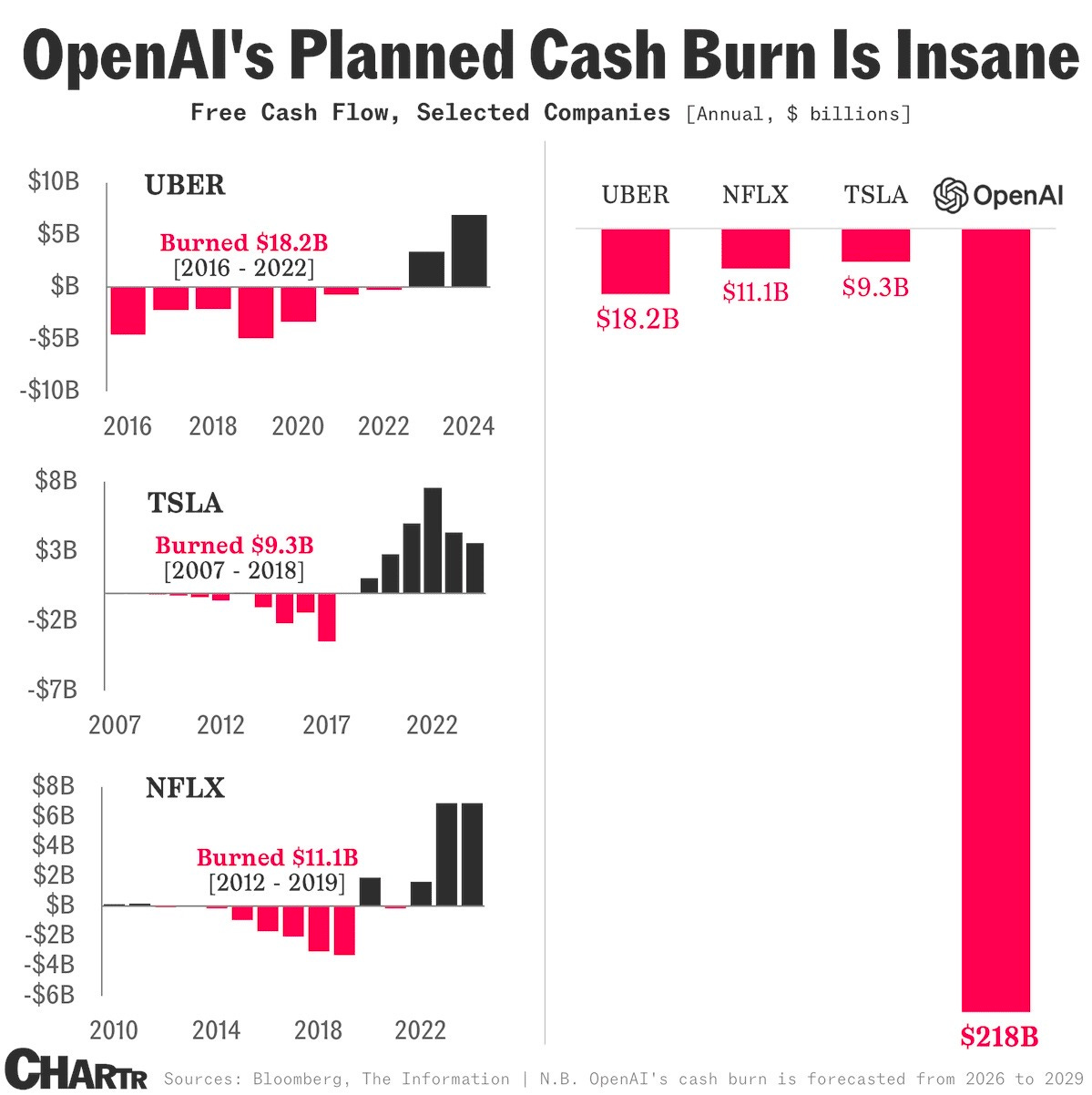
- 🔥 OpenAI’s Planned Spending Is Extraordinarily High – If OpenAI spends at the pace it currently projects, its cash burn will dwarf many famous loss-leading tech companies of the past.
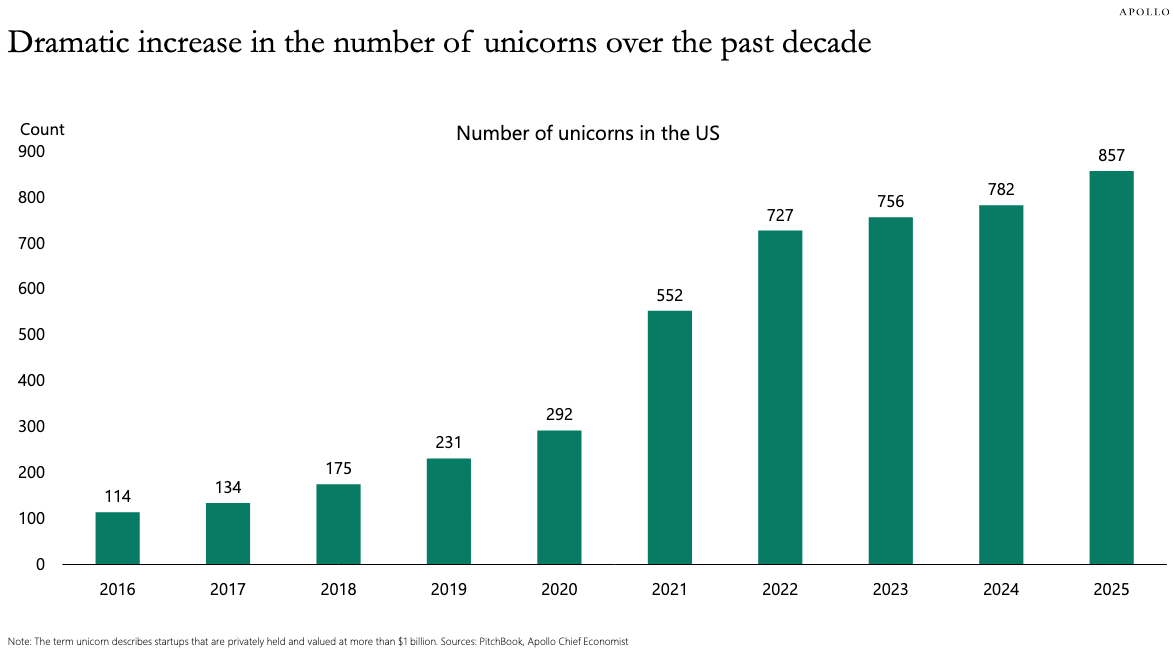
- Record Number of Unicorns – The number of private companies valued at over $1 billion has increased dramatically over the past decade.
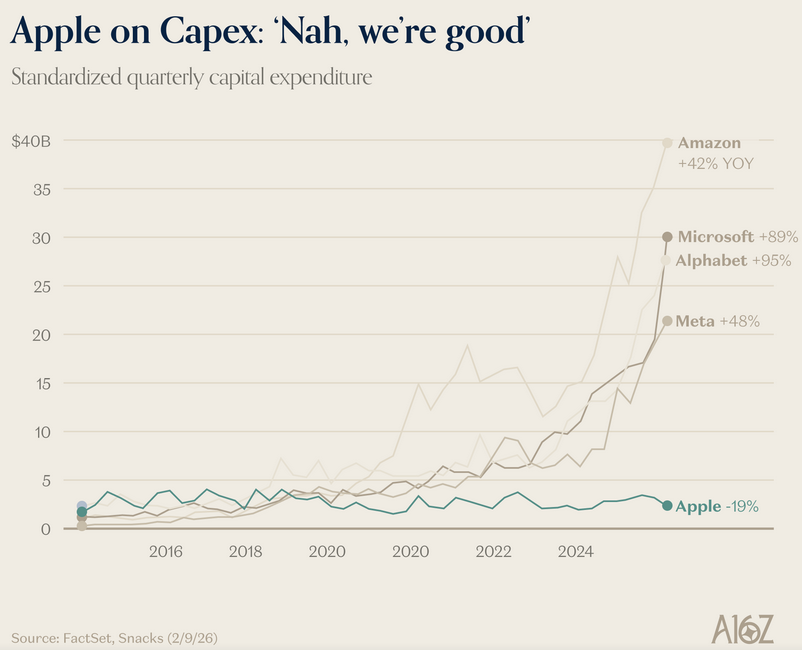
- 📱 Apple Not Spending Nearly As Much As Others – “While Meta, Amazon, Microsoft, and Google watch their Capex soar [on data centers, etc.], only Apple reduced its Capex last quarter.” — A16Z
Real Estate
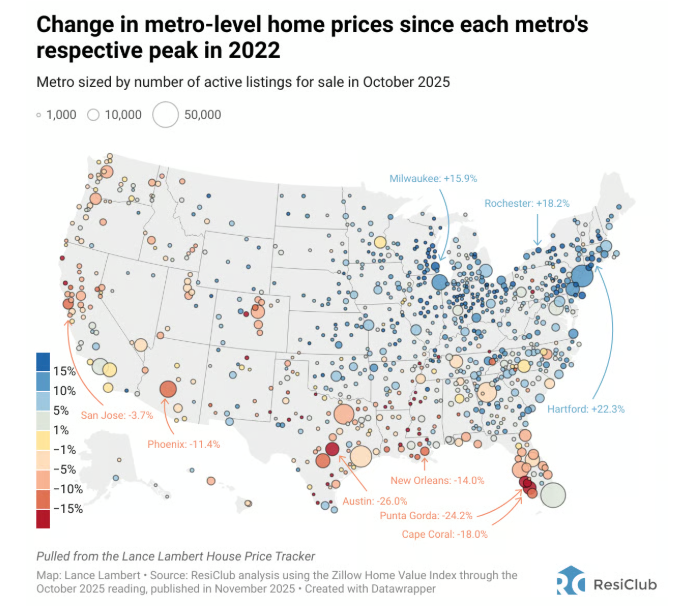
- Where Prices Have Risen and Dropped (Since 2022) – Certain parts of the country have seen sizable housing-price declines: Austin (-26%), Cape Coral (-18%) and New Orleans (-14%) stand out:
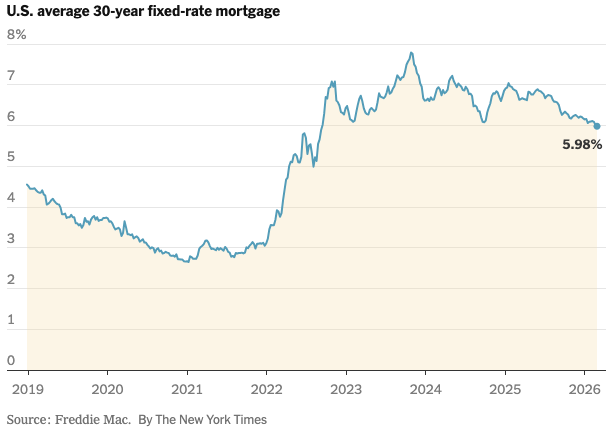
- 💲 Interest Rates Drop Below 6% – For the first time since September 2022, the average 30-year mortgage rate has fallen below 6%.
- 🚩 A Red Flag for Fraud – If someone contacts you claiming to help stop fraudulent activity on your bank/credit/debit card account, that itself is a red flag.
- Do not respond or provide information. Instead, call the financial institution directly via their official phone number to verify whether the outreach was legitimate.
- 📲 IRS Fraud – Many scammers also impersonate the IRS. It’s important to know that the IRS does not initiate contact by email, text, or social media to request personal or financial information.
- 🏥 Healthcare Costs – Medical costs for employer-sponsored group insurance are expected to increase about 8.5% this year.

- Tech Employment Trending Down – “Brutal numbers for the US tech sector…employment decreased by 12k last month and is down 57k over the last year.”
- “That’s now nearly as bad as the worst of the 2024 tech-cession, and significantly worse than either the 2008 or 2020 recessions.” — Joseph Politano

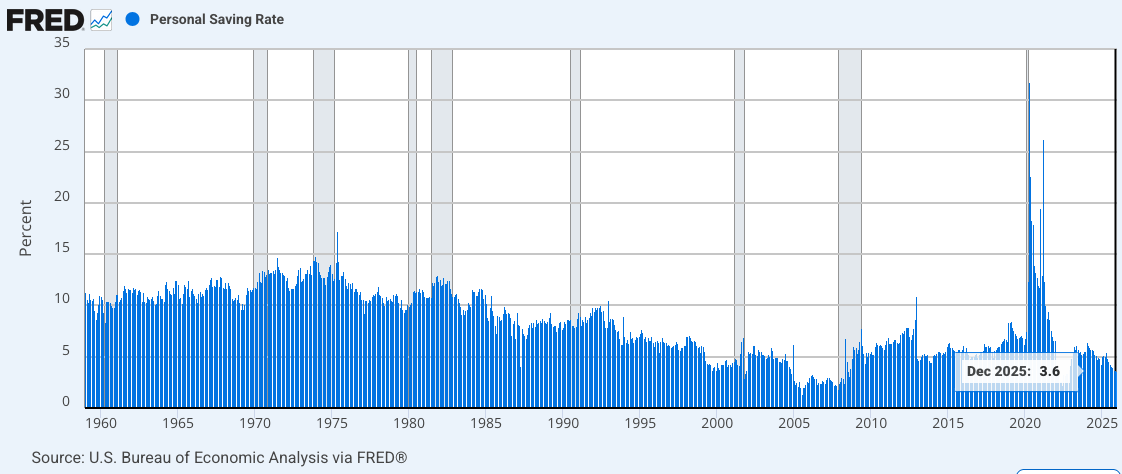
- 🏦 Most Americans Don’t Save Much – In the US, the savings rate is approximately 3.6%. This is very low compared to history. If possible, save 10 – 20% of your income.
Quote of the Month
“Even if you are wealthy on paper, if you don’t believe it, then it doesn’t matter. You could have $10 million, but if you feel like you need $20 million, then you will always feel poorer than someone with $100,000 who only feels like they need $50,000. A wealthy life isn’t a number, it’s a feeling.”
As always, please reach out if you have any questions or would like to connect.