
Investing / Stock Market
- What’s Changed Recently? March ended poorly, with a five-week losing streak in the S&P 500. That was the first 5-week losing streak in nearly four years. Here’s a nice take on the market since then:
- “Let me break down what’s actually happened in the markets. Year to date, the biggest winners [by sector] were industrials, materials, and energy. That made sense — war in the Middle East, oil prices surge, and energy stocks move higher.
- On March 30, we hit the market bottom. Since then, it’s completely reversed. Energy is down 11%. Meanwhile, financials are up 8%, communication services up 10%, tech up 21%.
- So what happened? For weeks, investors were doing what you’d expect. They were pricing in the risk of the Iran war. Then something switched. I call it timeline fatigue. The Iran story kept producing plot points with no resolution. Ceasefire, then no ceasefire. Blockade, then no blockade. Trump says negotiations are going somewhere, then they don’t. At a certain point, investors just gave up trying to interpret the headlines.
- When investors stopped looking at the geopolitics, they looked at the fundamentals. Earnings are strong, guidance is strong. Microsoft and Nvidia are trading at some of their lowest forward multiples in years. Suddenly the math was simple: Big Tech is executing, multiples are attractive, let’s buy.” — Ed Elson
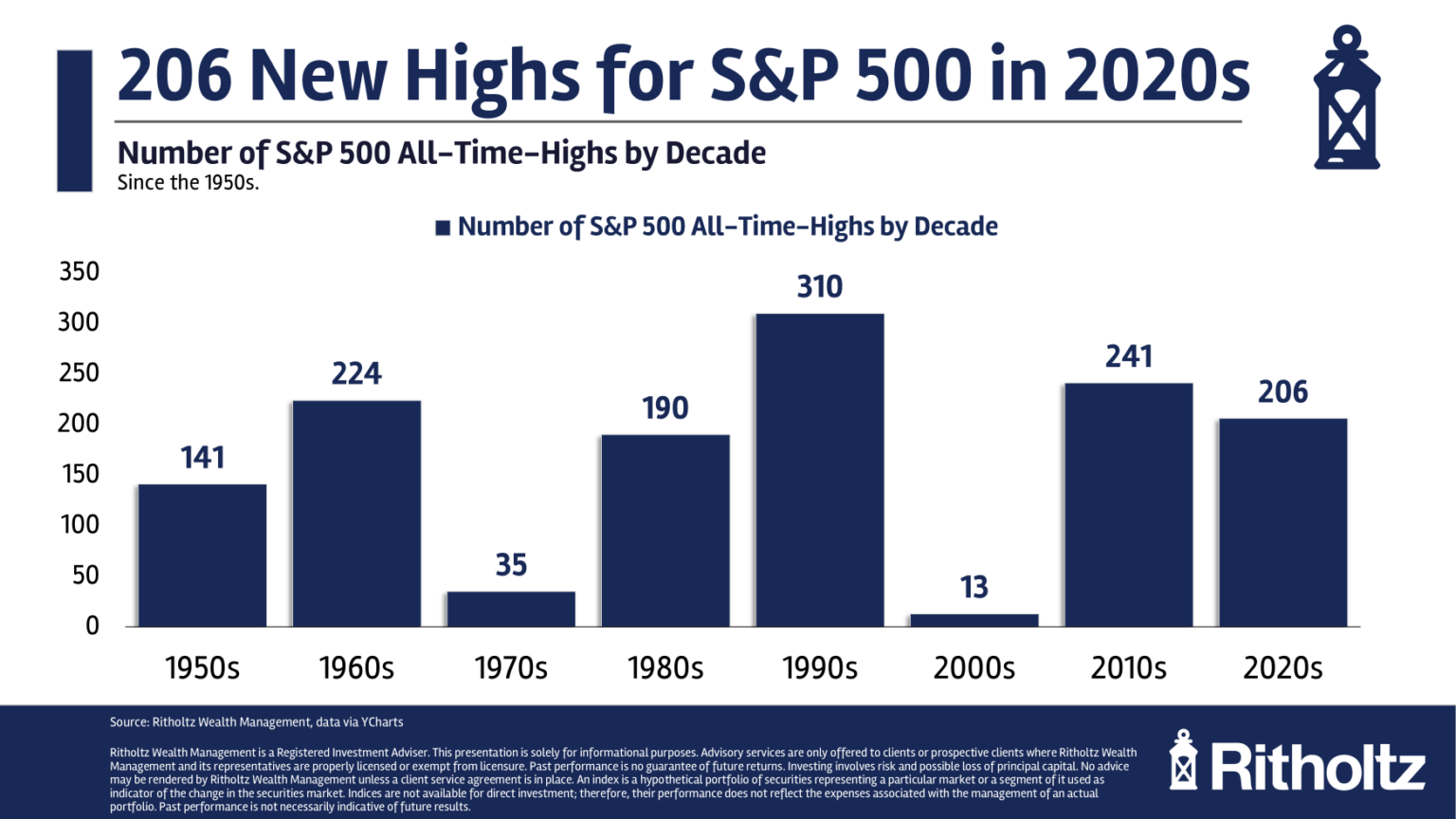
- 📈 Despite All the Scary and Negative News, Stock Markets Are Hitting New Highs – “This truly is an epic bull market run.” — Ben Carlson
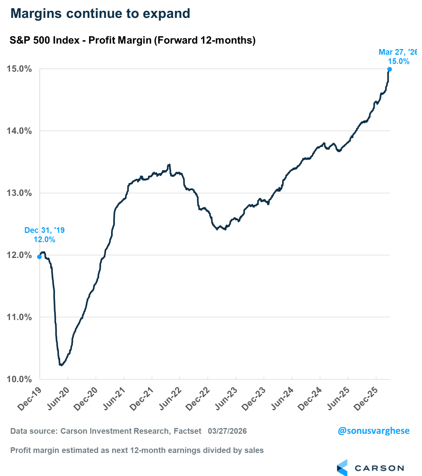
- 💵 Profit Margins Are Also At All-Time Highs – “On top of this, S&P 500 forward profit margins have hit a new all-time high of 15.0%, up from 12.0% at the end of 2019.
- It is hard to get overly bearish when both earnings and profit margins are hitting new highs.” — Ryan Detrick
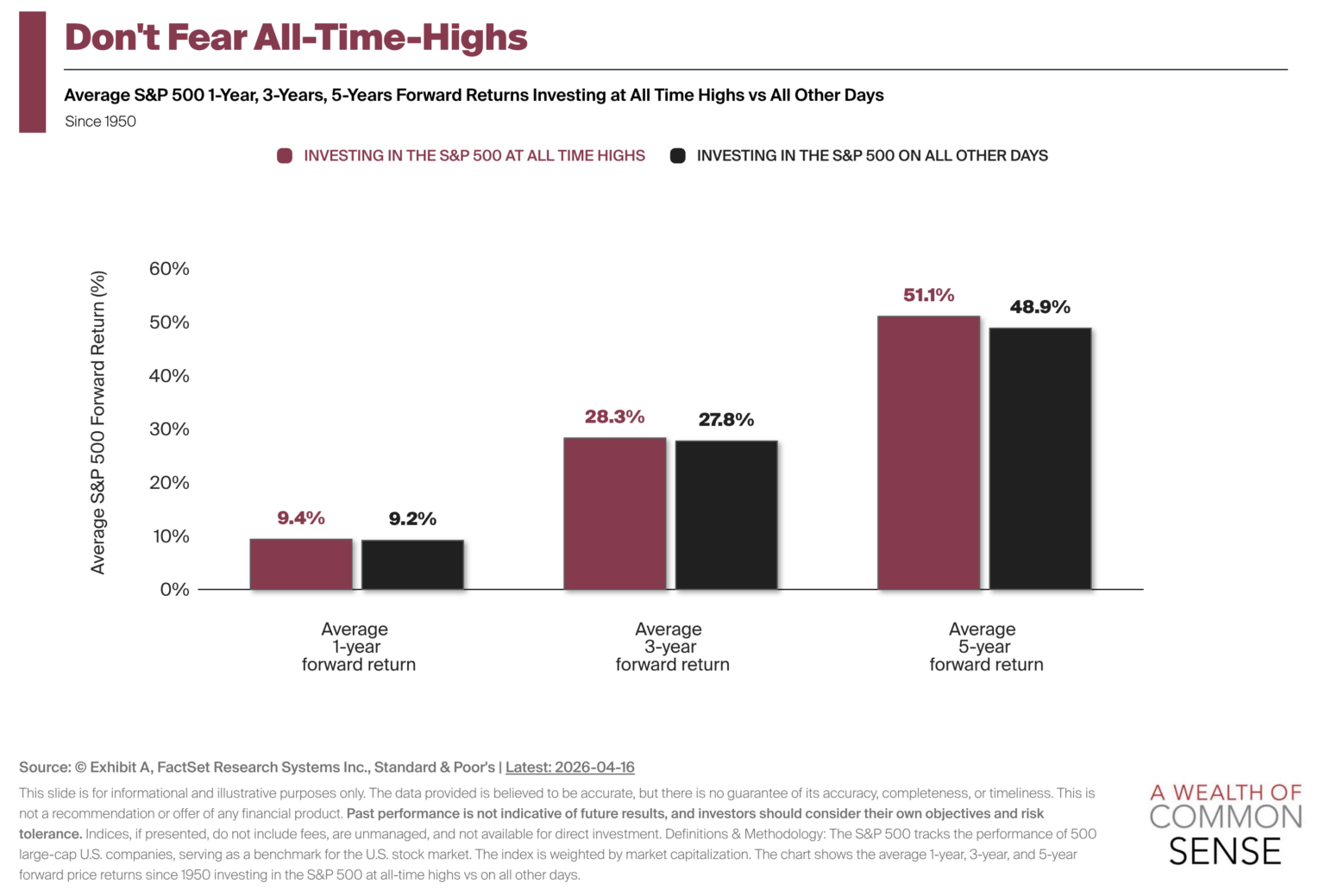
- 🚦 All-Time Highs Don’t Mean a Crash is Coming – Contrary to what you might think, all-time highs have lead to better returns going forward.
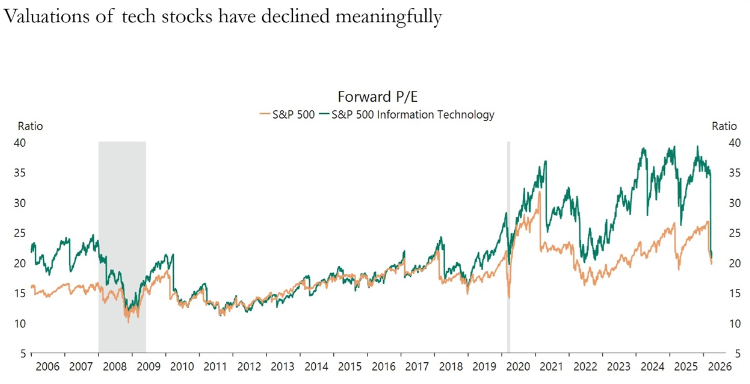
- Tech Valuations Have Gotten Cheaper – The chart below is worth a look. It compares the forward looking price-to-earnings (P/E) ratios of the S&P 500 as a whole, versus S&P 500 Information Technology sector.
- Forward P/E is simply a way of valuing stocks based on their expected future earnings. It tells you how much investors are willing to pay today for each dollar of anticipated profits.
- As of April 11th, tech valuations have dropped from 40x to 20x, levels last seen before the AI boom began.
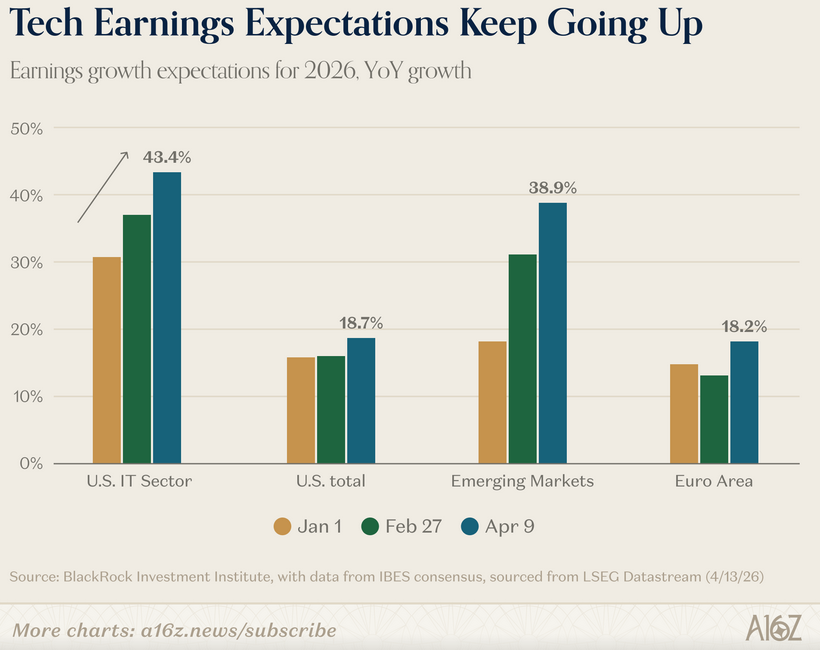
- Expectations for Tech Are High – “BlackRock’s data shows growth expectation for the US IT sector rising from 31% at the start of the year all the way to 43.4% as of April 9.
- The broader US market, by comparison, is sitting at mere 18.7%….it’s a very strange thing to have dramatically rising earnings expectations, while at the same time, dramatically falling premiums for those earnings.” — A16Z
- Jason Zweig from The Wall Street Journal said it best:
- “I want to recommend a quirky, metaphorical way of thinking about investing when uncertainty is this high.
- You should think about overhauling your portfolio the way people should—but often don’t—decide about adding tattoos or body piercings.
- If you get a stud in your navel or a little tattoo on your ankle, you aren’t likely to look back later and kick yourself. If, however, you get a jumbo ring in your nose, or “I Love Mike” or “Lisa and Me 4Eva” inked across your entire chest or back, you might end up wondering what on earth you were thinking—and unable to undo it without some discomfort.
- Big, sudden portfolio changes are like that: easy to put in place and hard to reverse. Whatever you do if this war worsens, you should avoid doing anything that can’t be easily and cheaply undone.”
- There’s nothing inherently wrong with adjusting your investments to be more conservative or more aggressive. But one of the key benefits of working with an advisor is having that conversation thoughtfully and upfront. That way, your portfolio is aligned with your risk tolerance and positioned to generate the returns you need to reach your long-term goals.
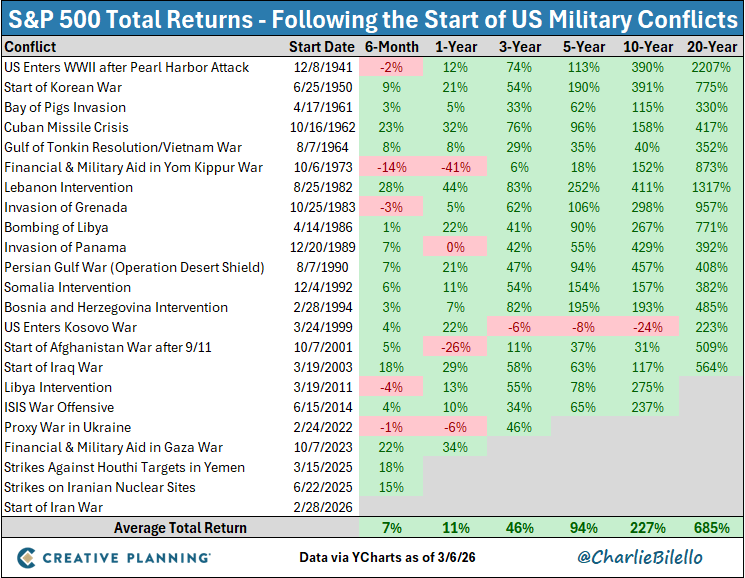
- 📱 US Stock Returns During Past Military Conflicts – “The best we can say looking at military conflicts in the past is that with the passage of time the stock market has tended to rise, and the more time that has passed, the more it has risen.
- That’s true for two reasons: a) all wars eventually come to an end, and b) the economy and earnings, even if impaired in the short run, still tend to grow in the long run in spite of these conflicts.” — Charlie Bilello
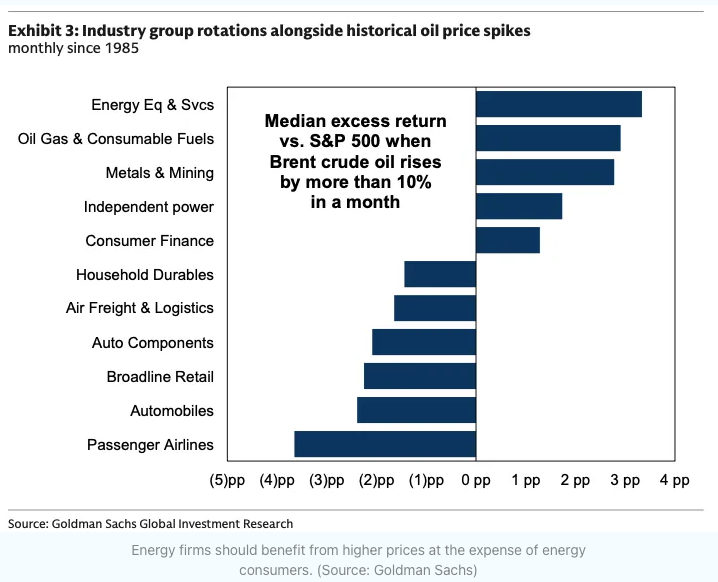
- What Stocks Do Well When Oil Rises? – “Unless you’re great at predicting the direction of energy prices, holding a broadly diversified portfolio of stocks has been the move, especially if you’re not a fan of volatility.” — Sam Ro
Work, Life
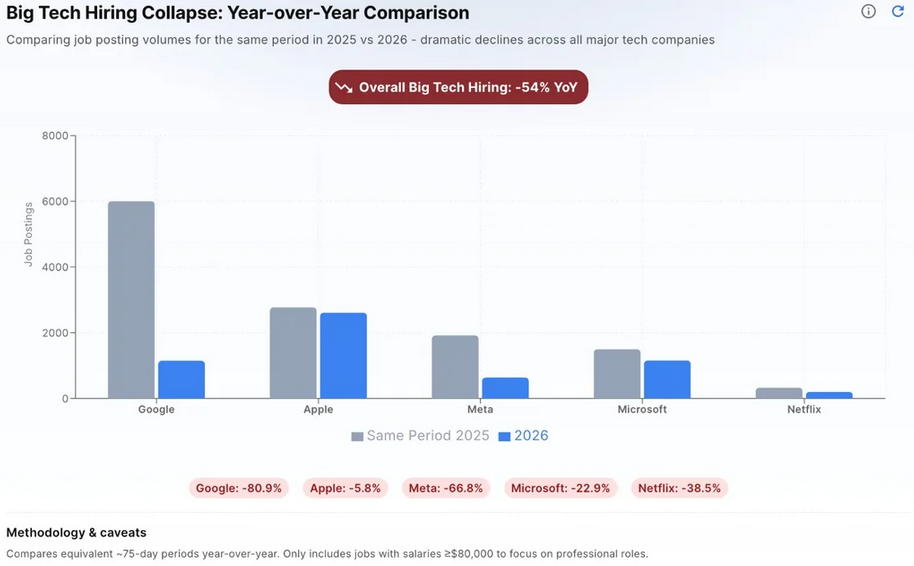
- Big Tech Hiring is Down – This chart speaks for itself:
- $ Crazy Stat re: Online Advertising – “Google is set to lose its crown as the biggest seller of digital ads: this year Meta will overtake it with ad revenue of $243bn, forecasts eMarketer, a research firm.” — The Economist
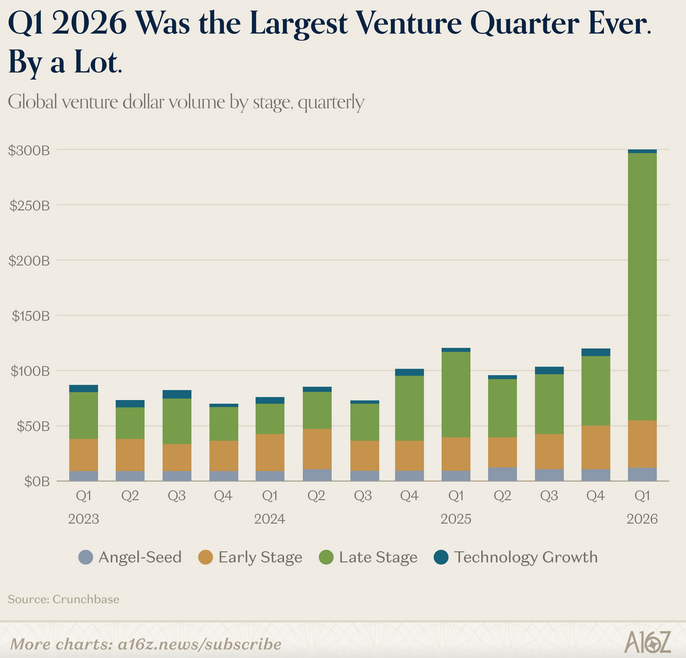
- 💰 Most Venture Capital Invested, Ever – “Q1 2026 was, by a wide margin, the largest quarter for venture investment ever recorded. Crunchbase data shows $300 billion poured into roughly 6,000 startups globally, up 150%+ both quarter over quarter and year over year.”
- The vast majority of this, ~80%, went to AI companies. Like all venture investments, many will fizzle out, but a handful will likely have a big impact.
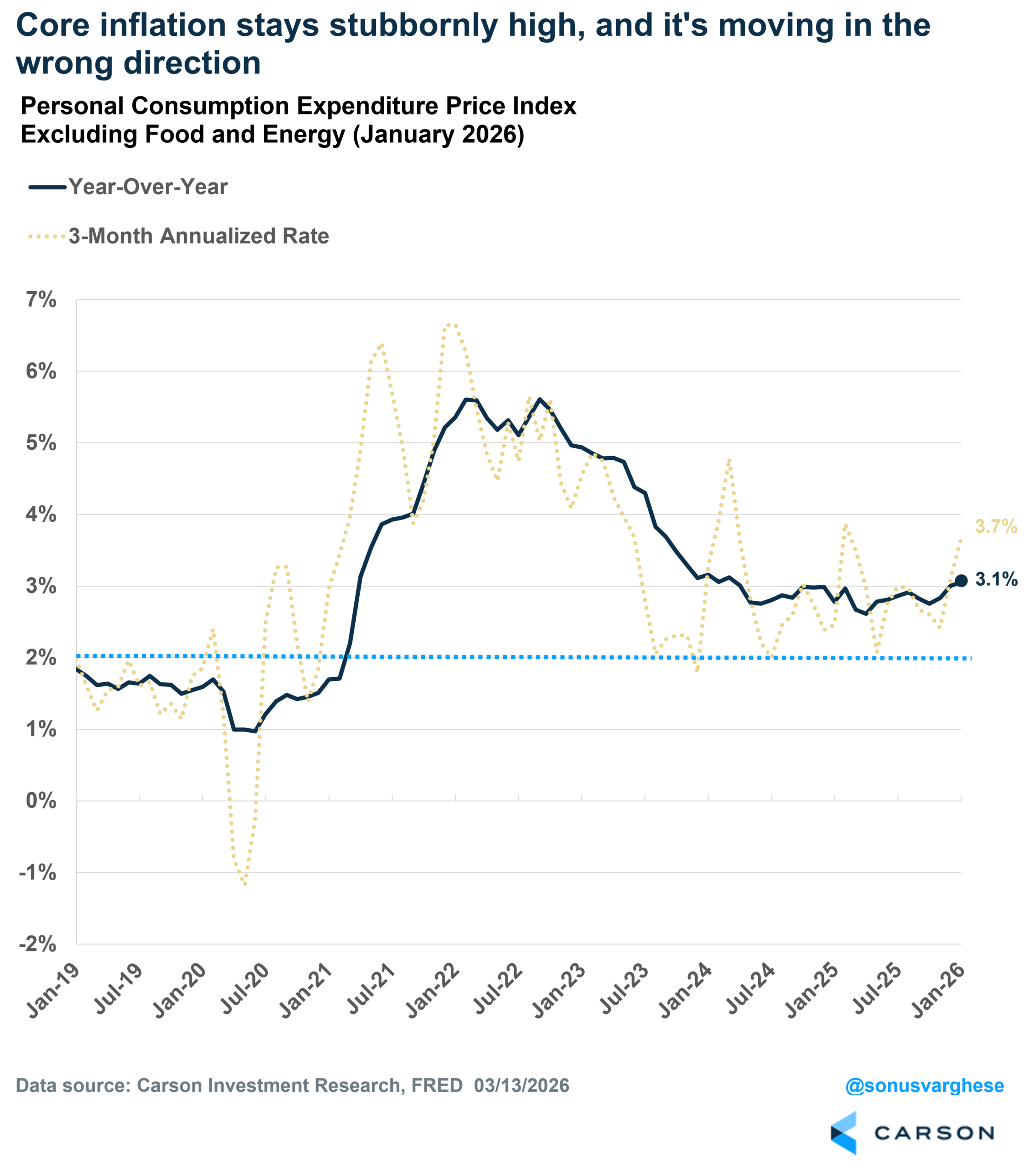
- ↗️ Inflation May Be Headed Back Up – The inflation picture was not looking great prior to the Iran war. It could get worse. This is certainly something to keep an eye on.
Quote of the Month
“If your work is unfulfilling, the money will be too.”
– Jerry Seinfeld
I hope you found these interesting.
As always, please reach out if you have any questions or would like to connect.