Investing / Stock Market
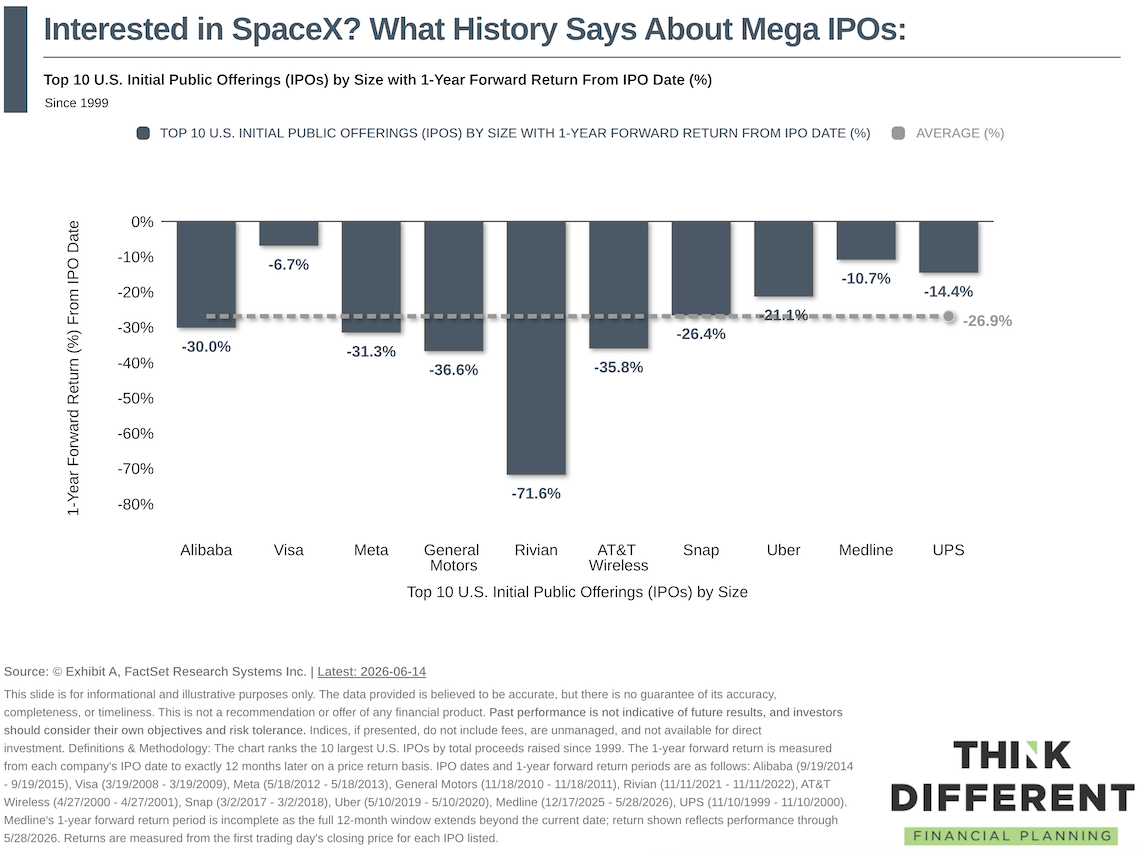
- 🛰️ Interested in SpaceX? – This chart ranks the 10 largest U.S. IPOs by deal size since 1999, and tracks how each performed over the following 12 months.
- All 10 had negative returns one year after going public, with an average return of -26.9%.
- Despite the excitement surrounding mega IPOs like SpaceX, history shows the biggest offerings have struggled in their first year of trading.
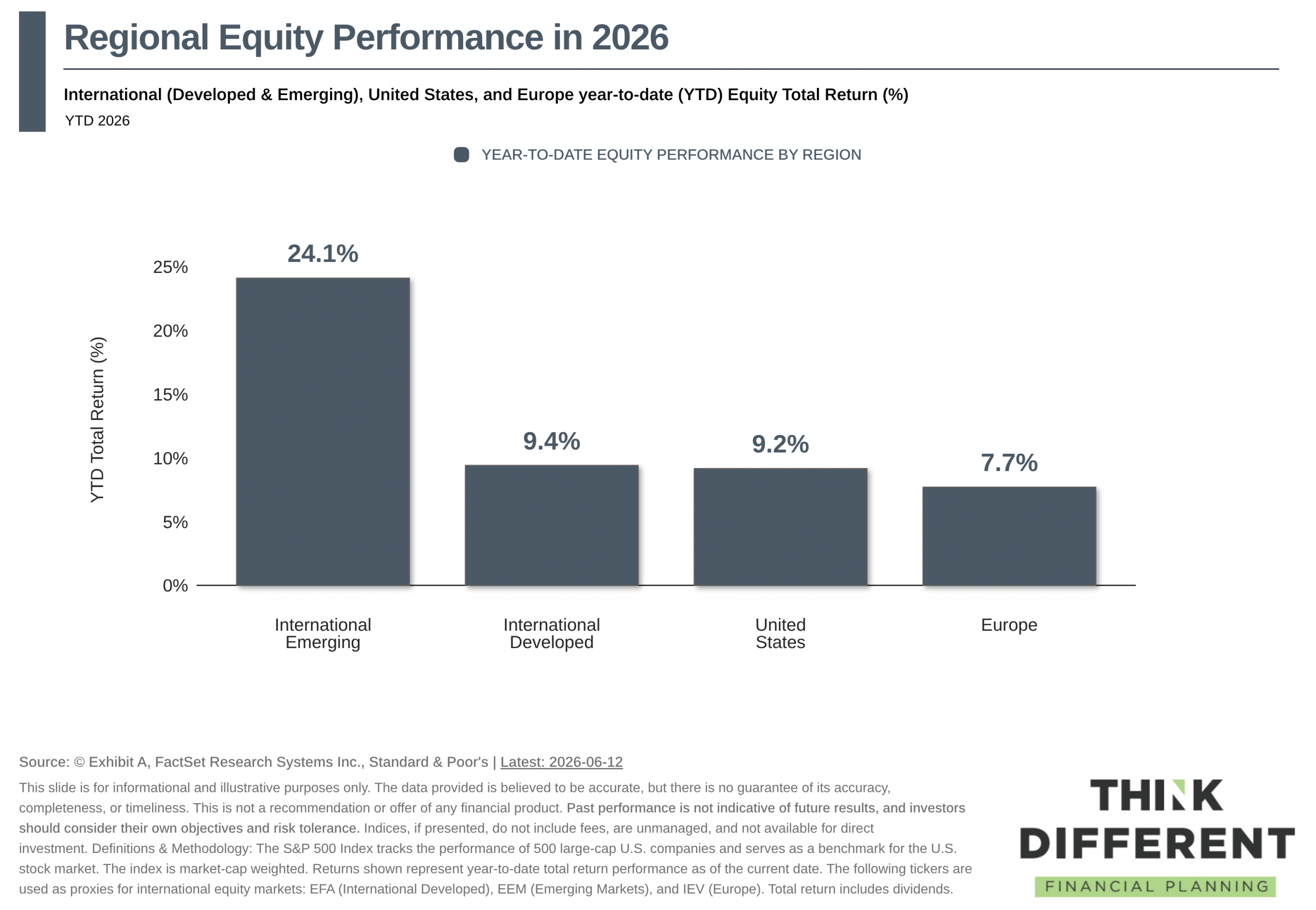
- 🌎 Stock Performance in 2026 – Stocks around the world have done well, with emerging markets (such as South Korea, Taiwan, and Thailand) leading the pack.
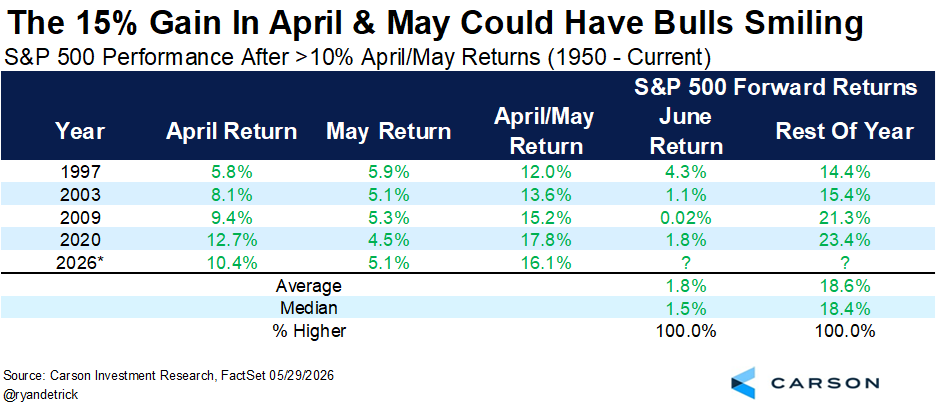
- 📈 A Very Good April & May – “This was the second-best April/May return [for the S&P 500] ever [+16.1%], with only the 17.8% rally in 2020 coming in better.
- The S&P 500 has gained double digits over these two months only four times, and the June that followed was never lower. In fact, the rest of the year was always up at least 14%.” — Ryan Detrick
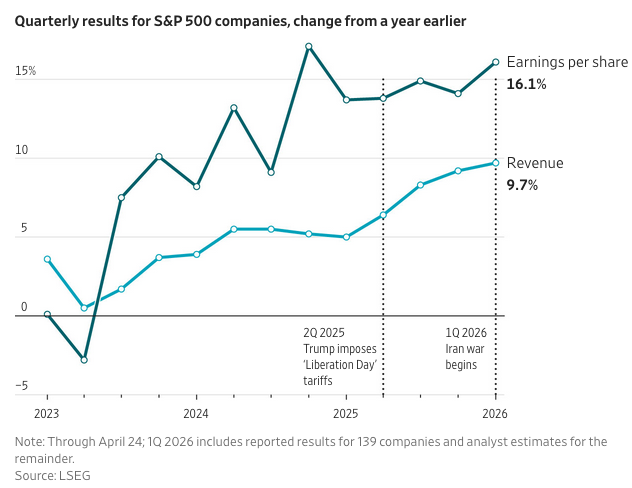
- 💪 Strong Fundamentals – “the biggest U.S. public companies are seeing profit and revenue surge. Year-over-year growth in earnings per share is expected to exceed 13% for the sixth quarter running, according to estimates from financial-data firm LSEG. Sales are expected to rise more than in any quarter since the fall of 2022.” — Theo Francis, The Wall Street Journal
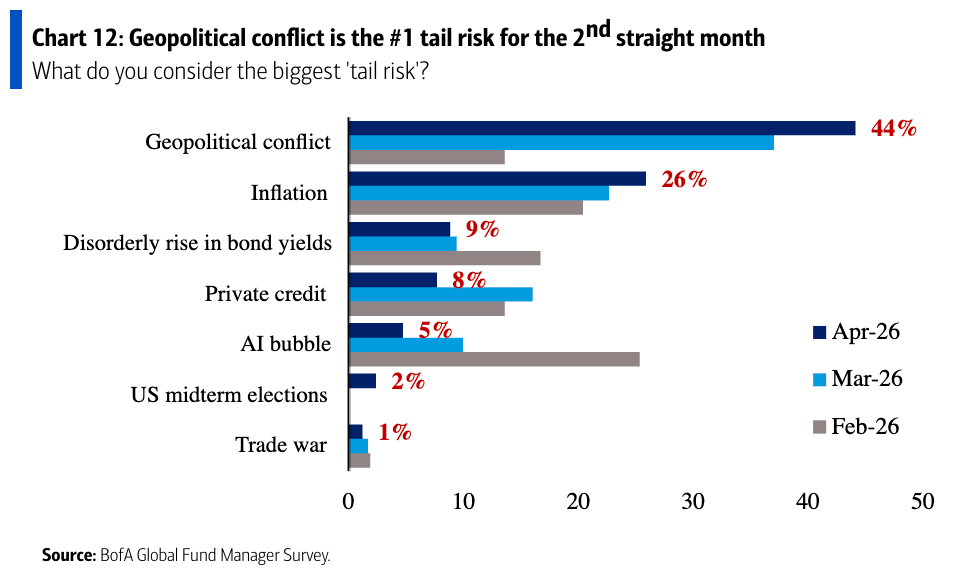
- 😬 Top Concerns – The chart below is from Bank of America’s Global Fund Manager Survey.
- What stood out to me is how the “AI Bubble” fear has dropped a ton since just February.
- “Investors and traders not talking about a risk suggests that the risk isn’t priced into markets. That means when the risk materializes, volatility is more likely to spike with prices potentially overshooting to the downside.” — Sam Ro
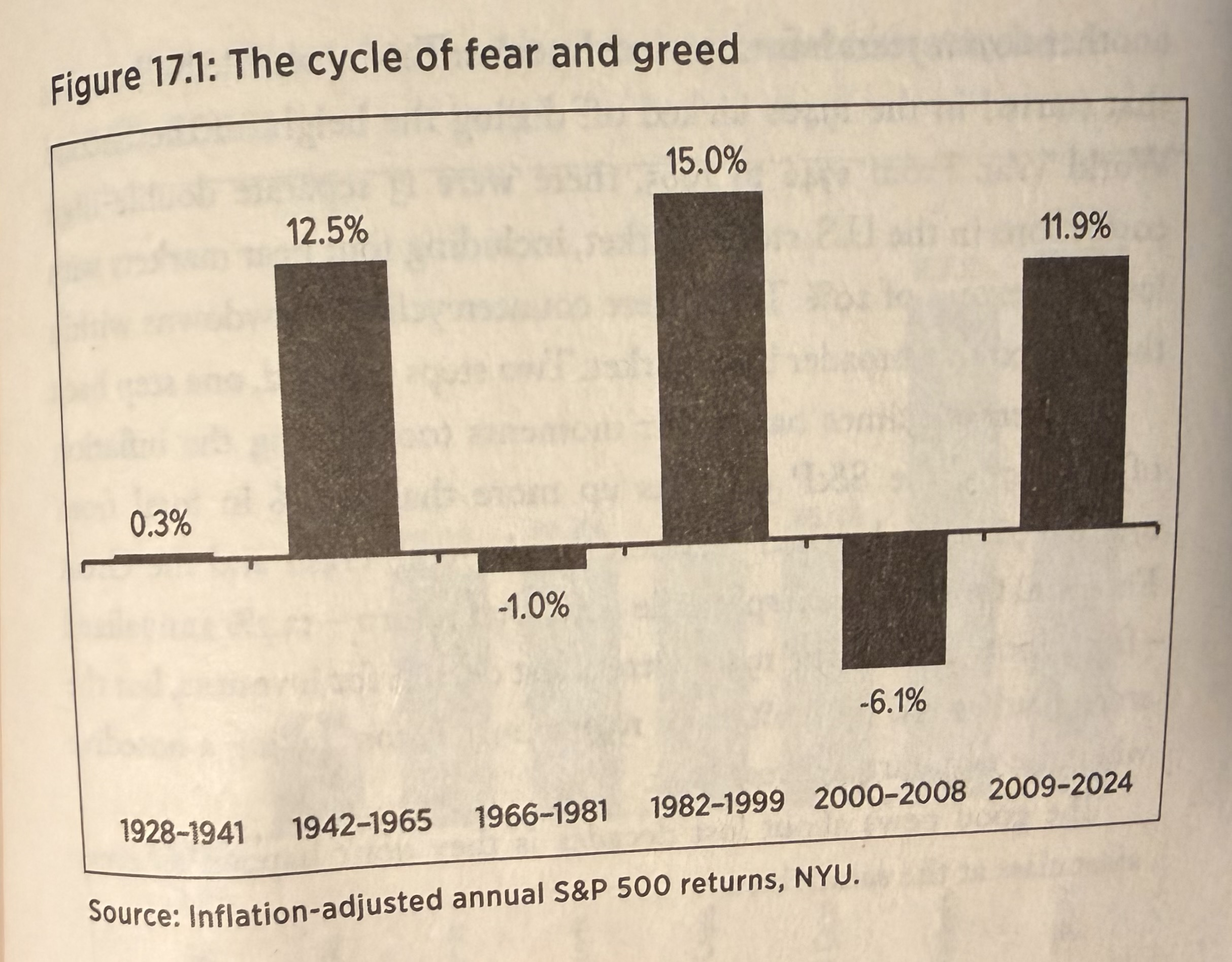
- 💵 Investing Through Good Times and Bad – The chart below is from Ben Carlson’s new book, Risk & Reward. It shows the annualized returns of the S&P 500 across several hand-picked eras, ranging from long stretches of strong performance to extended periods of poor or flat (inflation-adjusted) returns.♾️ Thinking of Changing Your Portfolio/Investment Approach?
- I’m used to seeing stock returns grouped by decade, or summarized as long-term annual averages. But changing the start and end dates tells a different story. It highlights how the market can spend many years rewarding investors, and many years testing their patience with poor returns.
- A few caveats: This is only the S&P 500, not the entire stock market. The periods are also chosen with hindsight, so they’re useful for illustration, not prediction.
- The most recent period, 2009–2024, has obviously been one of the good times. The hard part is that nobody knows whether we’re still in the middle of it or near the end. This could keep going for another decade, or 2026 could be the year things change.
- The uncertainty is the lesson. Long-term investing does not feel like one smooth, up 10% per year ride. It’s a series of very different times, and your returns and experience depends a lot on when you start, and whether you can stick with your investment plan through the good times and bad.
- 🕰️ The “Secret” to Long-Term Investment Success – This is very well put:
- “All investments center around beliefs about what will transpire in the future. No one really knows what will happen tomorrow, next month, or next year. The most catastrophic disruptions are those that we never saw coming. All those events tend to wash out over multiple decades.
- The secret to long-term investment success comes down to tapping into that long-term economic growth in the most cost-effective way possible. It also requires staying put when the inevitable downturns unfold.” — Daniel Sotiroff, Morningstar
Economy / Interest Rates
- 💳 People Are Still Spending – “Overall consumer spending appears robust. American Express reported cardholder spending was up 9% in the first quarter, to a three-year high.”
- 🏦 On The Direction of Interest Rates – “…whether the Fed cuts or hikes rates is not the right question for investors.
- Rather, investors should be asking why the outlook for monetary policy is shifting. If the Fed is getting more hawkish [meaning interest rates would move up] because the economy is stronger than previously expected, that’s not obviously bad for stocks.” — Sam Ro
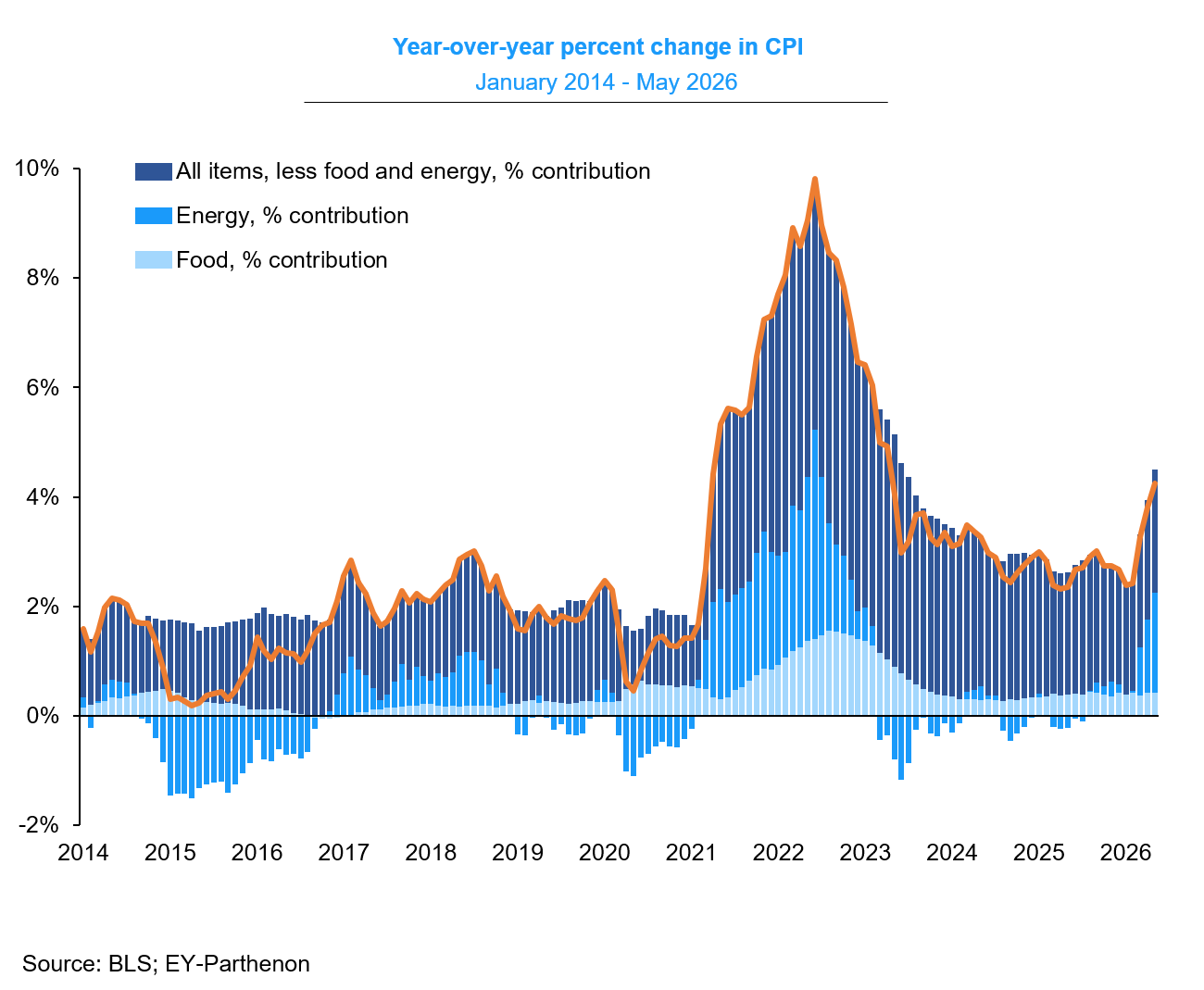
- 💸 Inflation Increasing – The Consumer Price Index (CPI) increased 4.2% year-over-year in May, up from 3.8% the month prior, as energy prices surged. Excluding food and energy prices, what’s known as “core CPI” was up 2.9%.🏦 On The Direction of Interest Rates – “…whether the Fed cuts or hikes rates is not the right question for investors.
- “At some point, whether it’s a year from now or 2-3 years from now, the Fed will realize that inflation has run too high for too long and will have to be even more aggressive to get inflation back to target.
- “The current episode could end up being similar to what we saw in the 1970s and into the early 1980s. A relatively easy Fed looked past elevated inflation, but then Fed Chair Paul Volcker came in and raised rates to over 15% to ultimately crush inflation, in the process sending the economy into a big recession. That doesn’t imply we’ll see interest rates rise to 10% or more, like in the 1980s, but even raising rates to 5-6% from this point will be quite painful.” — Sonu Varghese, Carson Group
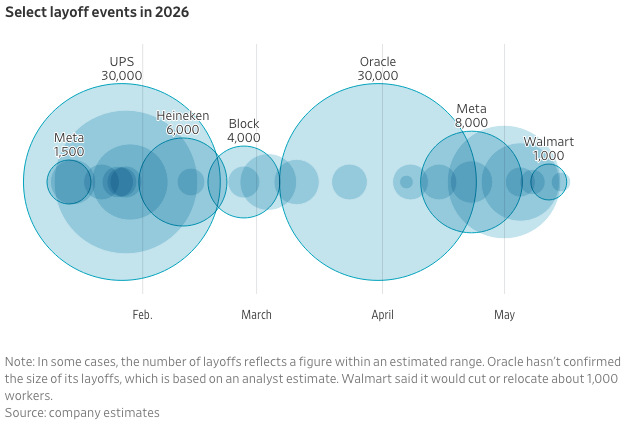
- 🧑💻 Layoffs – “The overall layoff rate (layoffs as a percent of the workforce) remains at a historically low level of 1.2%. Something useful to keep in mind when you see news headlines about 10,000-30,000 planned layoffs across a few companies—the US economy sees about 1.8-1.9 million layoffs PER MONTH.” — Sonu Varghese, Carson Group
- “Tech has been hardest-hit, with firms letting go of more than 123,000 employees so far this year, up 66% over the same period in 2025.” — The Wall Street Journal
- 🤖 Will AI Take Everyone’s Job? – “The debate around AI often tilts toward extremes, from those predicting imminent mass unemployment on one end, to those dismissing AI as an over hyped bubble on the other. Neither view is likely to be correct.
- AI will reshape the labor market, but the process is probably uneven, gradual, and highly sector-specific. The interesting questions are not whether jobs will be lost, but where, how quickly, and whether new demand emerges to replace them. In that sense, AI is less a story about the end of work and more a story about the reallocation of it.” — Robert Bittencourt, Apollo
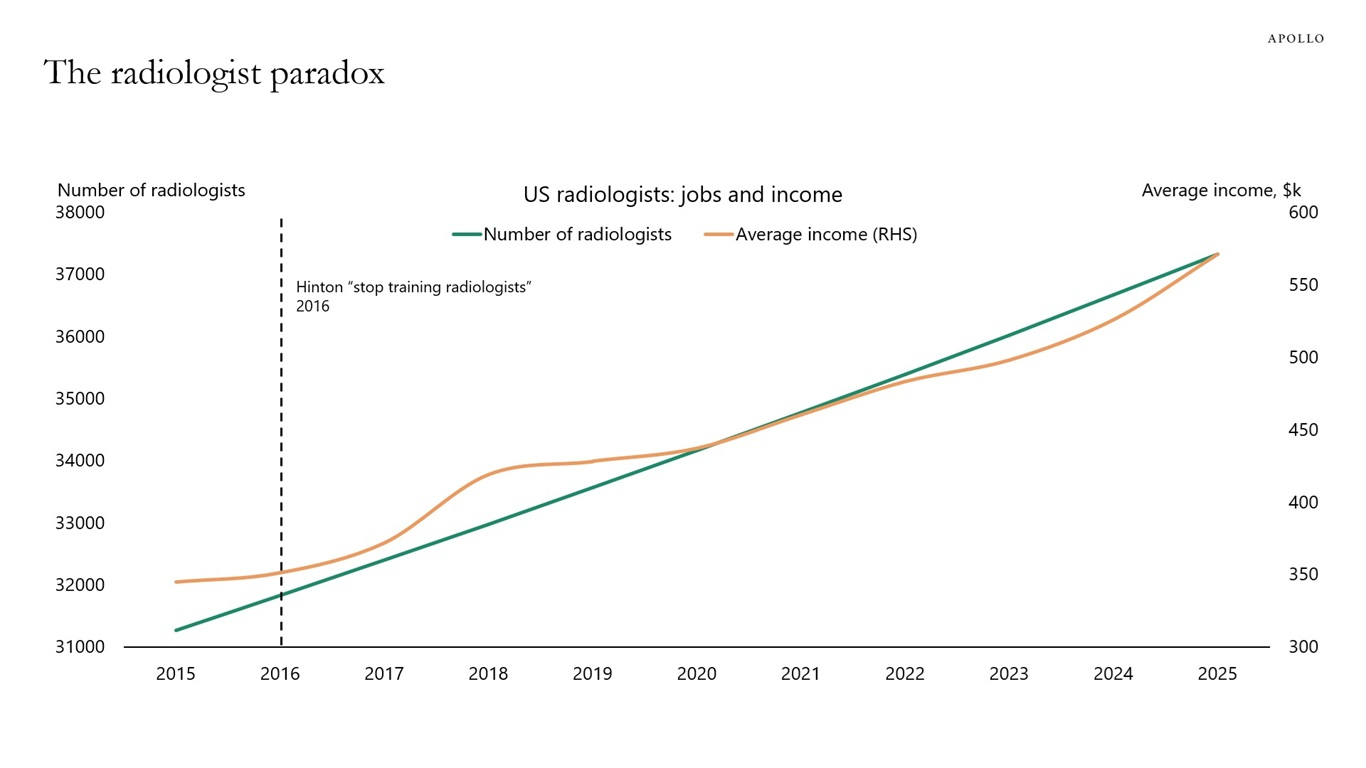
- If you’re interested in this topic, I highly recommend the article linked above, as well as this article from Torsten Slok, also at Apollo. His main point:
- “When technology makes a task more efficient, total consumption of that task increases rather than decreases, because lower costs expand demand.” The examples of radiologists, call centers, and travel agents, is worth thinking about.
Quote of the Month
“You’re only worth what you can write a check for tomorrow.”
– Paul Tudor Jones’ Grandfather (from this excellent interview)
I hope you found these interesting.
As always, please reach out if you have any questions or would like to connect.