
September Market Update

September Market Update

Happy Fall! 🍁

This past week, the Federal Reserve raised interest rates by 0.25%. President Trump has repeatedly pushed for lower rates, so the decision was notable, as the new Fed Chair, Kevin Warsh, moved in the opposite direction. Given the concerns about Fed independence during his nomination process, I took that as an encouraging sign that the institution will retain its independence.

In other news, for those with a concentrated stock position, I highly suggest this article: The Best Way to Sell a Concentrated Position.

And lastly, the best quote I read from the past month is one I wholeheartedly agree with. It comes from Jo Townsend, the manager of New Zealand’s sovereign wealth fund:

  • “Returns for US equities over the past couple of years are close to double annualized returns for the past 20 years…So we would expect there to be some reversion to the mean at some point.”
  • – Jo Townsend, chief executive of the Guardians of New Zealand Superannuation, which manages New Zealand’s sovereign wealth fund.
From the article: World’s best-performing sovereign wealth fund expects equities pullback. 

Below is my usual collection of charts and personal-finance data points from the past few weeks.

Thanks for reading. I hope you enjoy

Investing / Stock Market
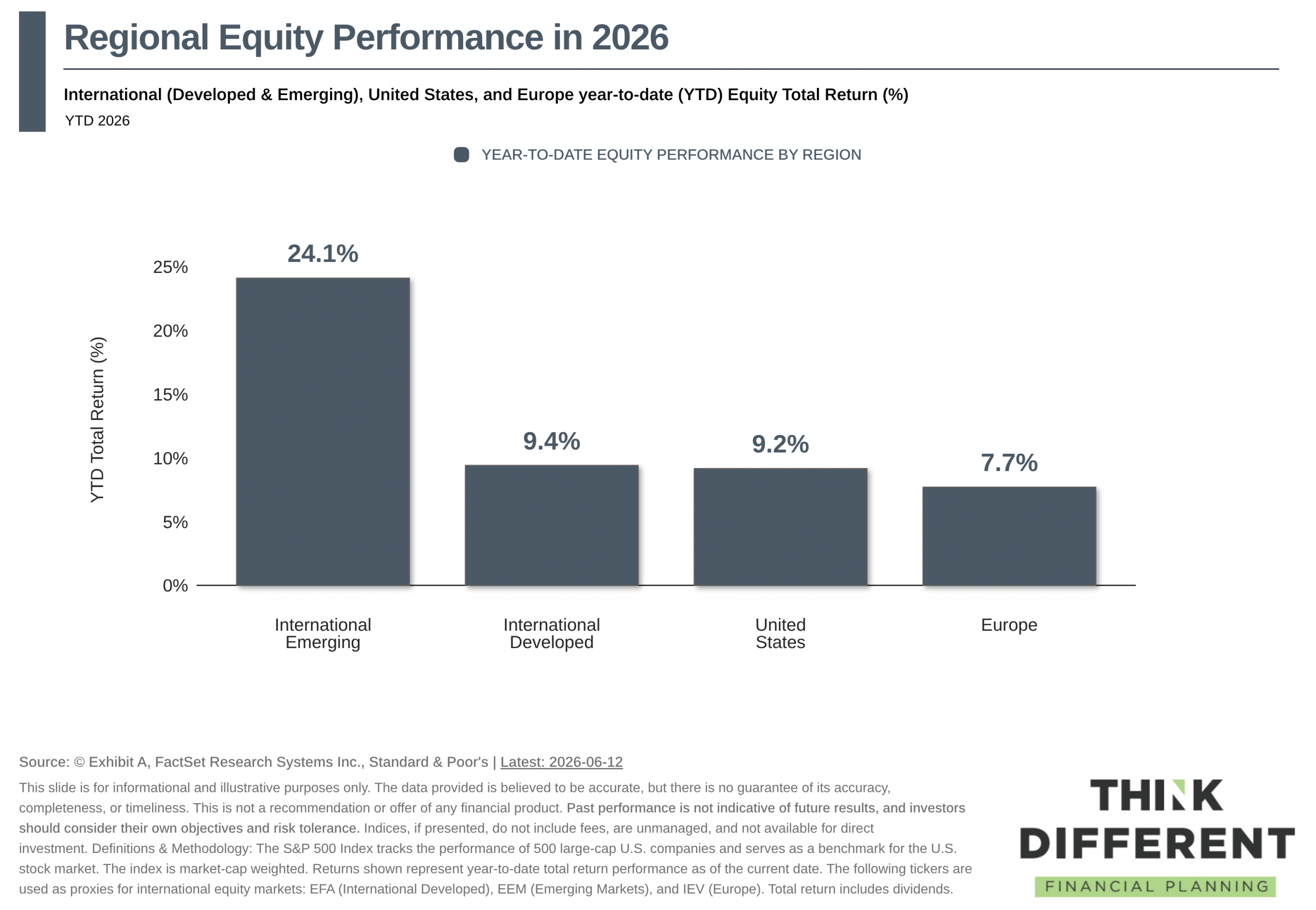
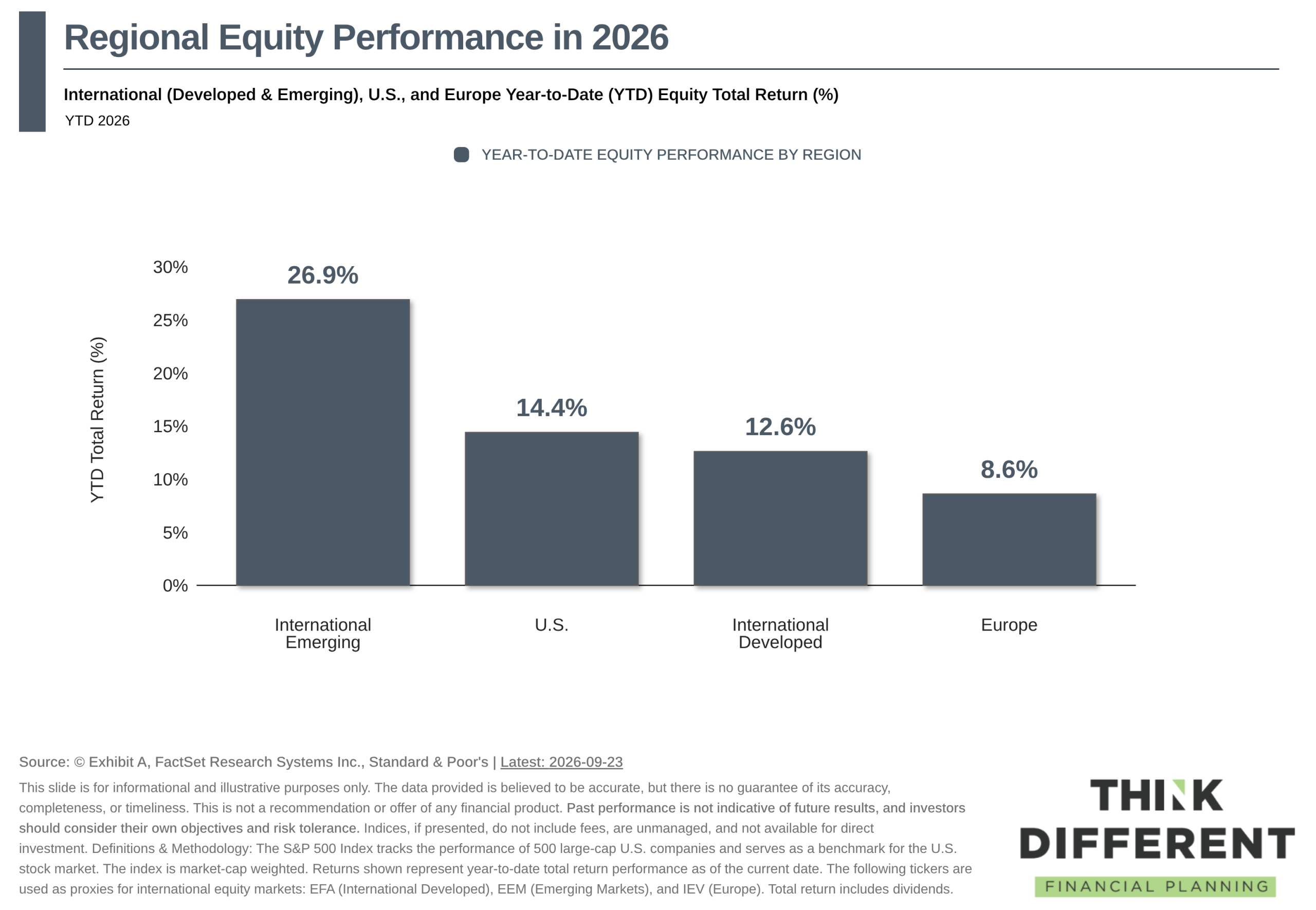
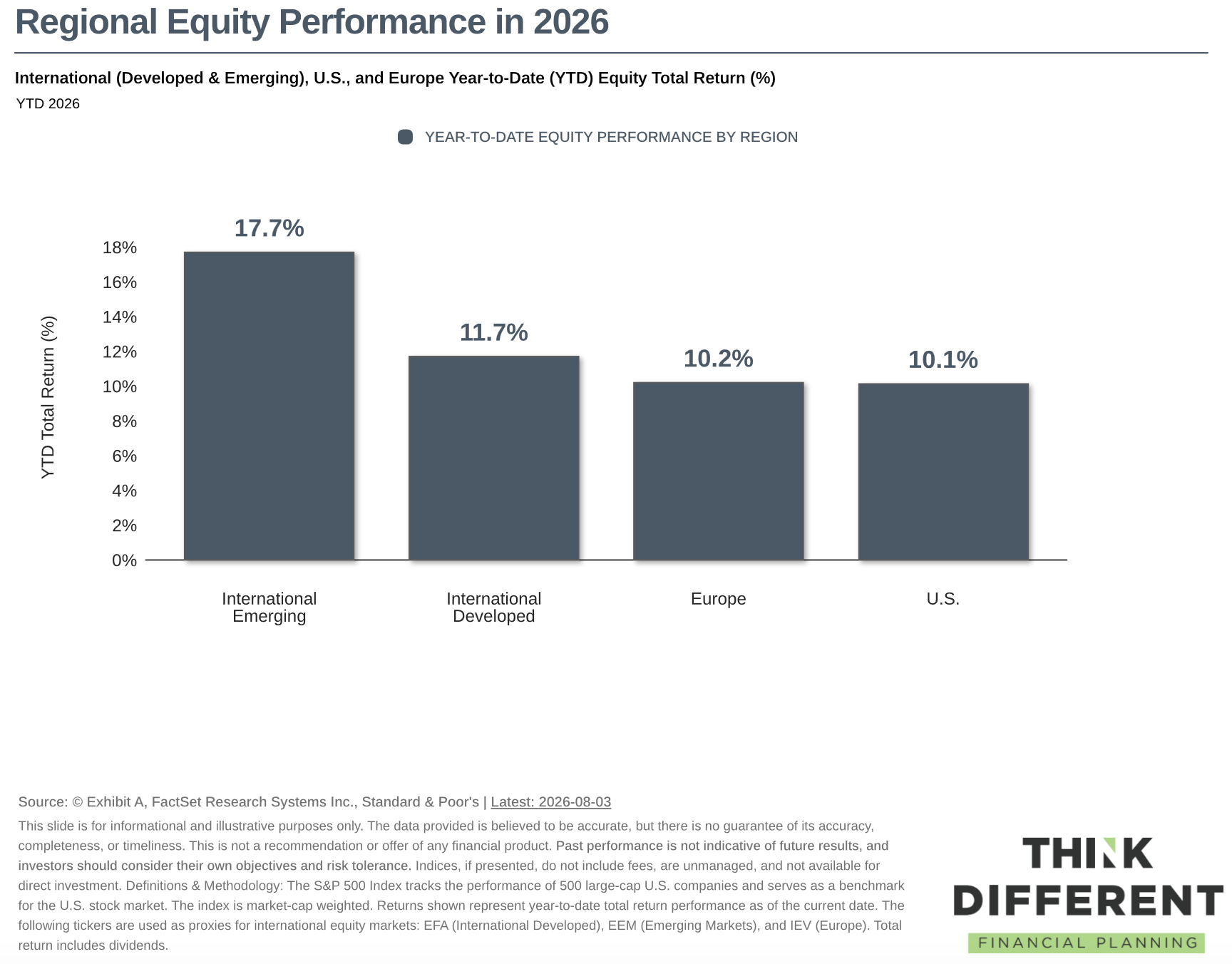
  • 🌎 Stock Performance in 2026 – It’s been a good year, with international stocks continuing to lead the pack:
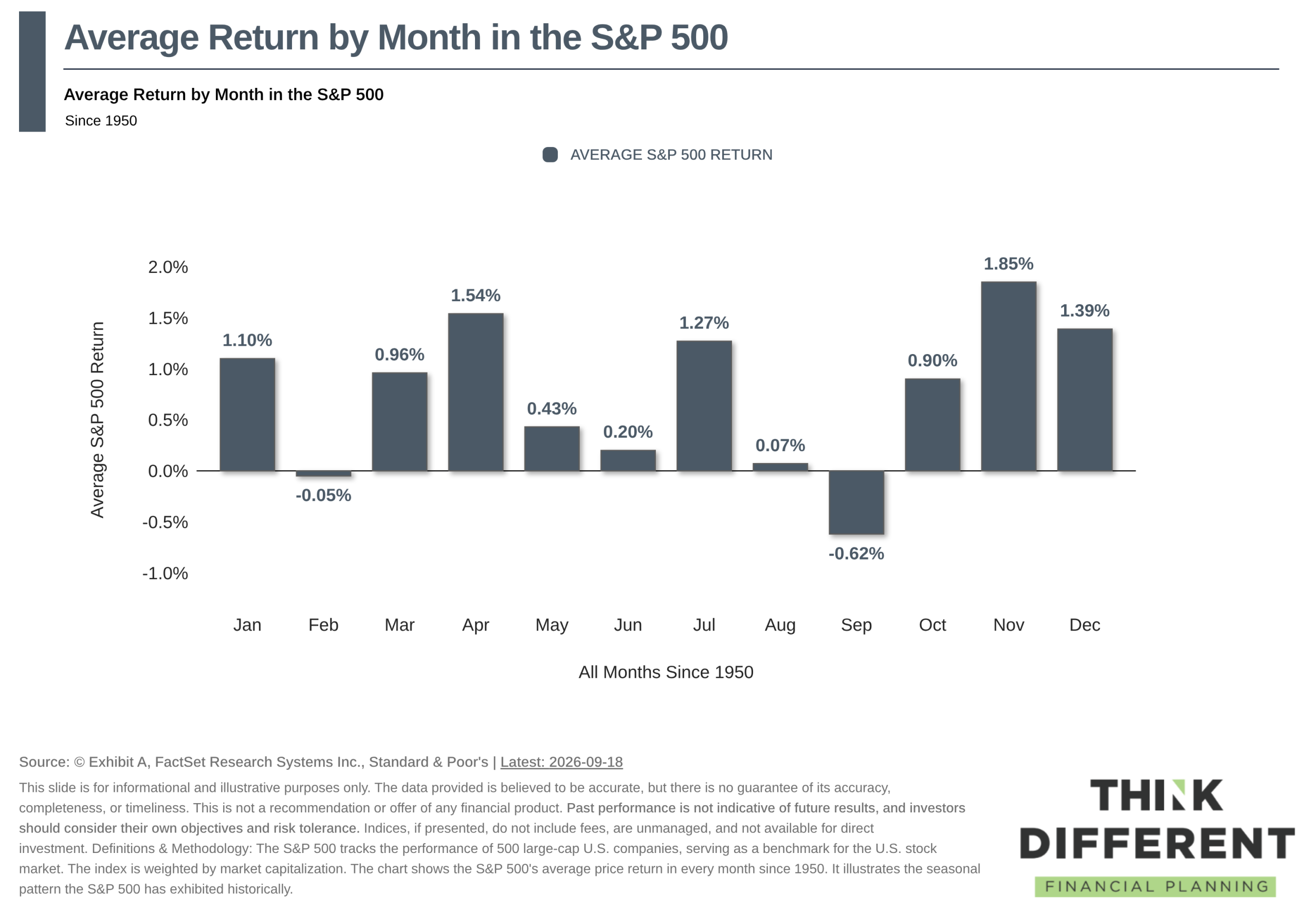
  • 😱 September Scaries – September is historically the worst month of the year:
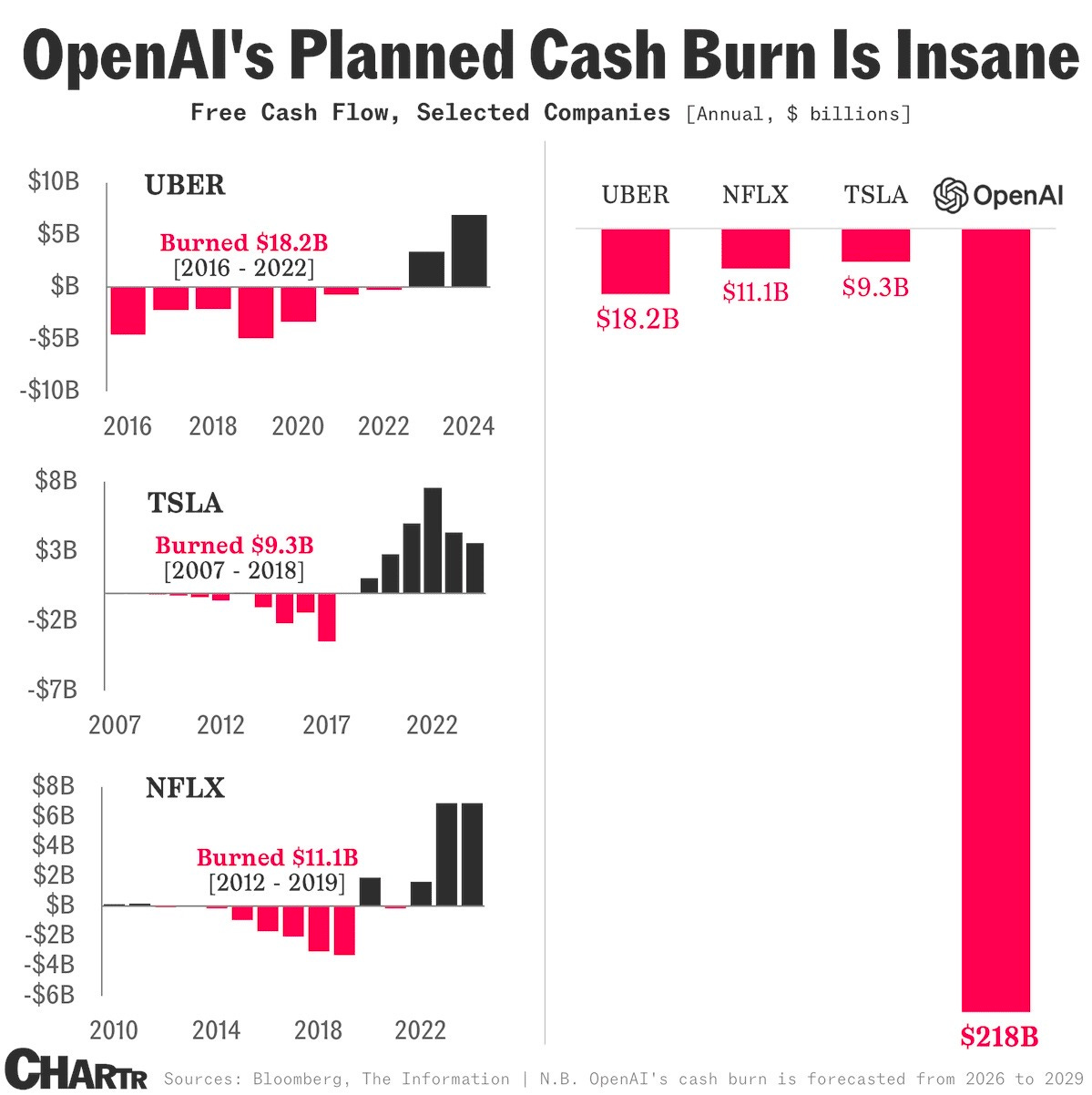
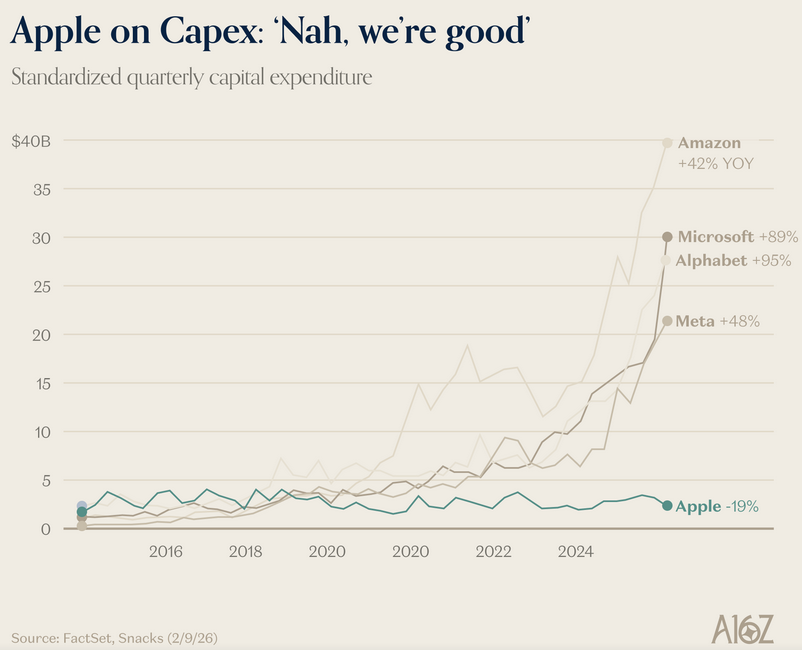
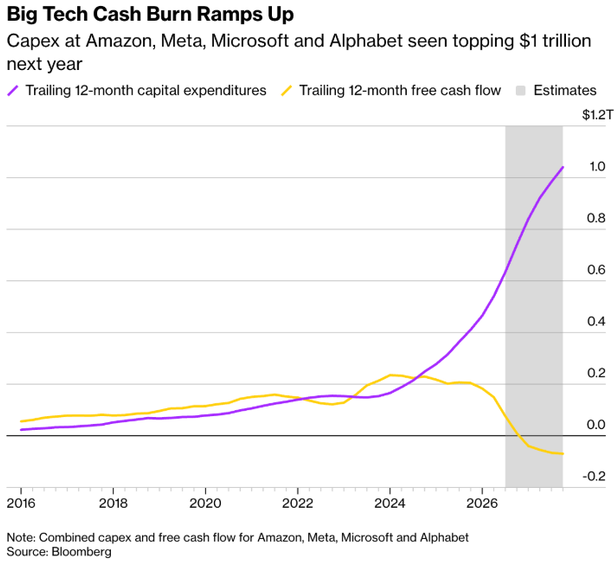
  • 💰 Big Tech Spending Spree – Amazon, Meta, Microsoft, and Alphabet are on pace to spend nearly $1 trillion annually, while their free cash flow is projected to turn negative.
  • It goes to show how expensive the AI build out is, even for the world’s most profitable companies.
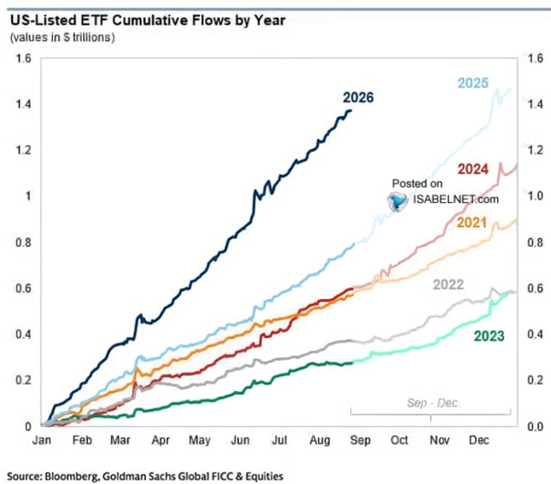
  • 📈 Consumers Are Investing Too – Investors have already invested ~$1.3 trillion into ETFs this year. That’s nearly as much as all of 2025, which was a record year.
  • It shows how far each stock is trading below its 52-week high. Some well-known names are down a lot. And again, lots of tech:
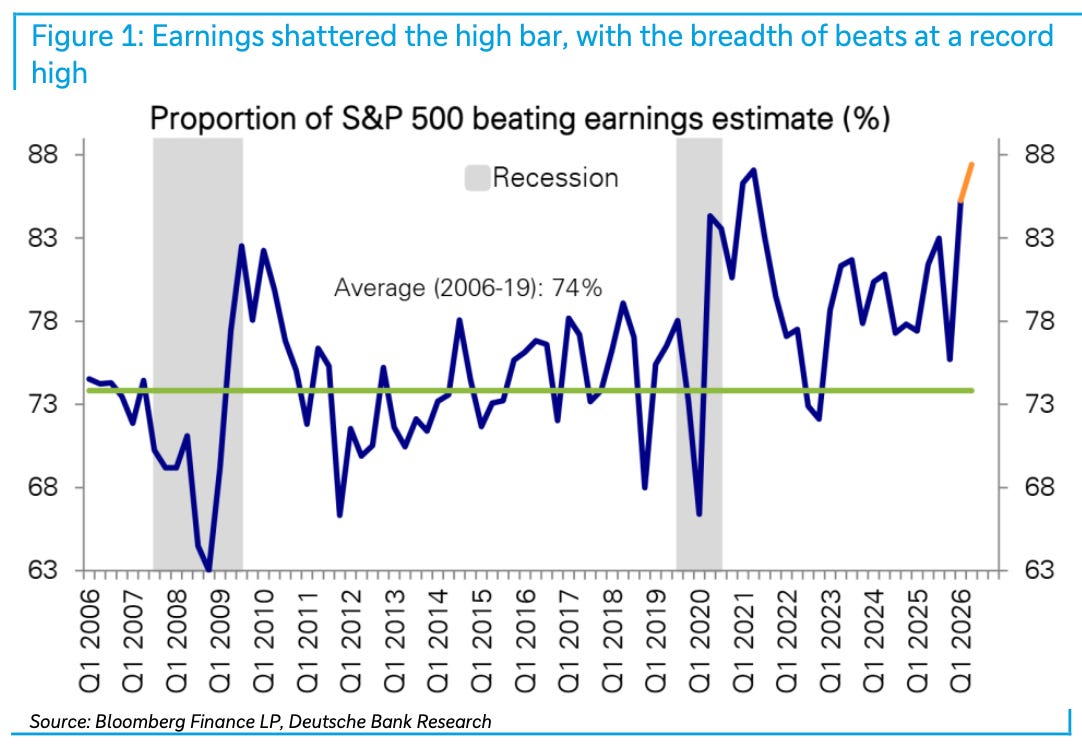
  • 💪 Beating Expectations – In good news, approximately 87% of S&P 500 companies beat their Q2 expectations, much higher than the long-term average.
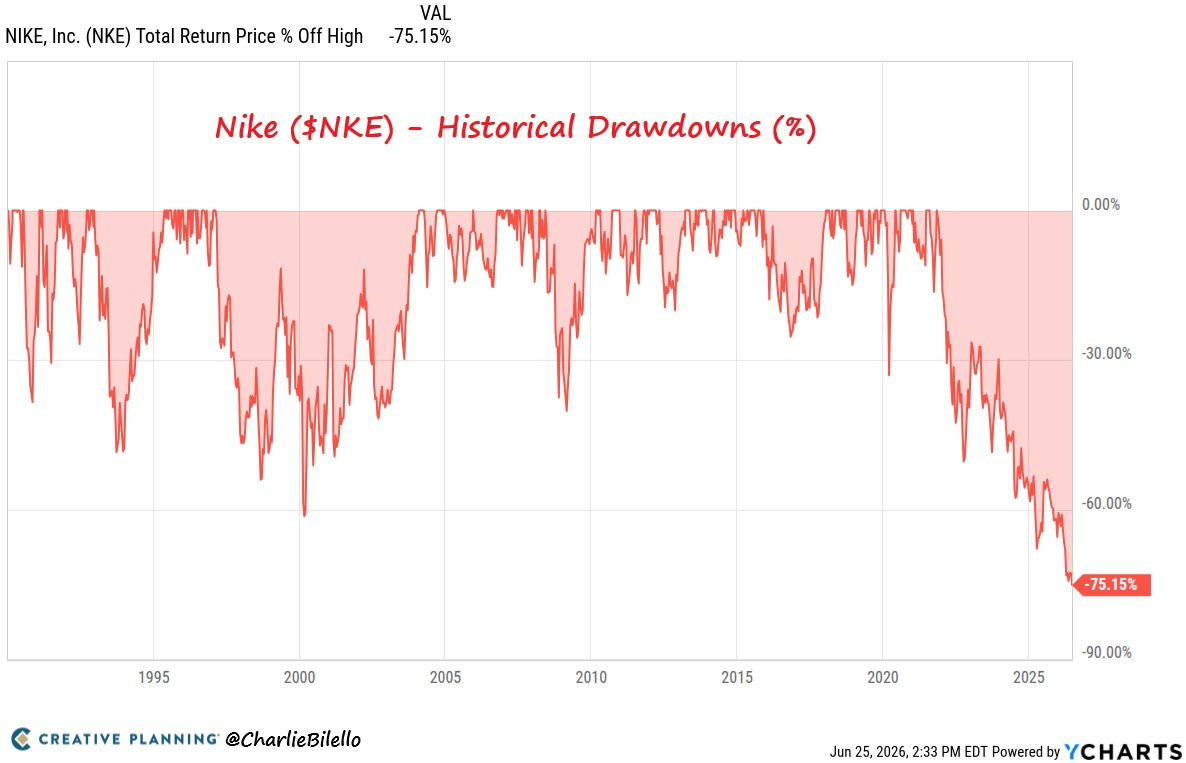
  • ✔ Nike Down 75% – Just because most companies are beating expectations, some are not. Nike is doing very poorly.
  • No matter how well known or established a company is, that does not mean their stock will do well.
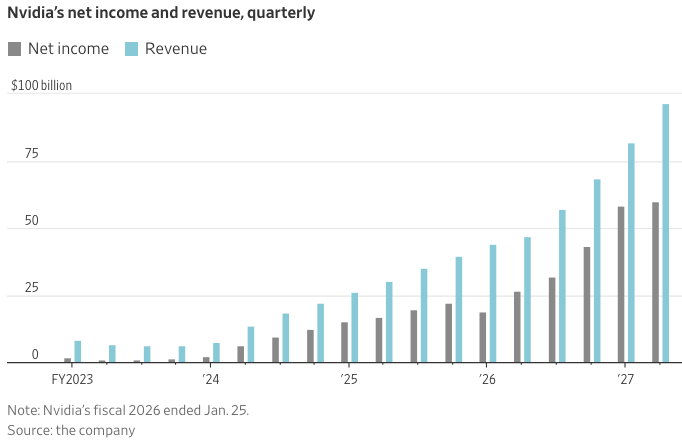
  • 📈 On The Other Hand… – Nvidia’s quarterly revenue is approaching $100 billion. Amazing growth since only 2023.
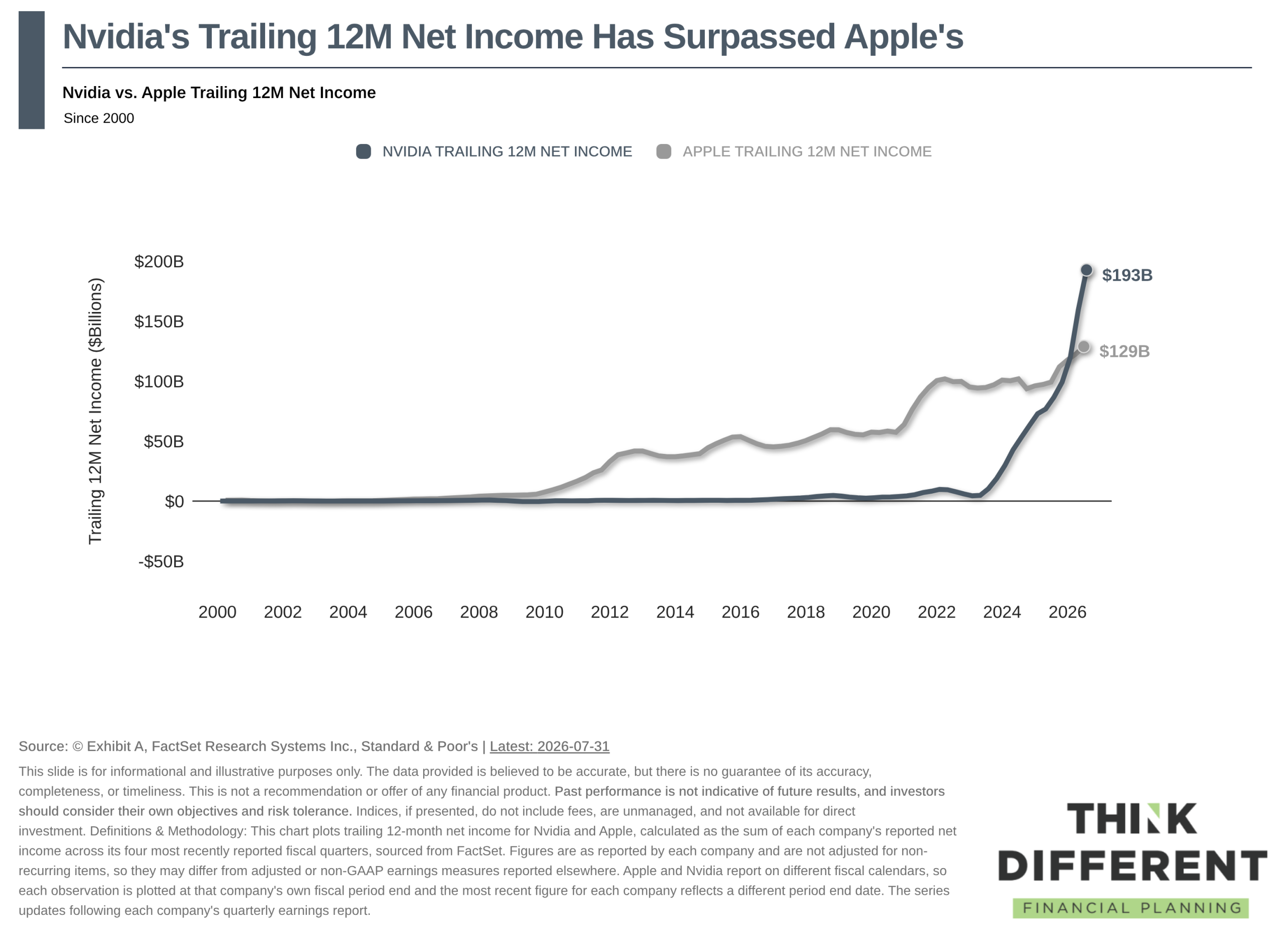
  • 🤖 Nvidia vs. Apple – Putting Nvidia’s net income in context, they’ve now earned more in profit over the past year than Apple:
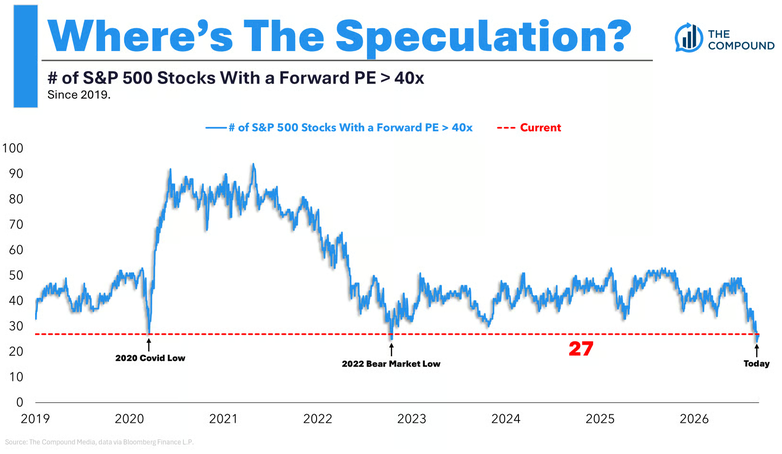
  • 🧐 Pricey? – The chart below shows the number of stocks in the S&P 500 that could be labeled “expensive.”
  • Out of those 500, only 27 fit the description.
  • This is down quite a bit from the Covid-era stock-trading frenzy, when companies like AMC and Gamestop traded at high valuations that didn’t make sense.
  • “The single biggest predictor of whether your retirement is brilliant or bleak has almost nothing to do with your portfolio. It’s your relationships.”
Real Estate
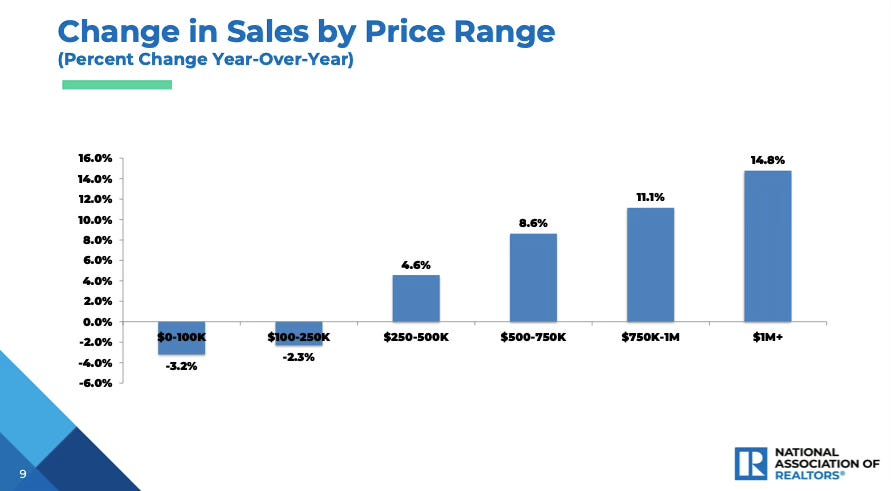
  • “The higher the price band, the more sales volumes are up on a year-over-year basis.”
  • – Conor Sen
Quote of the Month

“Leave the children enough so that they can do anything, but not enough that they can do nothing.”

– Warren Buffett

I hope you found these interesting.

As always, please reach out if you have any questions or would like to connect.

Diversification for the Win

Diversification for the Win

Investing / Stock Market
  • 🌎 Stock Performance in 2026 – International stocks have done well, with emerging markets (like Taiwan and South Korea) leading the pack.
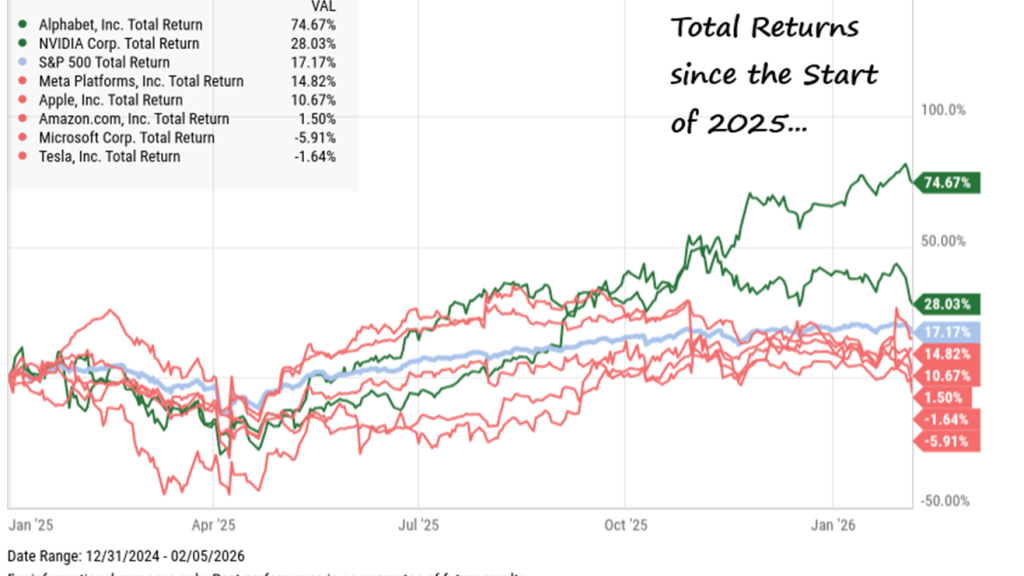
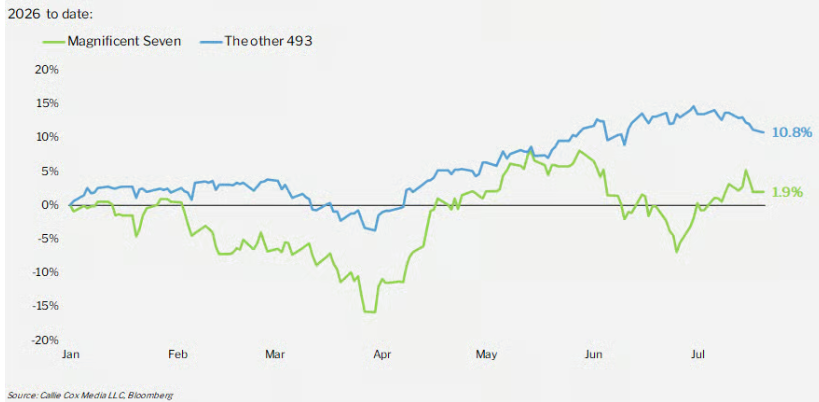
  • 💪 Strong Fundamentals – For most of this bull market, a small group of mega-cap stocks has accounted for a huge share of the S&P 500’s advance. In 2026, however, that market leadership has broadened significantly, with the other 493 companies outperforming both the S&P 500 and the Magnificent Seven (Apple, Microsoft, Alphabet, Amazon, Meta, Nvidia, and Tesla).
  • “Investors have long worried that heavy concentration at the top of the market would leave stocks vulnerable if the largest technology companies stumbled. So far, the opposite has occurred: strength elsewhere in the market has more than compensated, providing encouraging evidence that the bull market rests on a broader and potentially more durable foundation.Let me break down what’s actually happened in the markets. Year to date, the biggest winners [by sector] were industrials, materials, and energy. That made sense — war in the Middle East, oil prices surge, and energy stocks move higher.
  • Tech is still doing well, but different tech: 
  • “There’s an AI-related switcheroo underway, too. The Magnificent Seven may be having an awful year, but semiconductors and hardware stocks have risen to the top. Tech, but a different flavor of tech. — Callie Cox
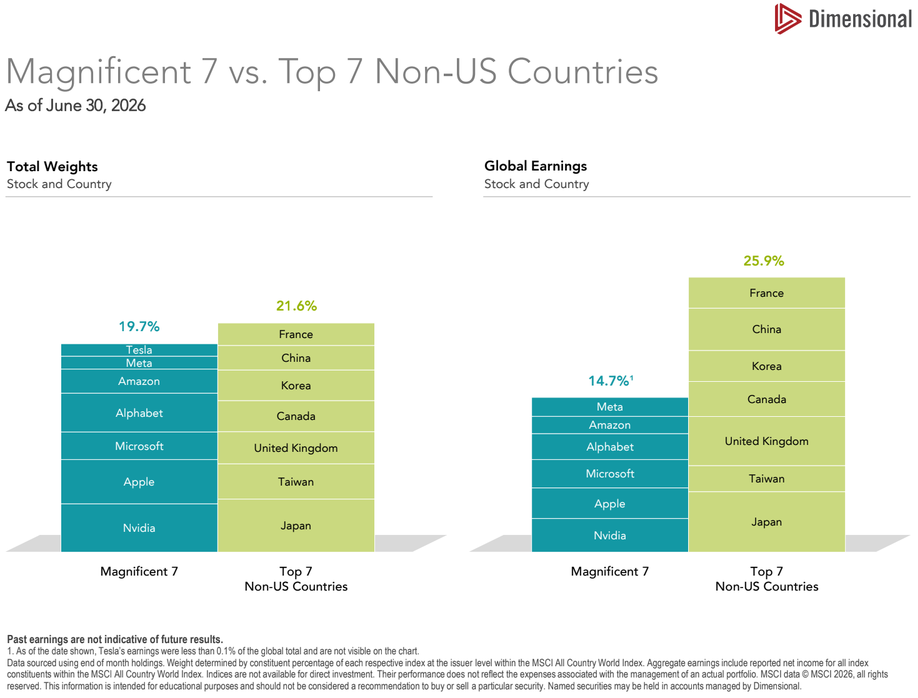
  • ⚖️ 7 Stock vs. 7 Countries – Despite their underperformance this year, the Magnificent 7 stocks are still massive companies. They’re worth almost as much as the seven largest non-U.S. stock markets combined!
  • However, their economic footprint is much smaller: As a group they generate 14.7% of global earnings, versus 25.9% for those seven countries.
  • In other words, their market valuations far outpace their share of worldwide revenue. It’s a bet that their future growth and profitability will continue to outpace the rest of the global market.
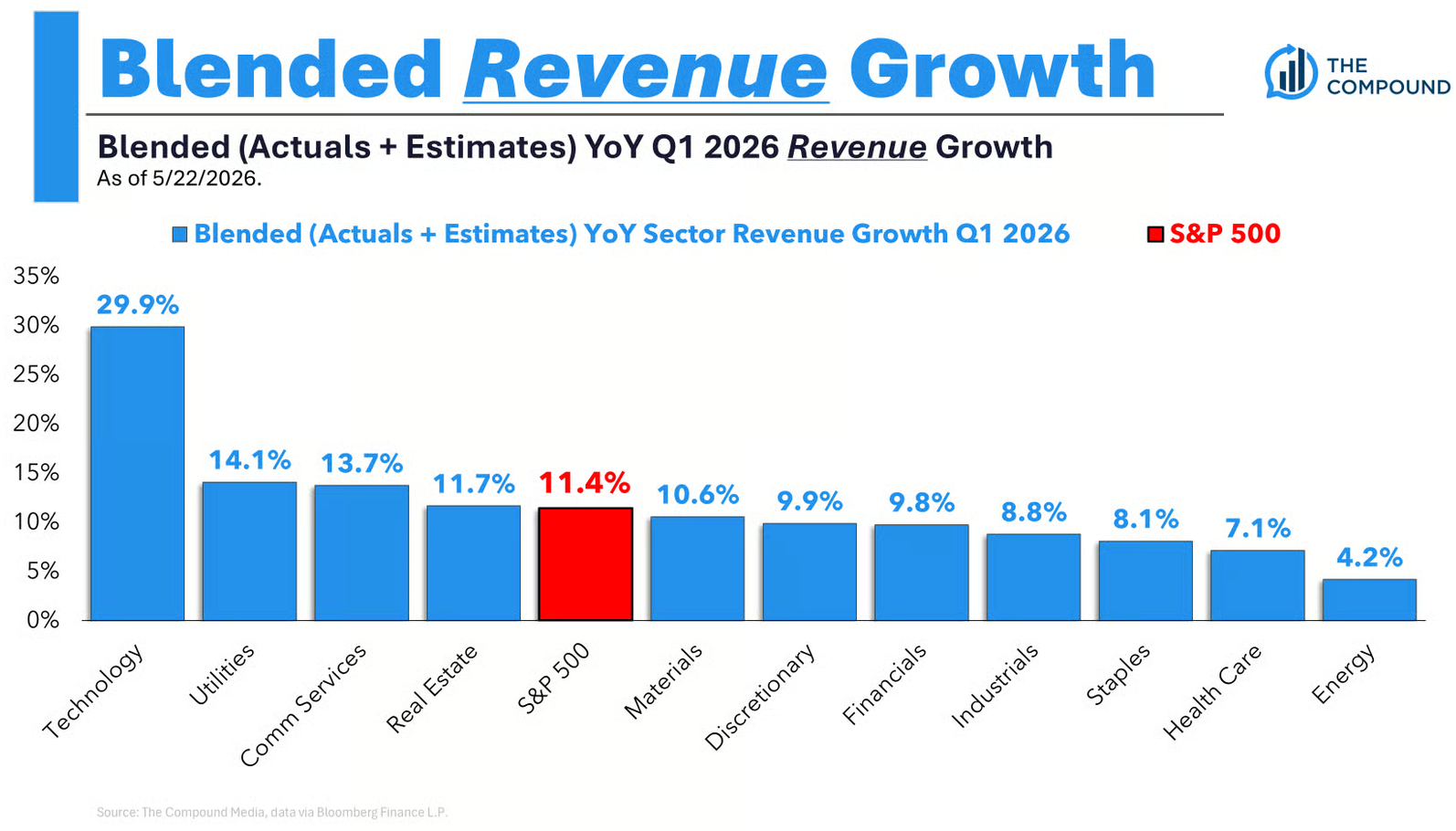
  • 📈 Encouraging News – “Every single sector is expected to report a year-over-year increase in revenue. 
  • The S&P 500 (overall) is expected to increase revenue by 11.4% from a year ago. ” — Matt Cerminaro
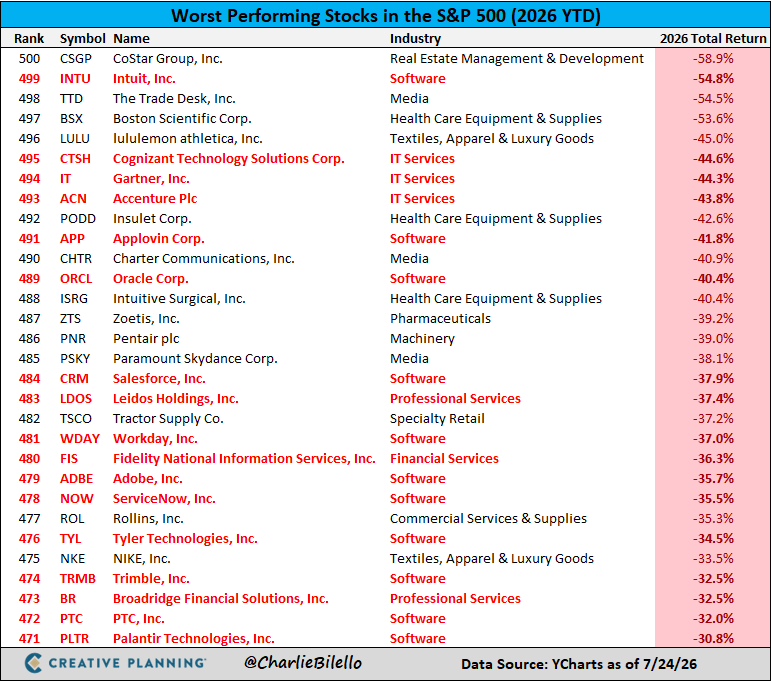
  • 🤖 Worst-Performing Stocks of 2026 – Despite revenue growth across every sector, not every company is up for the year. In fact, about 1 out of 3 stocks is down in 2026. Yet another reason to diversify.
  • “17 of the 30 worst-performing stocks in the S&P 500 this year are software and related services companies. Investors are betting that AI will be an existential threat to this industry.” — Charlie Bilello
  • This is interesting when viewed in the context of the stats above. Basically IT services and software are down, the Mag 7 are underperforming, but semiconductors and hardware stocks are doing very well. 
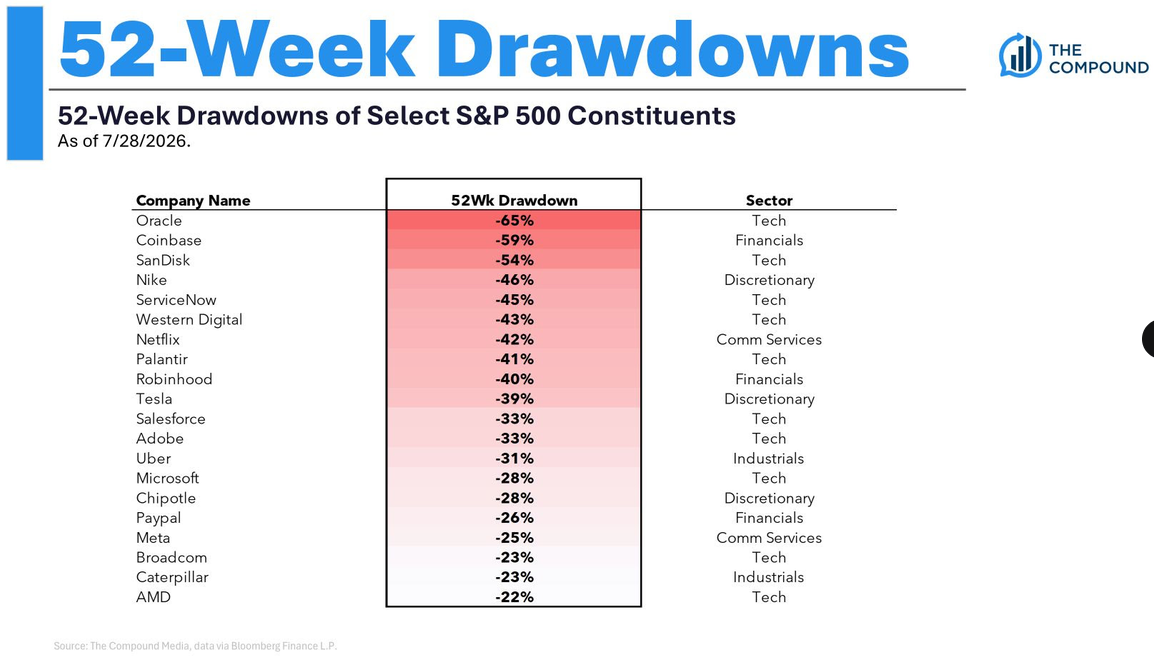
  • 5️⃣2️⃣ Drawdowns – The table below looks at the data a bit differently.
  • It shows how far each stock is trading below its 52-week high. Some well-known names are down a lot. And again, lots of tech:
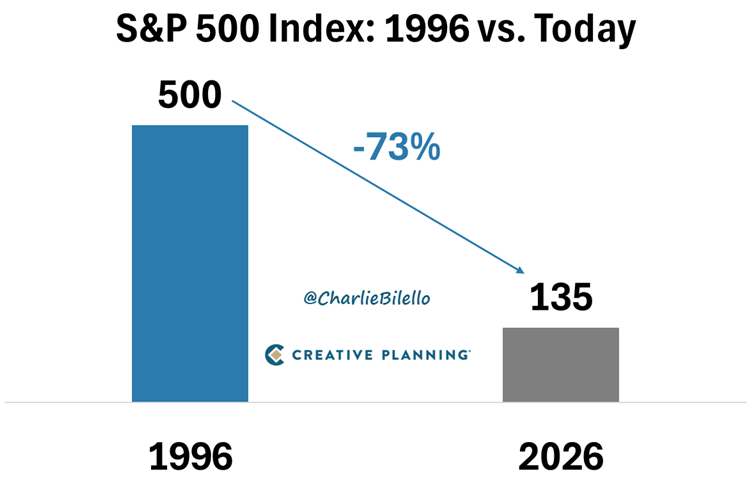
  • ⏳ A Surprising Stat – Stocks that perform poorly, like those above, can be removed from the S&P 500 index (which essentially represents the largest 500 companies in the US).
  • The statistic below summarized the turnover within that index over the past 30 years:
  • “Only 135 of the S&P 500 constituents in 1996 are still in the index today.
  • The lesson: companies change, leaders fade, and innovation never stops.” — Charlie Bilello
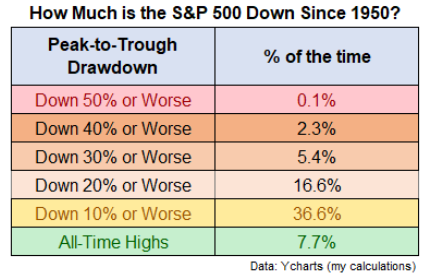
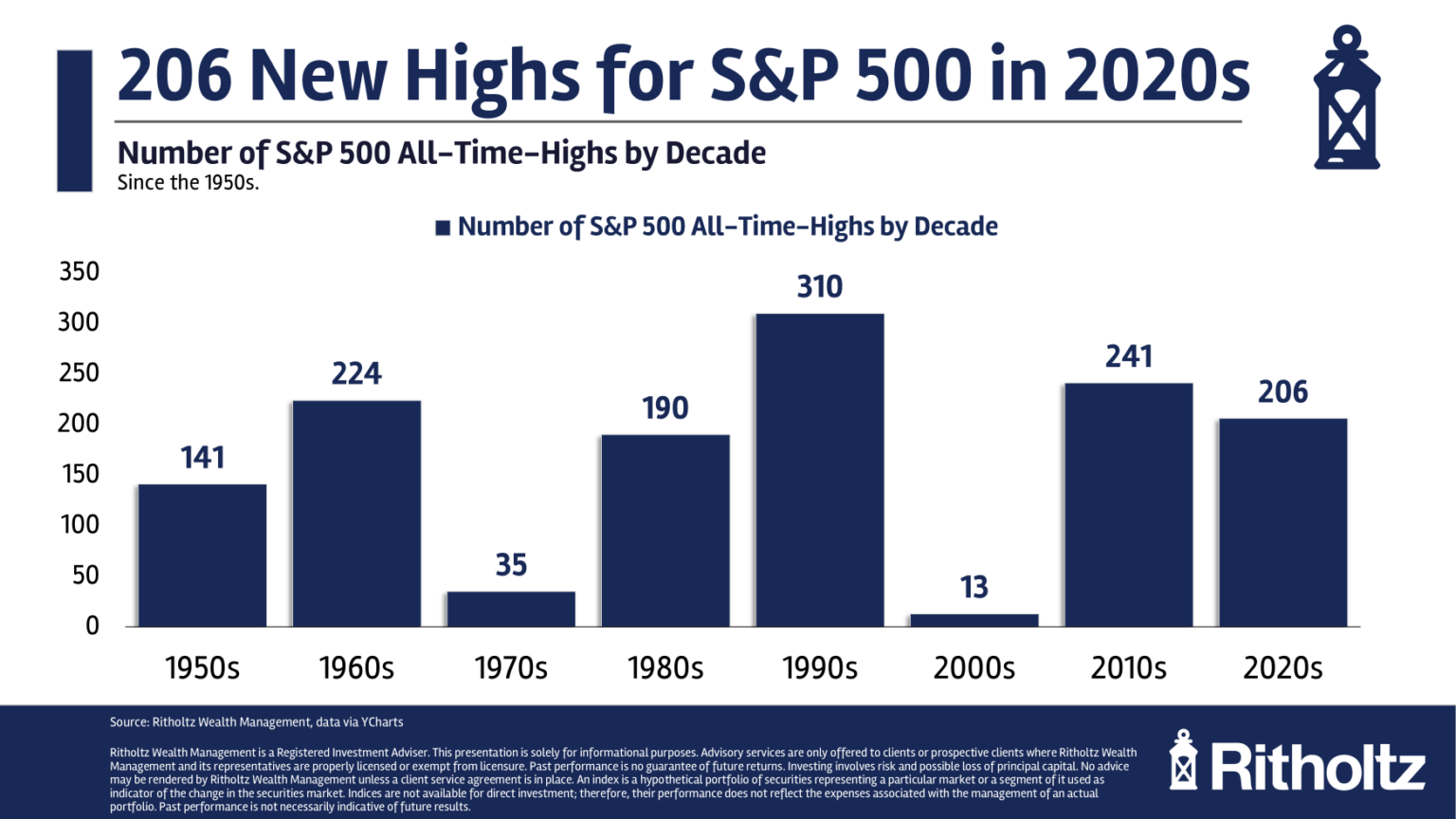
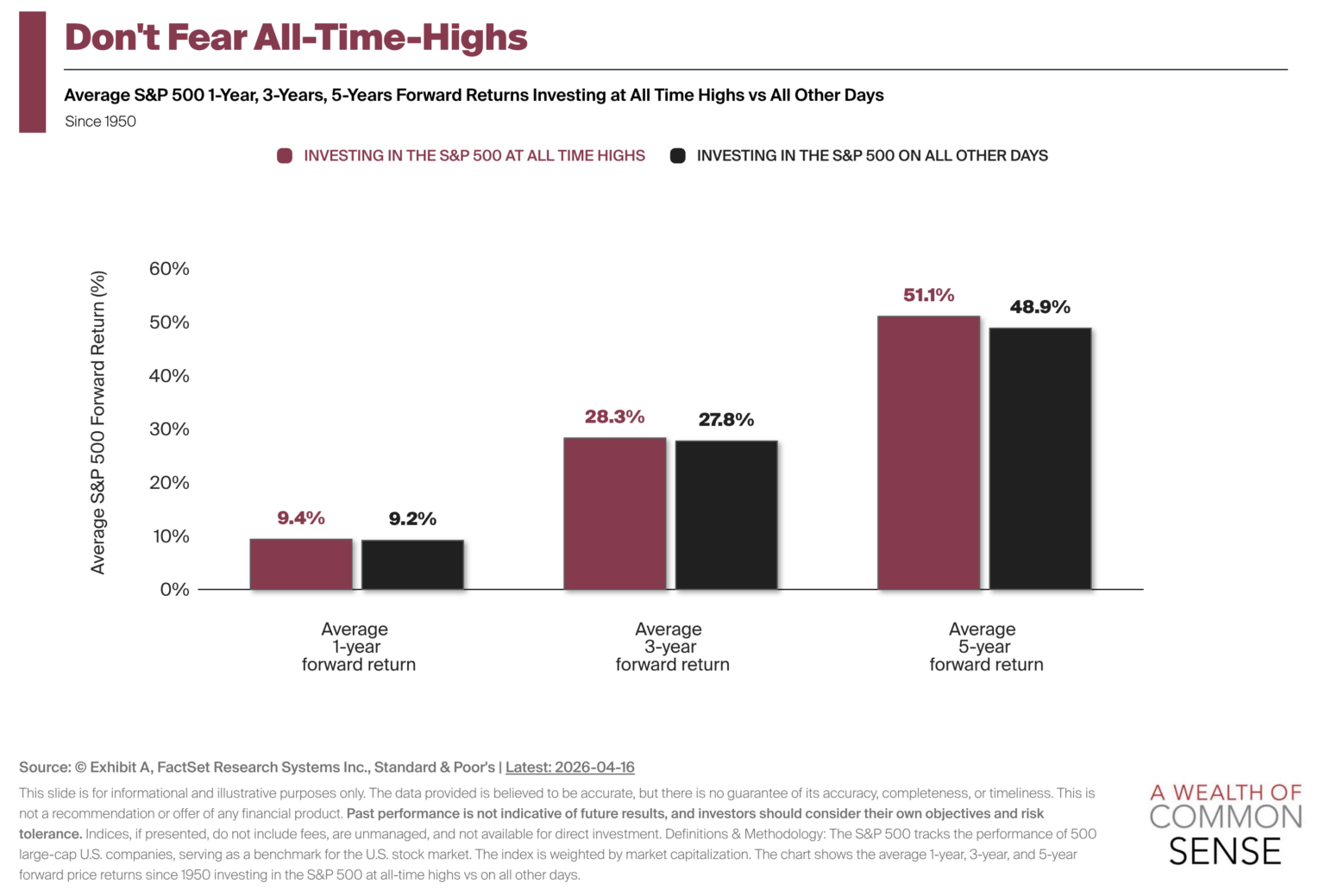
  • The table below shows how often the S&P 500 has traded been below its previous peak since 1950.
  • As Ben Carlson notes, “Roughly one-third of the time since 1950, the S&P 500 has been in a drawdown of 10% or worse.”
  • This is a reminder that all-time highs are relatively uncommon. The market has spent only ~8% of the time there. The majority of the time, you have to live with some degree of decline, which is perfectly. normal.
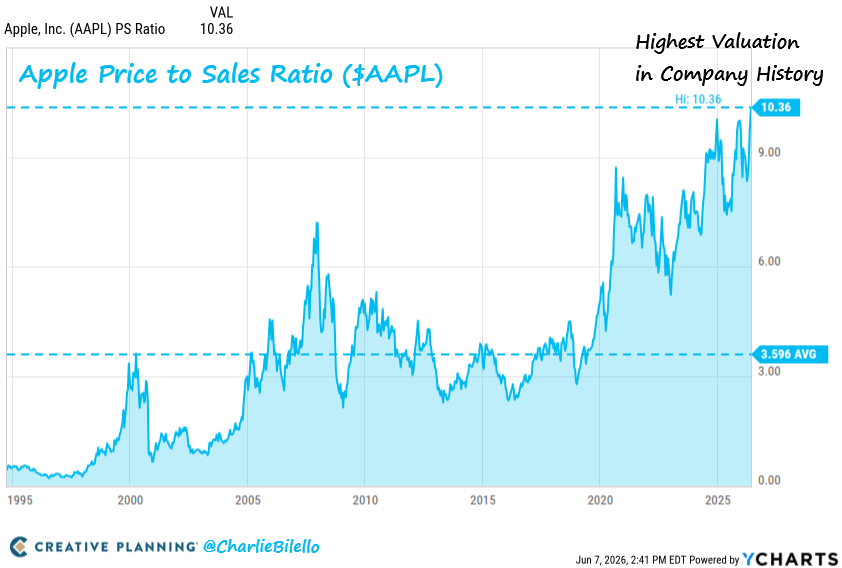
  • 🖥️ Apple’s Valuation – Apple is trading at over 10x sales, the highest valuation in company history. 
  • Said another way, this means investors value the company at ~$10 for every $1 of annual revenue.
  • Lately the company has been rewarded for not splurging on the AI/data center boom, conserving cash and maintaining their high margins instead.
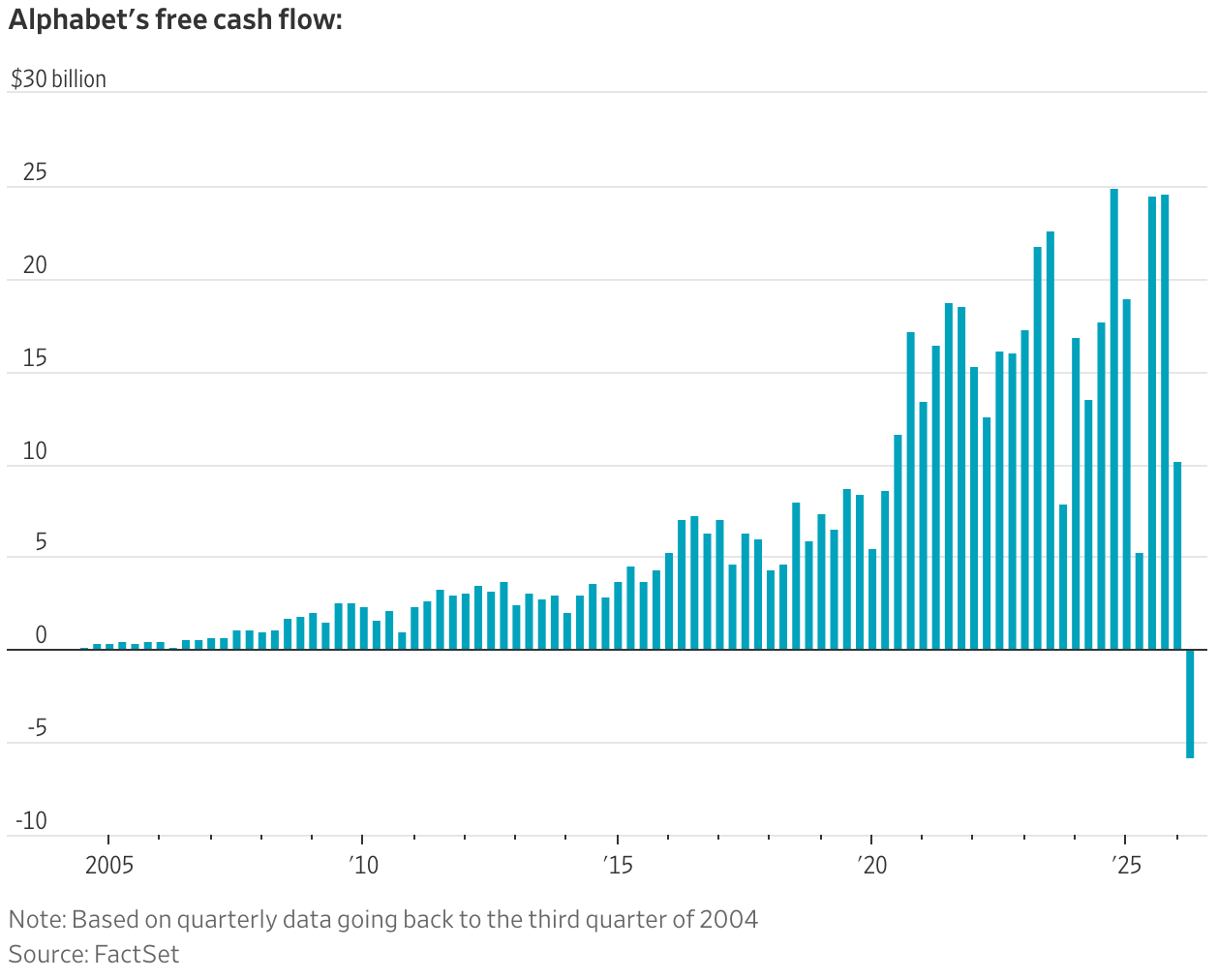
  • “Alphabet’s free cash flow came in at negative $5.9 billion—the first negative print since the company went public in 2004. Its finance chief said free cash flow would remain under pressure as the company deepens its investments in AI. Alphabet also lifted its capital spending forecast to as much as $205 billion this year.” — Hannah Erin Lang, Tina Li, and Caitlin McCabe, The Wall Street Journal
  • Free cash flow is essentially the money companies have left over after expenses and investments. It details how much cash is available for things investors like, such as dividends and share repurchases.
  • Tesla and Amazon are also in this camp (with Meta approaching), spending lots to gain a future advantage. The fact that their stocks are being penalized for this spending to me suggests that investors are getting impatient. This is also not the behavior you’d expect in a bubble environment (which some people claim we’re in).
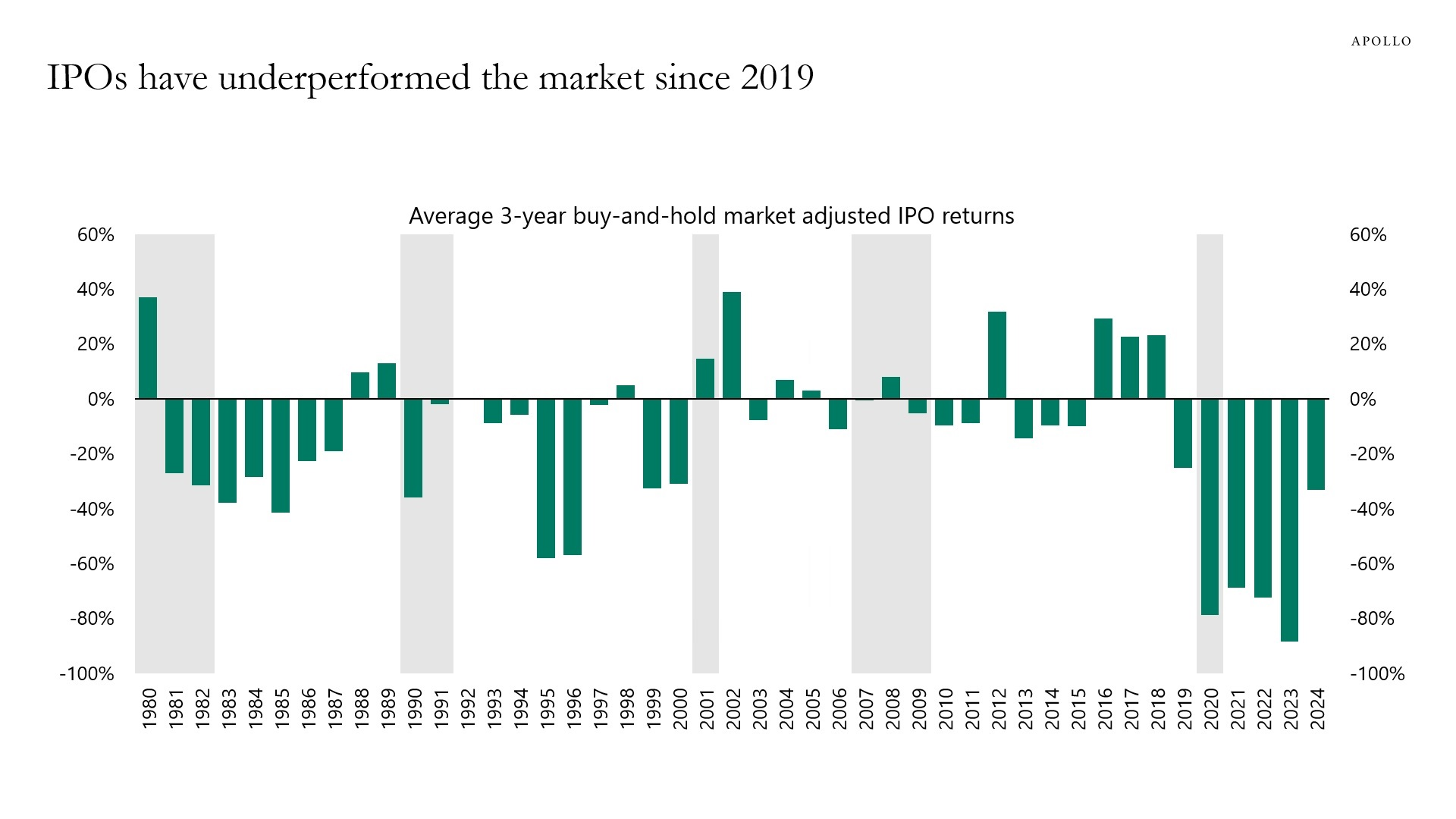
  • This is perhaps an indictment of the venture capitalists and private markets. It seems that companies are repeatedly overvalued prior to going public. 

Interesting Stats

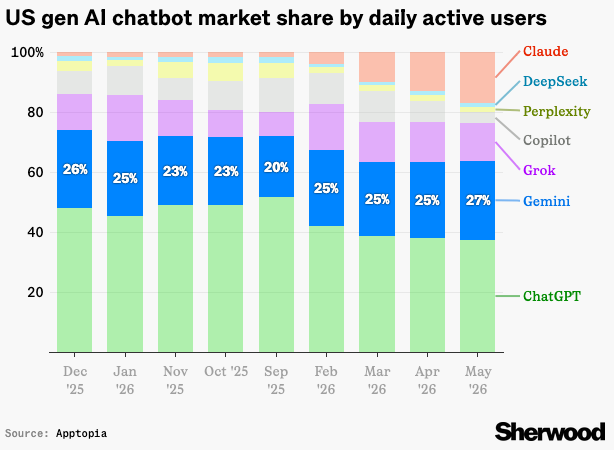
  • 💬 Chatbot Market Share – Claude looks to have the momentum, but GPT still has the biggest market share:
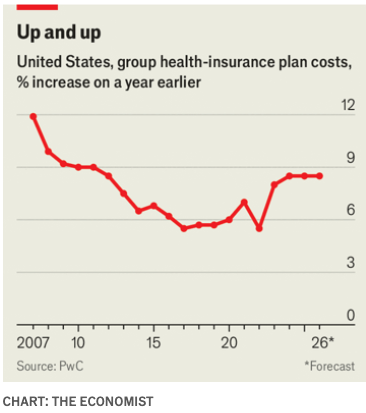
  • This is driven by a few factors: Government subsidies expiring, hospital consolidation, and increased use of medical care by the overall public. 
  • Annual healthcare inflation has rarely been below 6%! Much higher than the 2-3% overall inflation rate. 
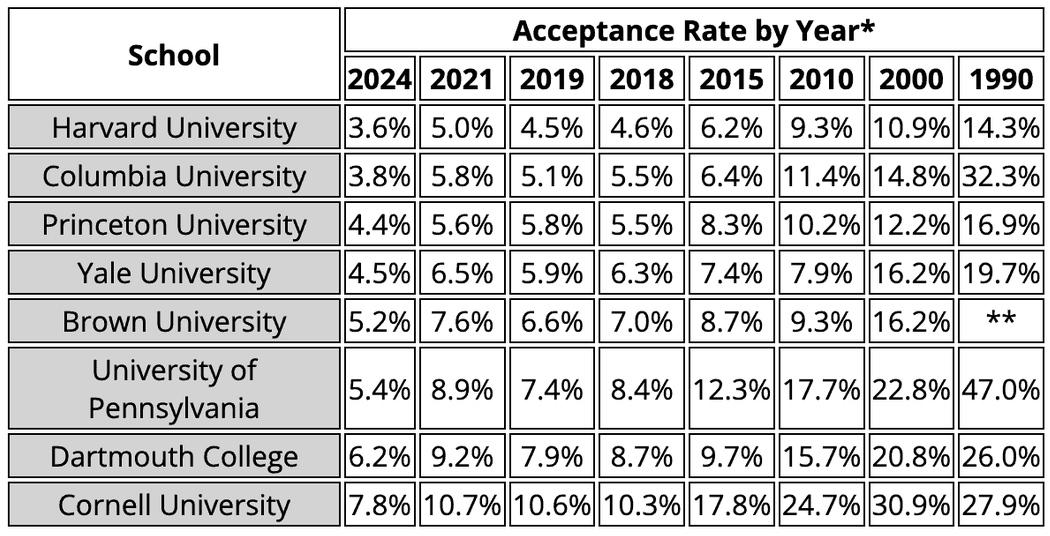
  • 🏫 Ivy League Acceptance Rates – “Since 2015, the number of college applicants has gone up 78% while acceptance rates at elite colleges have plummeted” — Nick Maggiulli
  • 👶 Trump Accounts – If you have a baby born between 2025 and 2028, they’re now eligible for a free $1,000 from the federal government. 
  • The child can’t access the money until they’re age 18, after which these accounts are treated like an IRA, where withdrawals are taxed at the child’s ordinary income tax rates.
  • To learn more, click here or download the Trump Accounts app from the Apple App Store or Google Play.
  • To receive the one-time $1,000 federal contribution, an authorized adult must open a Trump Account for the child and elect the pilot-program contribution on IRS Form 4547. The easiest route is to sign in to an IRS Individual Online Account through ID.me, submit Form 4547, and check the box requesting the $1,000 contribution.

Quote of the Month

“Do not let your actions be based on your fears.”

– Alice Crowe, the mother of Cameron Crowe, from the excellent book, The Uncool

I hope you found these interesting.

As always, please reach out if you have any questions or would like to connect.
Mid-June Market Update

Mid-June Market Update

Investing / Stock Market
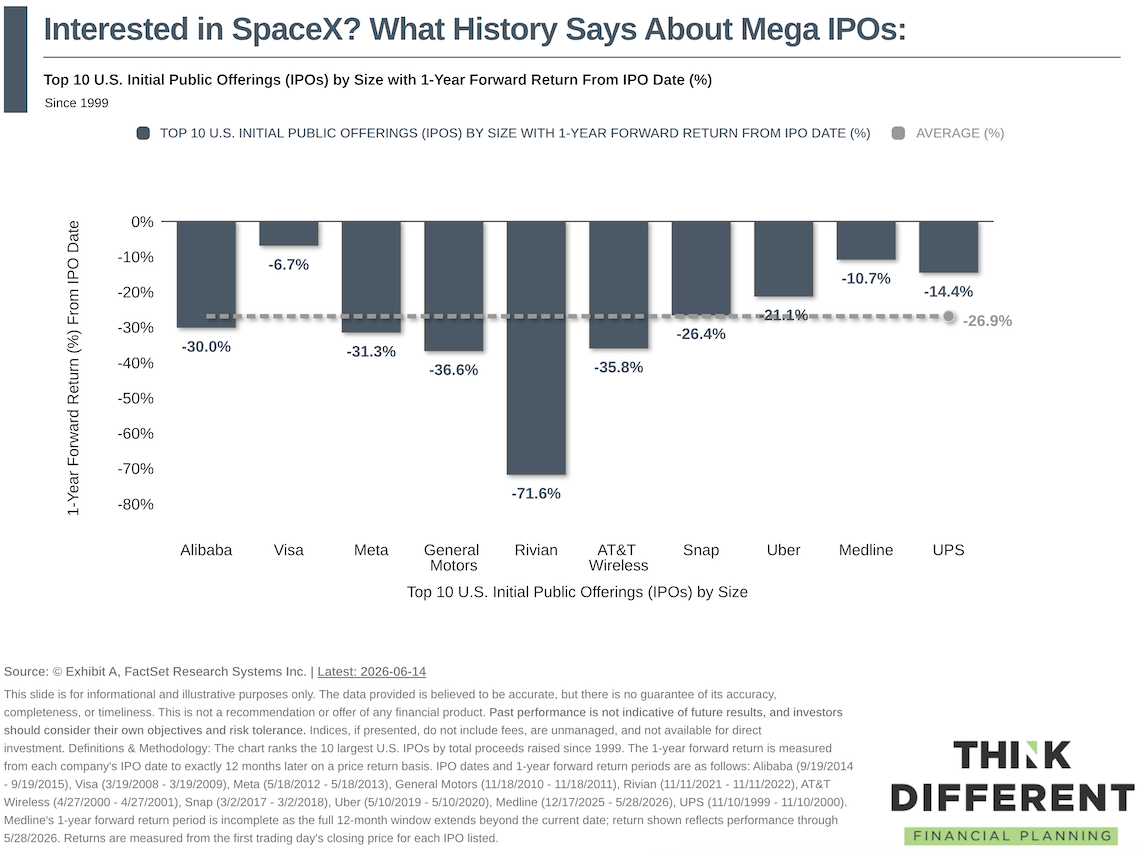
  • 🛰️ Interested in SpaceX? – This chart ranks the 10 largest U.S. IPOs by deal size since 1999, and tracks how each performed over the following 12 months.
  • All 10 had negative returns one year after going public, with an average return of -26.9%.
  • Despite the excitement surrounding mega IPOs like SpaceX, history shows the biggest offerings have struggled in their first year of trading.
  • 🌎 Stock Performance in 2026 – Stocks around the world have done well, with emerging markets (such as South Korea, Taiwan, and Thailand) leading the pack.
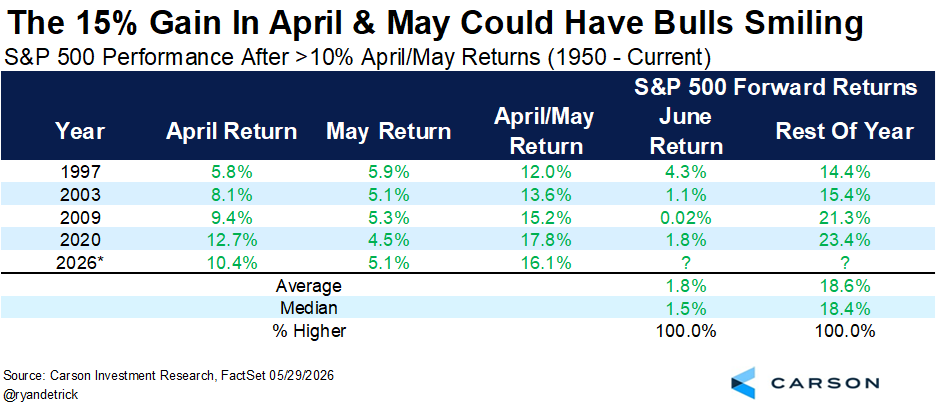
  • 📈 A Very Good April & May – “This was the second-best April/May return [for the S&P 500] ever [+16.1%], with only the 17.8% rally in 2020 coming in better.
  • The S&P 500 has gained double digits over these two months only four times, and the June that followed was never lower. In fact, the rest of the year was always up at least 14%.”  — Ryan Detrick
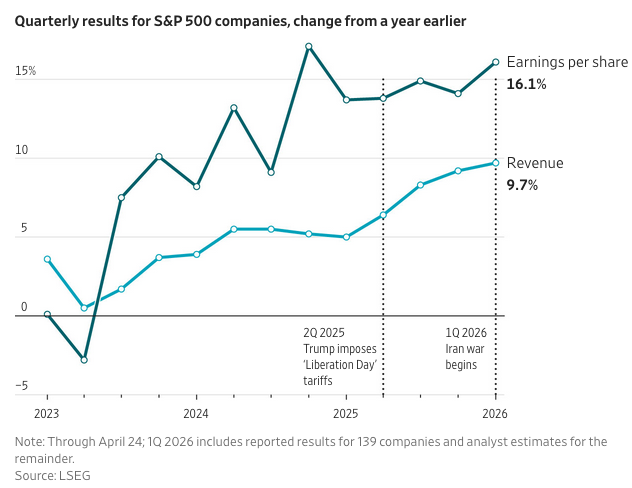
  • 💪 Strong Fundamentals – “the biggest U.S. public companies are seeing profit and revenue surge. Year-over-year growth in earnings per share is expected to exceed 13% for the sixth quarter running, according to estimates from financial-data firm LSEG. Sales are expected to rise more than in any quarter since the fall of 2022.” — Theo Francis, The Wall Street Journal
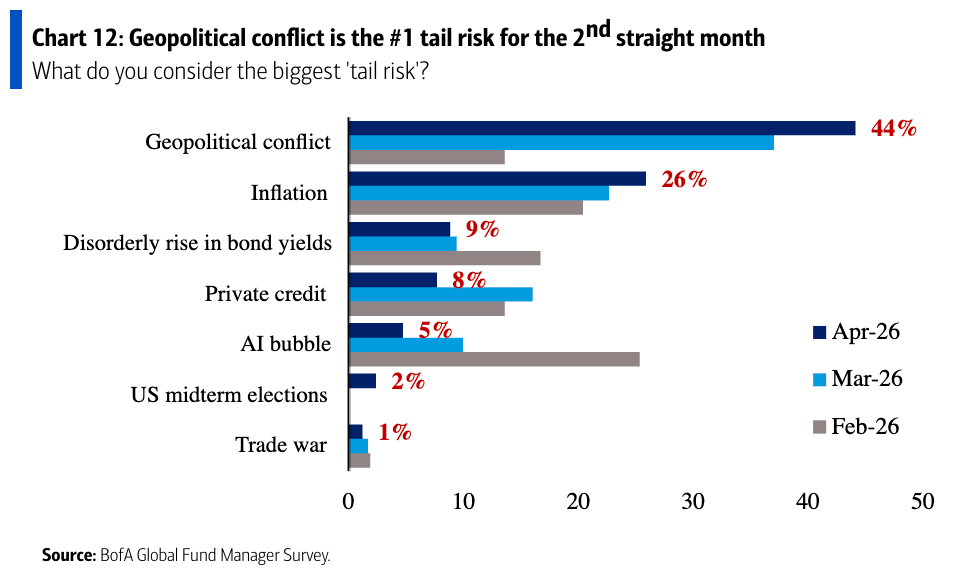
  • 😬 Top Concerns – The chart below is from Bank of America’s Global Fund Manager Survey.
  • What stood out to me is how the “AI Bubble” fear has dropped a ton since just February.
  • “Investors and traders not talking about a risk suggests that the risk isn’t priced into markets. That means when the risk materializes, volatility is more likely to spike with prices potentially overshooting to the downside.” — Sam Ro
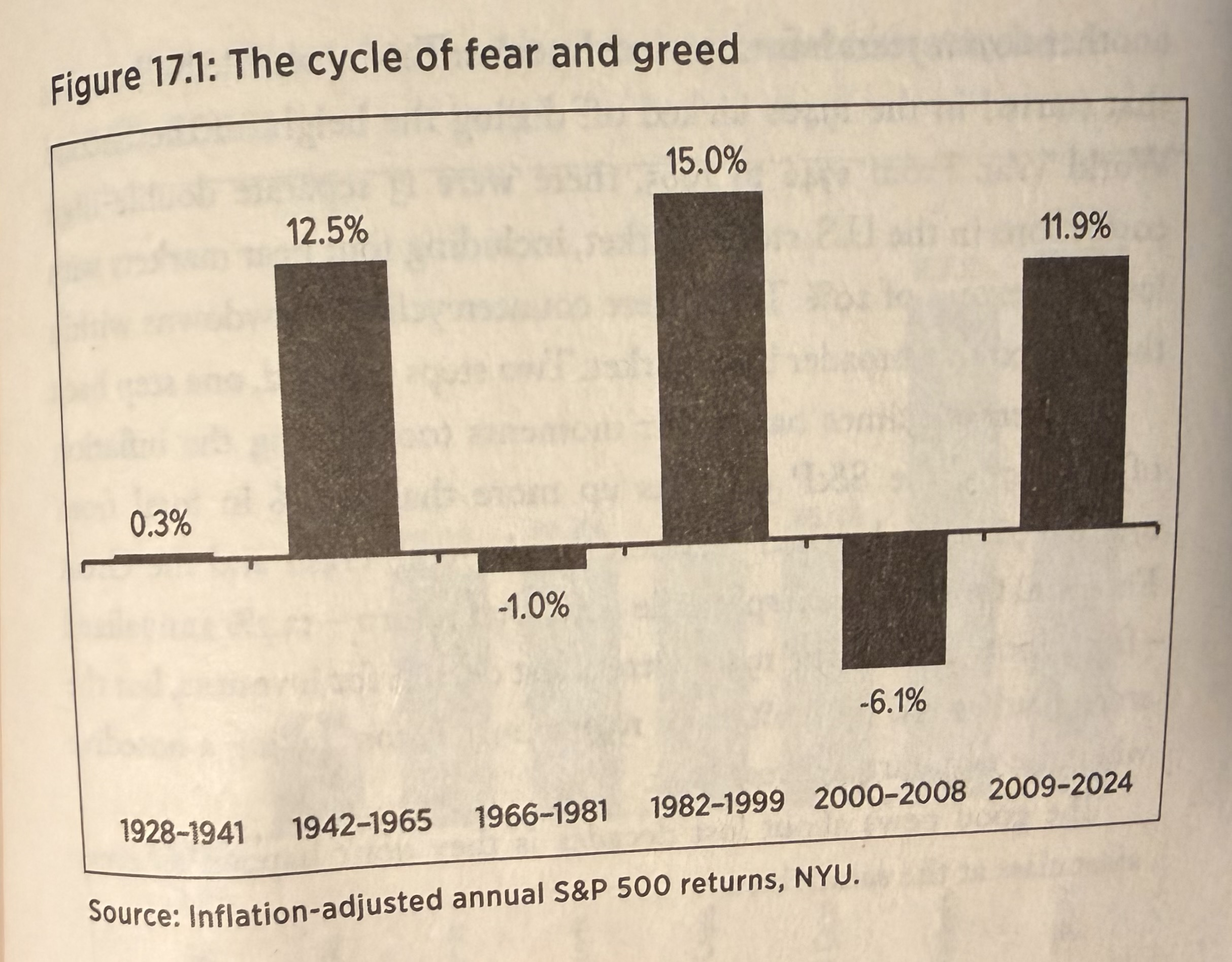
  • 💵 Investing Through Good Times and Bad – The chart below is from Ben Carlson’s new book, Risk & Reward. It shows the annualized returns of the S&P 500 across several hand-picked eras, ranging from long stretches of strong performance to extended periods of poor or flat (inflation-adjusted) returns.♾️ Thinking of Changing Your Portfolio/Investment Approach?
  • I’m used to seeing stock returns grouped by decade, or summarized as long-term annual averages. But changing the start and end dates tells a different story. It highlights how the market can spend many years rewarding investors, and many years testing their patience with poor returns.
  • A few caveats: This is only the S&P 500, not the entire stock market. The periods are also chosen with hindsight, so they’re useful for illustration, not prediction.
  • The most recent period, 2009–2024, has obviously been one of the good times. The hard part is that nobody knows whether we’re still in the middle of it or near the end. This could keep going for another decade, or 2026 could be the year things change.
  • The uncertainty is the lesson. Long-term investing does not feel like one smooth, up 10% per year ride. It’s a series of very different times, and your returns and experience depends a lot on when you start, and whether you can stick with your investment plan through the good times and bad.
  • “All investments center around beliefs about what will transpire in the future. No one really knows what will happen tomorrow, next month, or next year. The most catastrophic disruptions are those that we never saw coming. All those events tend to wash out over multiple decades.
  • The secret to long-term investment success comes down to tapping into that long-term economic growth in the most cost-effective way possible. It also requires staying put when the inevitable downturns unfold.” — Daniel Sotiroff, Morningstar
Economy / Interest Rates
  • 💳 People Are Still Spending – “Overall consumer spending appears robust. American Express reported cardholder spending was up 9% in the first quarter, to a three-year high.”
  • Rather, investors should be asking why the outlook for monetary policy is shifting. If the Fed is getting more hawkish [meaning interest rates would move up] because the economy is stronger than previously expected, that’s not obviously bad for stocks.” — Sam Ro
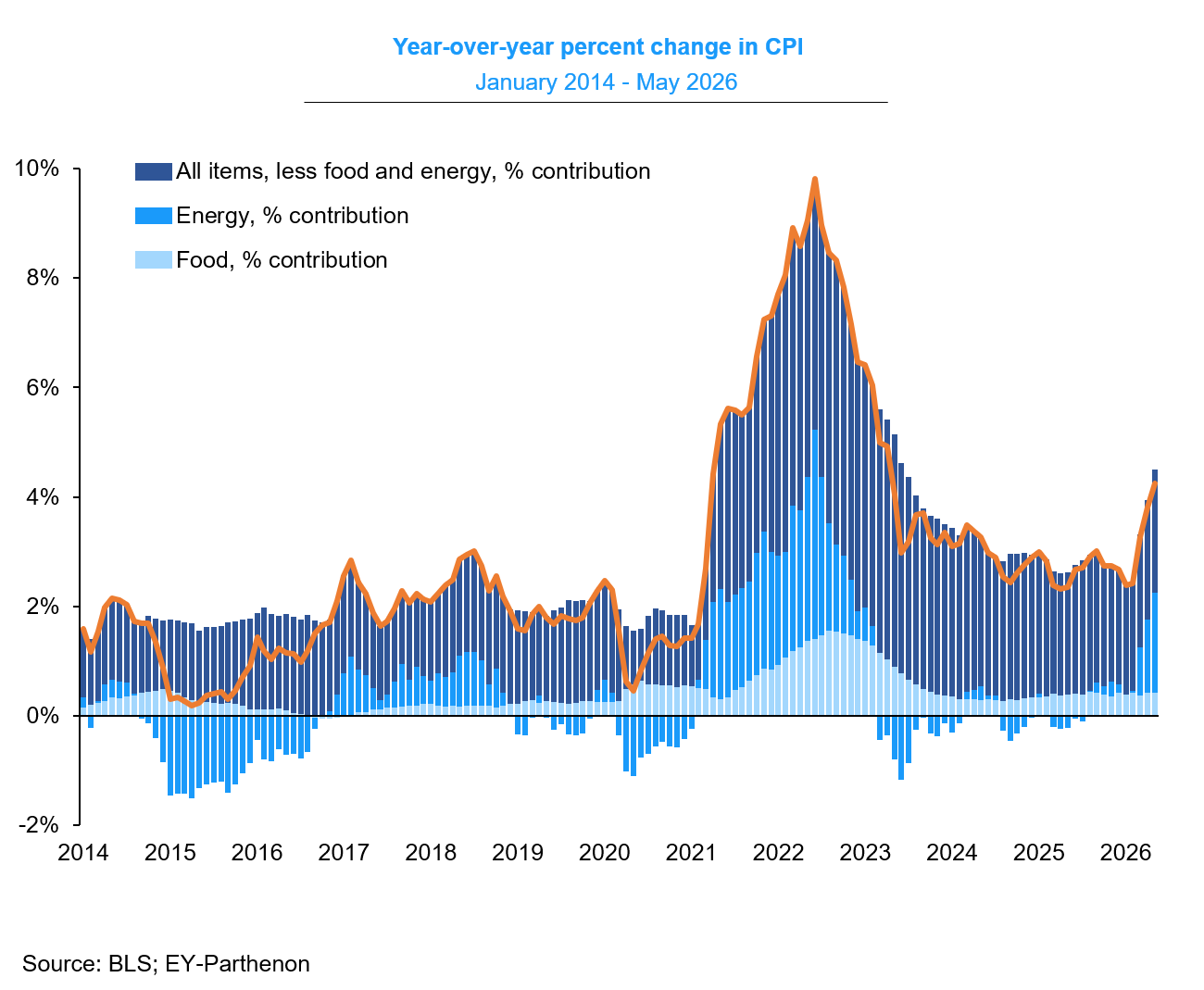
  •  💸 Inflation Increasing – The Consumer Price Index (CPI) increased 4.2% year-over-year in May, up from 3.8% the month prior, as energy prices surged. Excluding food and energy prices, what’s known as “core CPI” was up 2.9%.🏦 On The Direction of Interest Rates – “…whether the Fed cuts or hikes rates is not the right question for investors.
  • “At some point, whether it’s a year from now or 2-3 years from now, the Fed will realize that inflation has run too high for too long and will have to be even more aggressive to get inflation back to target.
  • “The current episode could end up being similar to what we saw in the 1970s and into the early 1980s. A relatively easy Fed looked past elevated inflation, but then Fed Chair Paul Volcker came in and raised rates to over 15% to ultimately crush inflation, in the process sending the economy into a big recession. That doesn’t imply we’ll see interest rates rise to 10% or more, like in the 1980s, but even raising rates to 5-6% from this point will be quite painful.” — Sonu Varghese, Carson Group
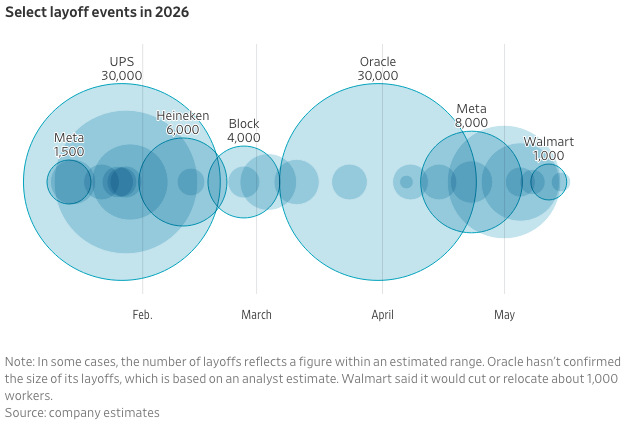
  • 🧑‍💻 Layoffs – “The overall layoff rate (layoffs as a percent of the workforce) remains at a historically low level of 1.2%. Something useful to keep in mind when you see news headlines about 10,000-30,000 planned layoffs across a few companies—the US economy sees about 1.8-1.9 million layoffs PER MONTH.” — Sonu Varghese, Carson Group
  • “Tech has been hardest-hit, with firms letting go of more than 123,000 employees so far this year, up 66% over the same period in 2025.” — The Wall Street Journal
  • 🤖 Will AI Take Everyone’s Job? – “The debate around AI often tilts toward extremes, from those predicting imminent mass unemployment on one end, to those dismissing AI as an over hyped bubble on the other. Neither view is likely to be correct.
  • AI will reshape the labor market, but the process is probably uneven, gradual, and highly sector-specific. The interesting questions are not whether jobs will be lost, but where, how quickly, and whether new demand emerges to replace them. In that sense, AI is less a story about the end of work and more a story about the reallocation of it.” — Robert Bittencourt, Apollo
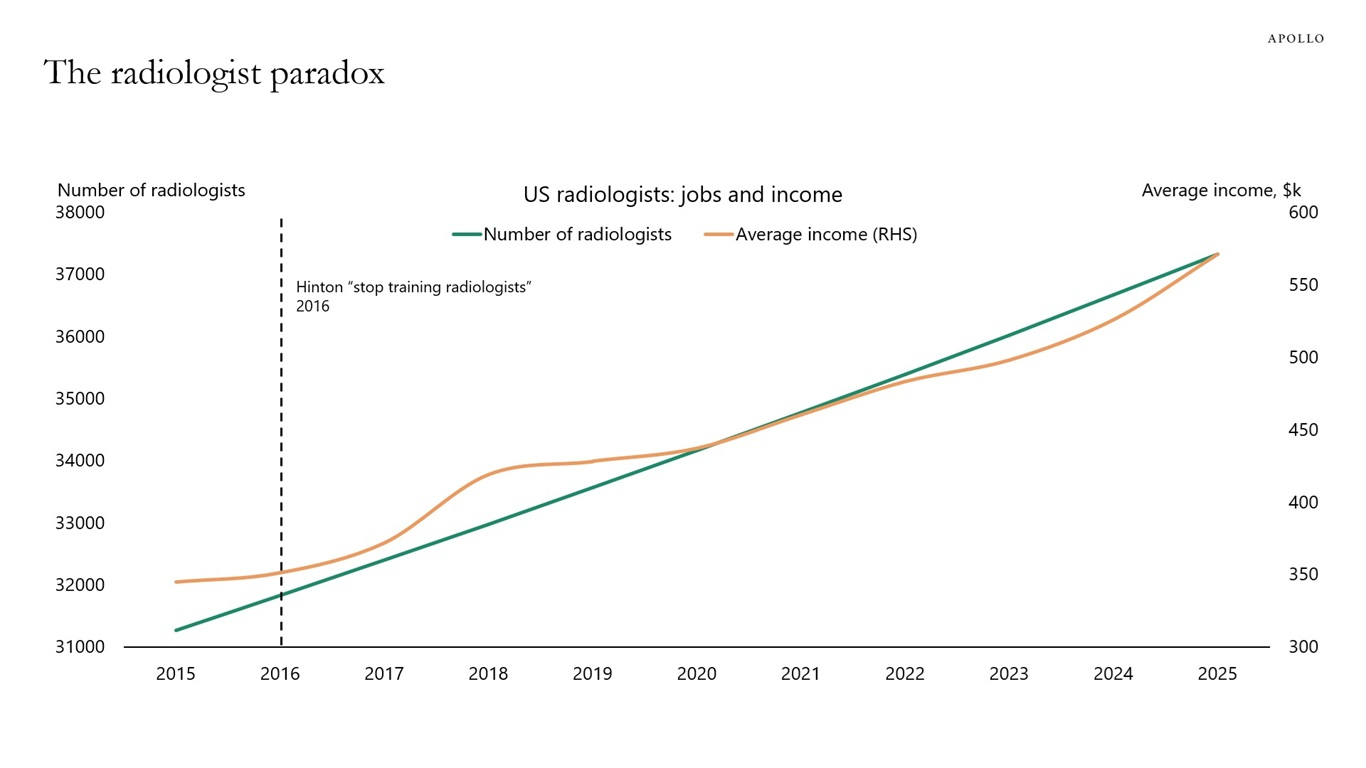
  • If you’re interested in this topic, I highly recommend the article linked above, as well as this article from Torsten Slok, also at Apollo. His main point:
  • “When technology makes a task more efficient, total consumption of that task increases rather than decreases, because lower costs expand demand.” The examples of  radiologists, call centers, and travel agents, is worth thinking about.
Quote of the Month

“You’re only worth what you can write a check for tomorrow.”

– Paul Tudor Jones’ Grandfather (from this excellent interview)

I hope you found these interesting.

As always, please reach out if you have any questions or would like to connect.
April’s Top Personal Finance News

April’s Top Personal Finance News

Investing / Stock Market
  • “Let me break down what’s actually happened in the markets. Year to date, the biggest winners [by sector] were industrials, materials, and energy. That made sense — war in the Middle East, oil prices surge, and energy stocks move higher.
  • On March 30, we hit the market bottom. Since then, it’s completely reversed. Energy is down 11%. Meanwhile, financials are up 8%, communication services up 10%, tech up 21%.
  • So what happened? For weeks, investors were doing what you’d expect. They were pricing in the risk of the Iran war. Then something switched. I call it timeline fatigue. The Iran story kept producing plot points with no resolution. Ceasefire, then no ceasefire. Blockade, then no blockade. Trump says negotiations are going somewhere, then they don’t. At a certain point, investors just gave up trying to interpret the headlines.
  • When investors stopped looking at the geopolitics, they looked at the fundamentals. Earnings are strong, guidance is strong. Microsoft and Nvidia are trading at some of their lowest forward multiples in years. Suddenly the math was simple: Big Tech is executing, multiples are attractive, let’s buy.”  — Ed Elson
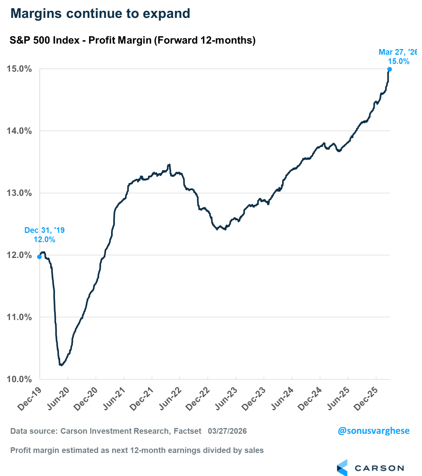
  • It is hard to get overly bearish when both earnings and profit margins are hitting new highs.” — Ryan Detrick
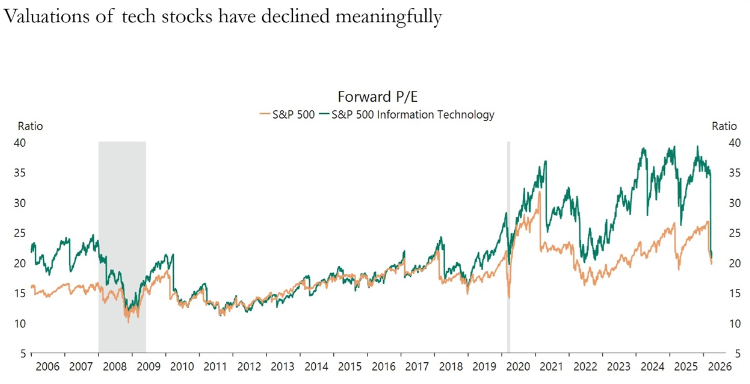
  • Tech Valuations Have Gotten Cheaper – The chart below is worth a look. It compares the forward looking price-to-earnings (P/E) ratios of the S&P 500 as a whole, versus  S&P 500 Information Technology sector.
  • Forward P/E is simply a way of valuing stocks based on their expected future earnings. It tells you how much investors are willing to pay today for each dollar of anticipated profits.
  • As of April 11th, tech valuations have dropped from 40x to 20x, levels last seen before the AI boom began.
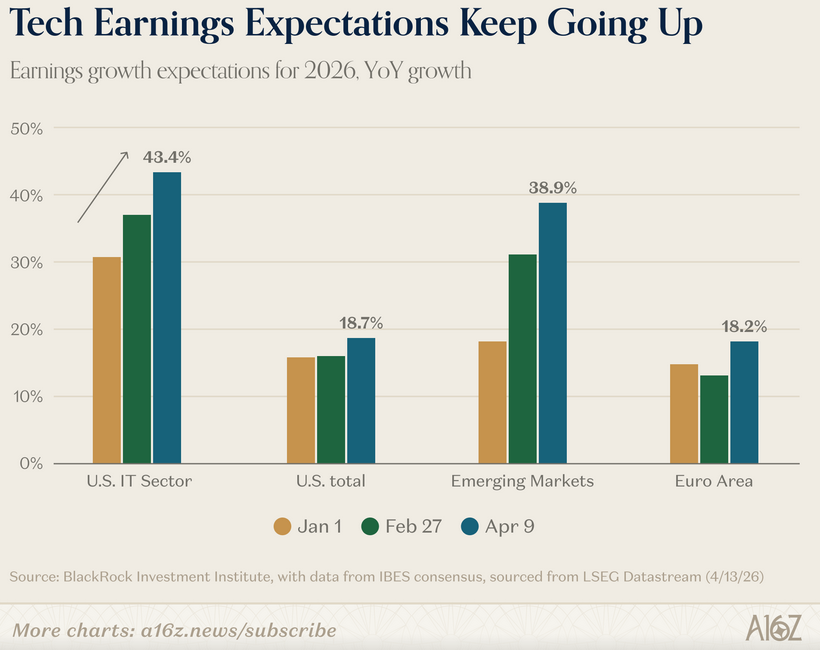
  • Expectations for Tech Are High – “BlackRock’s data shows growth expectation for the US IT sector rising from 31% at the start of the year all the way to 43.4% as of April 9.
  • The broader US market, by comparison, is sitting at mere 18.7%….it’s a very strange thing to have dramatically rising earnings expectations, while at the same time, dramatically falling premiums for those earnings.” — A16Z
  • Jason Zweig from The Wall Street Journal said it best:
  • “I want to recommend a quirky, metaphorical way of thinking about investing when uncertainty is this high.
  • You should think about overhauling your portfolio the way people should—but often don’t—decide about adding tattoos or body piercings.
  • If you get a stud in your navel or a little tattoo on your ankle, you aren’t likely to look back later and kick yourself. If, however, you get a jumbo ring in your nose, or “I Love Mike” or “Lisa and Me 4Eva” inked across your entire chest or back, you might end up wondering what on earth you were thinking—and unable to undo it without some discomfort.
  • Big, sudden portfolio changes are like that: easy to put in place and hard to reverse. Whatever you do if this war worsens, you should avoid doing anything that can’t be easily and cheaply undone.”
  • There’s nothing inherently wrong with adjusting your investments to be more conservative or more aggressive. But one of the key benefits of working with an advisor is having that conversation thoughtfully and upfront. That way, your portfolio is aligned with your risk tolerance and positioned to generate the returns you need to reach your long-term goals.
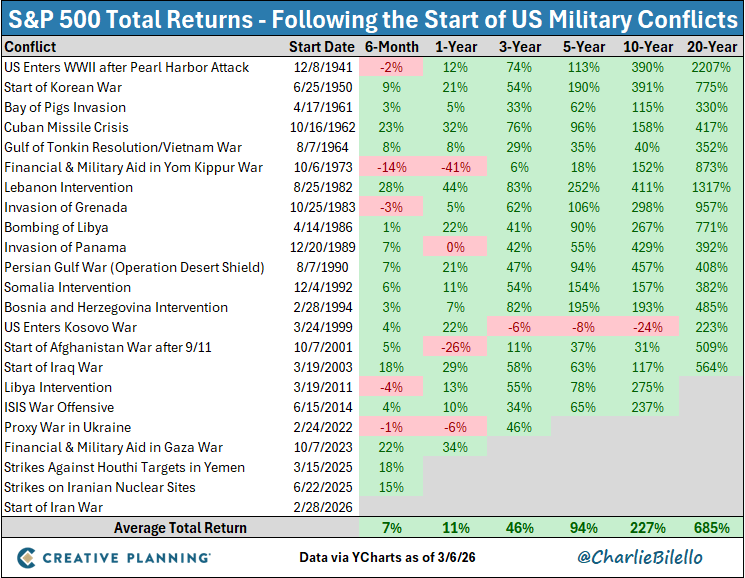
  • 📱 US Stock Returns During Past Military Conflicts – “The best we can say looking at military conflicts in the past is that with the passage of time the stock market has tended to rise, and the more time that has passed, the more it has risen.
  • That’s true for two reasons: a) all wars eventually come to an end, and b) the economy and earnings, even if impaired in the short run, still tend to grow in the long run in spite of these conflicts.” — Charlie Bilello
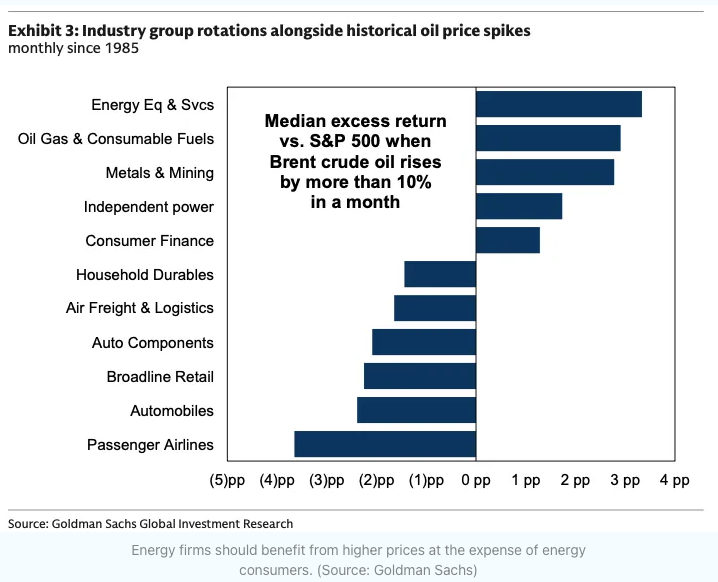
  • What Stocks Do Well When Oil Rises? – “Unless you’re great at predicting the direction of energy prices, holding a broadly diversified portfolio of stocks has been the move, especially if you’re not a fan of volatility.” — Sam Ro
Work, Life
  • $ Crazy Stat re: Online Advertising – “Google is set to lose its crown as the biggest seller of digital ads: this year Meta will overtake it with ad revenue of $243bn, forecasts eMarketer, a research firm.” — The Economist
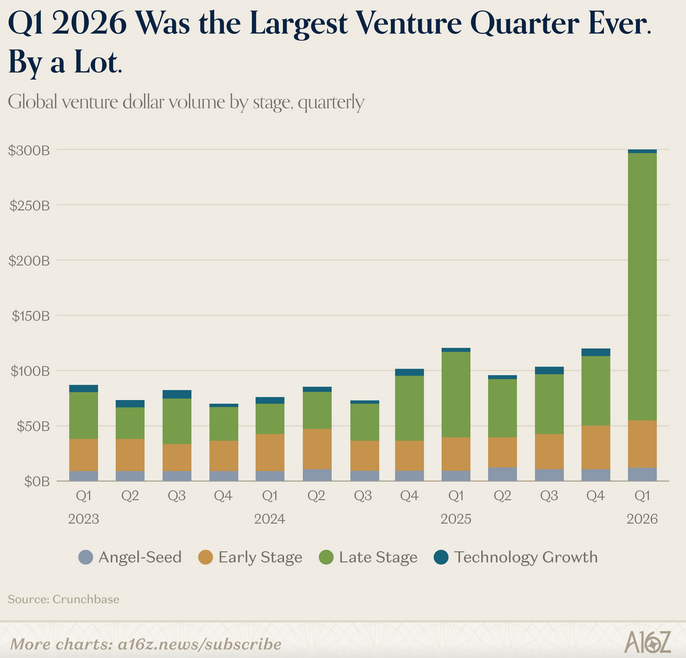
  • 💰 Most Venture Capital Invested, Ever – “Q1 2026 was, by a wide margin, the largest quarter for venture investment ever recorded. Crunchbase data shows $300 billion poured into roughly 6,000 startups globally, up 150%+ both quarter over quarter and year over year.” 
  • The vast majority of this, ~80%, went to AI companies. Like all venture investments, many will fizzle out, but a handful will likely have a big impact.
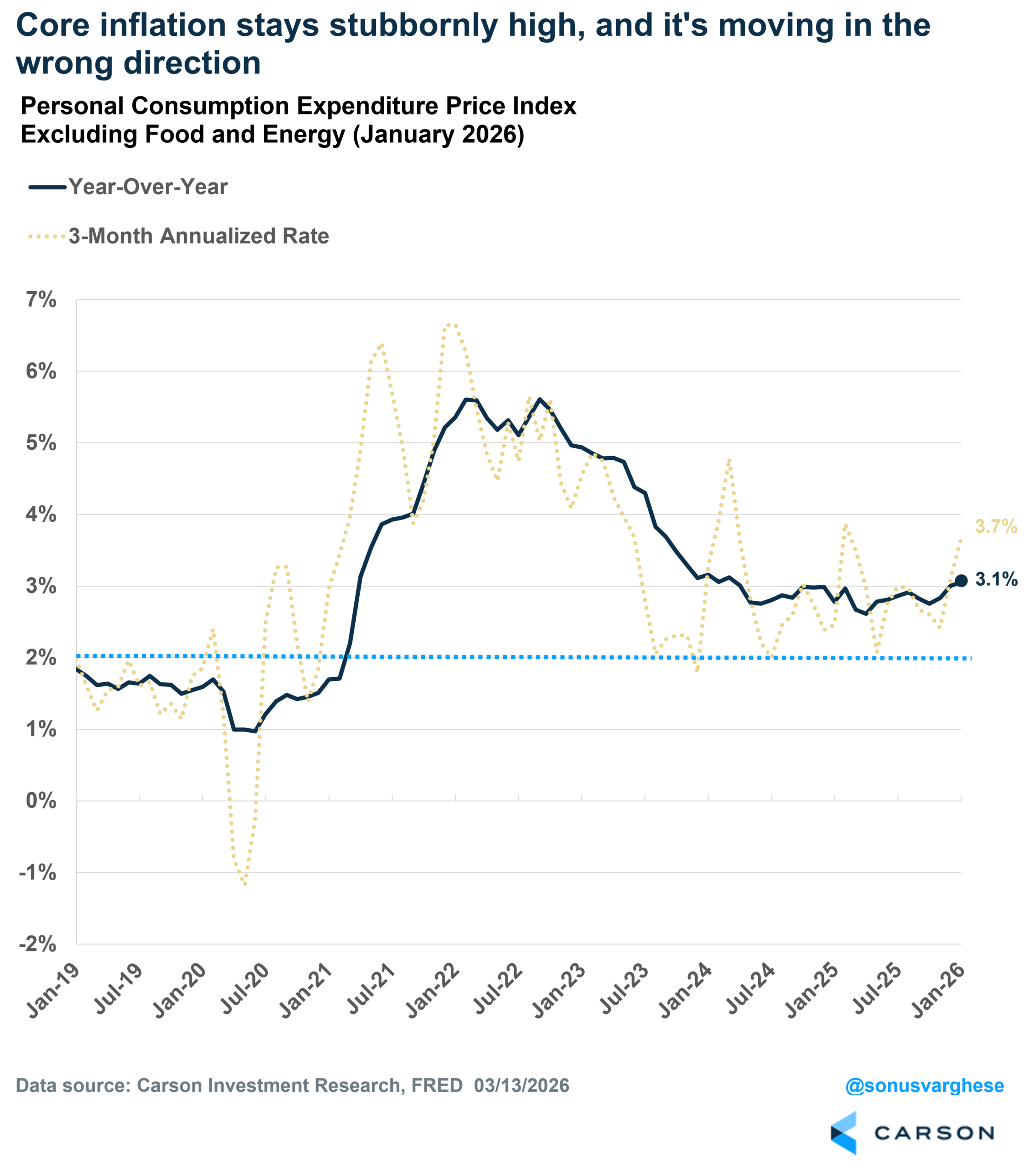
  • ↗️ Inflation May Be Headed Back Up – The inflation picture was not looking great prior to the Iran war. It could get worse. This is certainly something to keep an eye on.

Quote of the Month

“If your work is unfulfilling, the money will be too.”

– Jerry Seinfeld

I hope you found these interesting.

As always, please reach out if you have any questions or would like to connect.
February’s Top Personal Finance News

February’s Top Personal Finance News

So far this year the US stock market is almost flat, down 0.29%, with international markets up about 4.6%.

The near-term outlook for the economy and stock market includes several encouraging signs for growth and corporate earnings, along with a few warning signals that could develop into larger issues.

On the positive side:

  • The US economy continues to grow.
    One notable caveat: capital spending by the tech sector accounted for roughly 40–45% of US GDP growth over the past three quarters. This is an increase from less than 5% in the first three quarters of 2023.
  • Interest rates may decline.
    The Federal Reserve is expected to drop rates in 2026, which would lower borrowing costs. However, expectations for those cuts have recently softened as inflation pressures (particularly energy prices) have increased following the situation in Iran.
  • Consumer spending (a big part of the US economy) remains resilient.

On the negative side:

  • Geopolitical conflict could push inflation higher.
    Wars tend to be inflationary, particularly when they involve the Middle East and affect oil markets. Already the price of crude oil up ~50% since the start of the year. 
    • From Carson Research: “February’s Purchasing Managers Index has a ‘prices’ section, which increased by 11.5 points last month to 70.5. This was the highest reading since June, 2022 (when inflation hit the highest level in 40+ years).”
    • This may be an early sign that inflation pressures are building again. A move back above 3.5 – 4% inflation would present challenges for both households and the Federal Reserve.
  • Geopolitical risks may persist longer than expected.
    Conflicts often extend beyond initial timelines and can create unintended economic consequences.
  • AI bubble/productivity worries.
    One question is whether the massive capital spending by large technology companies will translate into productivity gains across the broader economy. At the same time, some investors are concerned about the high valuations of AI companies.
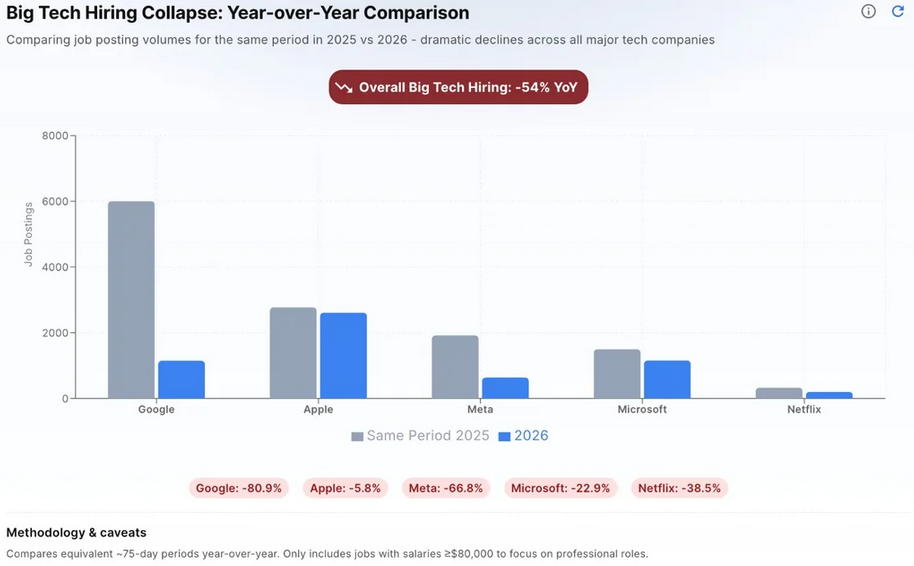
  • The labor market has begun to soften.
    Hiring has slowed in some sectors, particularly technology (see chart below).

A final thought
Today’s environment reflects a balance: on the one hand you have solid economic growth and strong corporate profits, with inflation risks and geopolitical uncertainty on the other.

Markets are continually “reading the tea leaves,” trying to predict what might happen next. The goal as a long-term investor, however, is not to predict every short-term development. It is to remain properly diversified and invested in a portfolio with an appropriate level of risk; one you can stick with through both good times and bad while still helping you accomplish your financial goals.

Thanks for reading. 

Investing / Stock Market
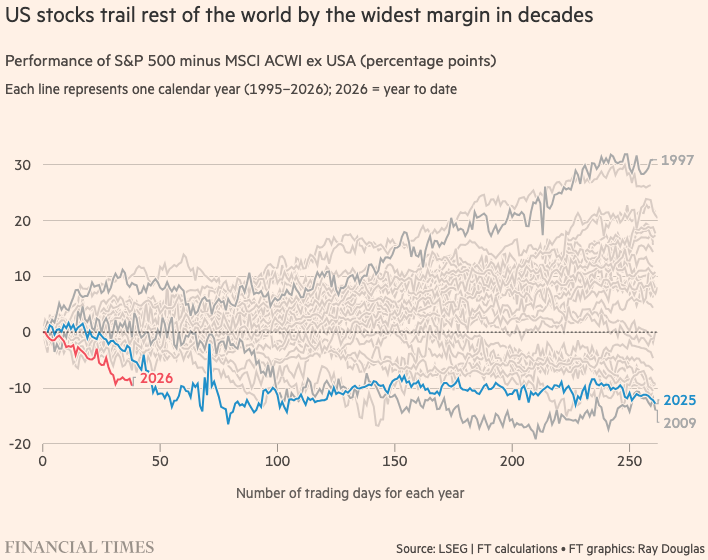
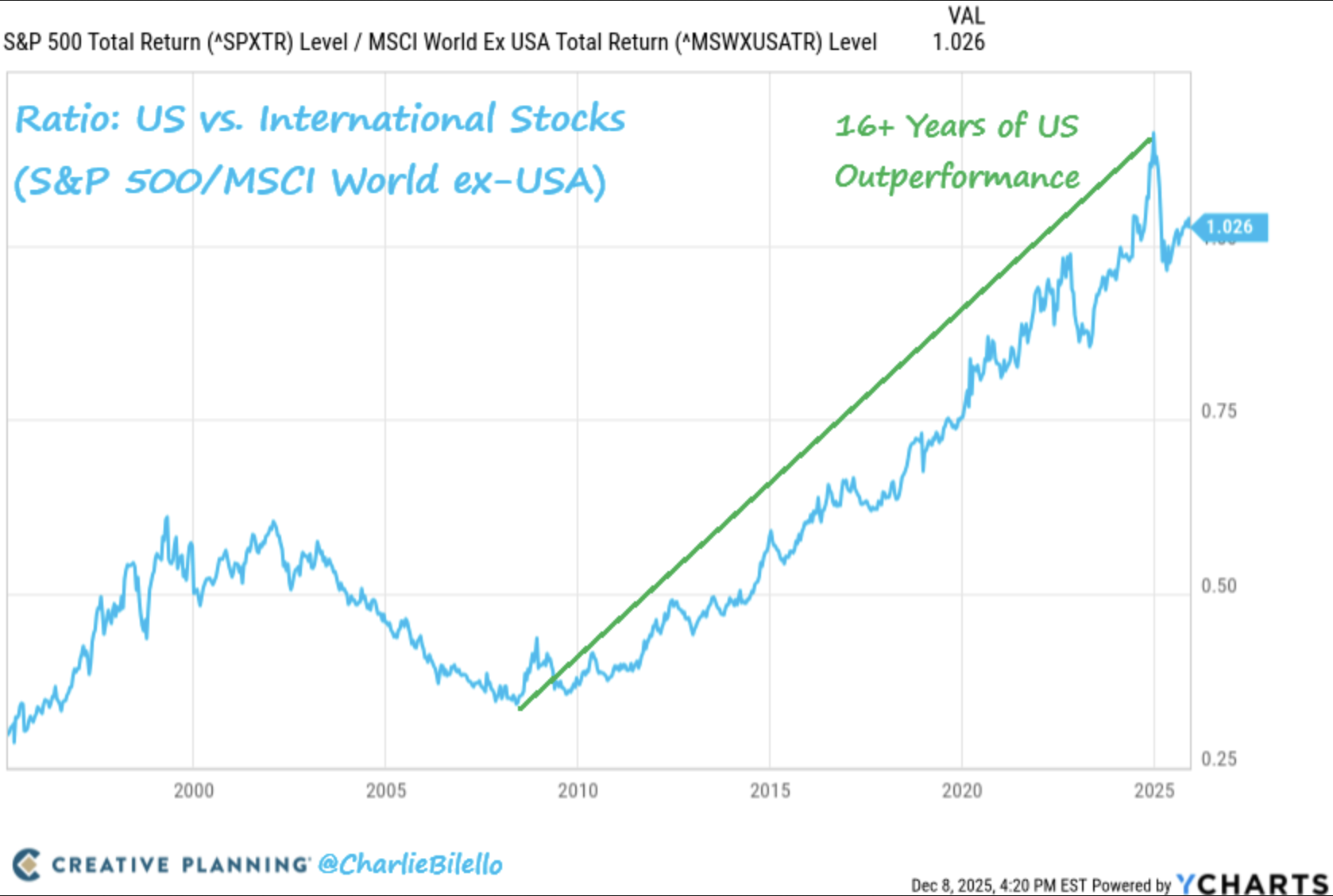
  • “From 2009 to 2024, the S&P 500 generated 3.6x the return of the MSCI World ex-US Index. In 2025 the US finally underperformed most equity markets.” — Michael Cembalest
  • This reminds me of another remarkable data point from Hendrik Bessembinder, a professor at Arizona State University.
  • He found that among all publicly traded American companies from 1925 to 2023, most had negative lifetime returns. Less than 3% of stocks accounted for the entire increase in shareholder wealth during that time.
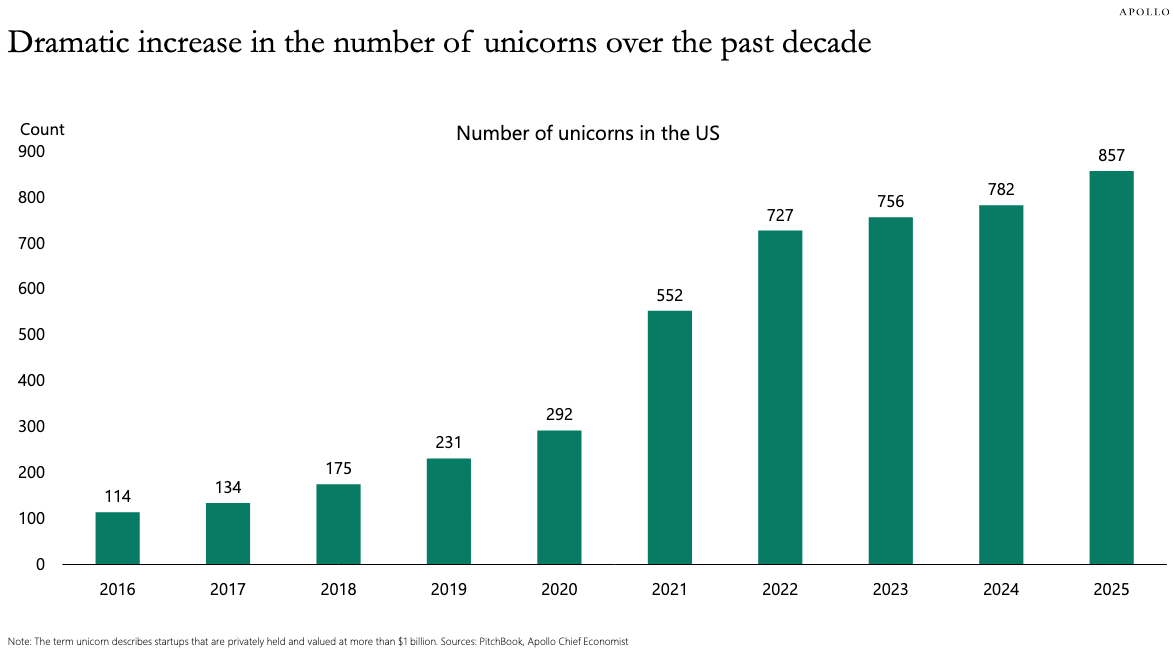
  • Record Number of Unicorns – The number of private companies valued at over $1 billion has increased dramatically over the past decade.

Real Estate

Life / Work
  • 🚩 A Red Flag for Fraud – If someone contacts you claiming to help stop fraudulent activity on your bank/credit/debit card account, that itself is a red flag.
  • Do not respond or provide information. Instead, call the financial institution directly via their official phone number to verify whether the outreach was legitimate.
  • 📲 IRS Fraud – Many scammers also impersonate the IRS. It’s important to know that the IRS does not initiate contact by email, text, or social media to request personal or financial information.
  • 🏥 Healthcare Costs – Medical costs for employer-sponsored group insurance are expected to increase about 8.5% this year.
  • Tech Employment Trending Down – “Brutal numbers for the US tech sector…employment decreased by 12k last month and is down 57k over the last year.”
  • “That’s now nearly as bad as the worst of the 2024 tech-cession, and significantly worse than either the 2008 or 2020 recessions.” — Joseph Politano
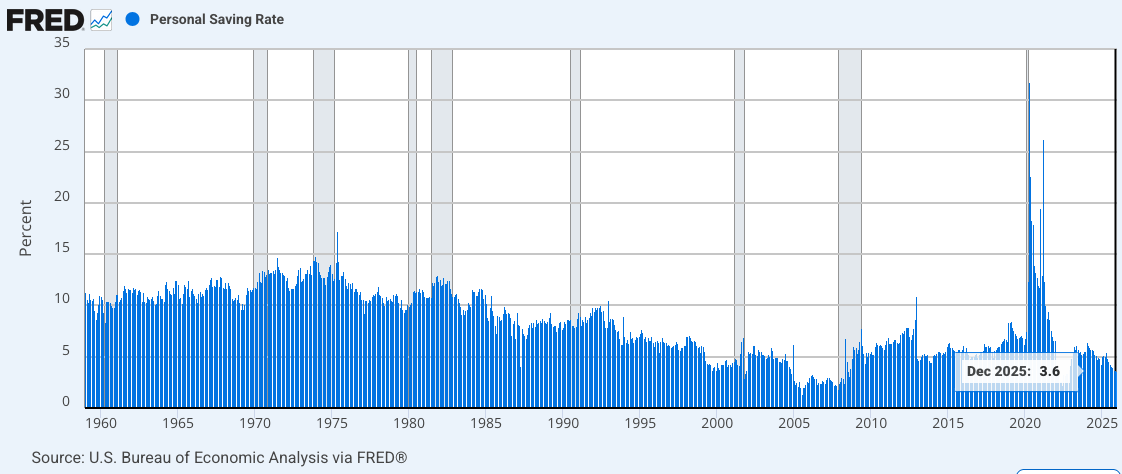
  • 🏦 Most Americans Don’t Save Much – In the US, the savings rate is approximately 3.6%. This is very low compared to history. If possible, save 10 – 20% of your income.

Quote of the Month

“Even if you are wealthy on paper, if you don’t believe it, then it doesn’t matter. You could have $10 million, but if you feel like you need $20 million, then you will always feel poorer than someone with $100,000 who only feels like they need $50,000. A wealthy life isn’t a number, it’s a feeling.”

– Nick Maggiulli

I hope you found these interesting.

As always, please reach out if you have any questions or would like to connect.
Some Thoughts After a Sad Reminder

Some Thoughts After a Sad Reminder

I normally post a new article around the beginning of each month. In January, I didn’t

The reason is a sad one. Shortly after Christmas, my wife and I learned that one of her best friends suffered a heart attack while out to dinner, went into a coma, and passed away two weeks later.

She was 38 years old. A wife. A healthy mother of two. A successful law firm partner. No known heart issues, no warning signs, just…gone. We’re waiting to see if a rare genetic disorder may have been the cause.

We recently returned from her funeral, where we shared stories and grieved together. Those few days sat under a dark cloud of sadness, especially the receptions that were held in her home, which is filled with pictures of better times, alongside her favorite books and art.
This newsletter is usually pretty cut-and-dry: markets, planning ideas, personal finance. But going through that brought up a few thoughts that felt worth sharing. Death is something most of us don’t think about unless we have to. Here’s what has been on my mind:
1. Randomness runs more of our lives than we’d like to admit.
We mostly believe that life unfolds as a tidy story: Cause followed by effect, effort rewarded by outcome. But the simple fact of when and where we are born affects so much: our opportunities, our friends, even our length of days. Death does not always knock politely or follow rules we can understand.

2. We assume “later” is guaranteed.
Because index funds are passively managed, they typically have much lower fees than actively managed mutual funds.

3. Family and close friends matter most.
Watching my wife and her friends drop everything to support each other, travel, and even plan parts of the funeral, was a powerful reminder that relationships are what truly matters.

4. Insurance and estate planning is boring until you need it.
You hope to not even need them. But I’ve seen people pass away without the proper coverage or documentation, and it can make a bad situation much worse.

I’ll be back to more typical market coverage next month, but I wanted to acknowledge the human side of all this while it’s still fresh.

Thanks for reading, and hug your friends/family a little tighter than usual.

Quote of the Month

“Success is being excited to go to work and being excited to come home.”

– Will Ahmed