
Second Quarter Investment Commentary, 2023

Second Quarter Investment Commentary, 2023

Investment returns during the second quarter were good once again. This marks the third straight quarter of positive returns for US and International stocks.

Second Quarter Investment Commentary – Overview

  • Economic Overview
    • Gross Domestic Product (GDP) Revised Higher
    • Inflation Continues to Trend Down
    • Unemployment Rate Remains Low
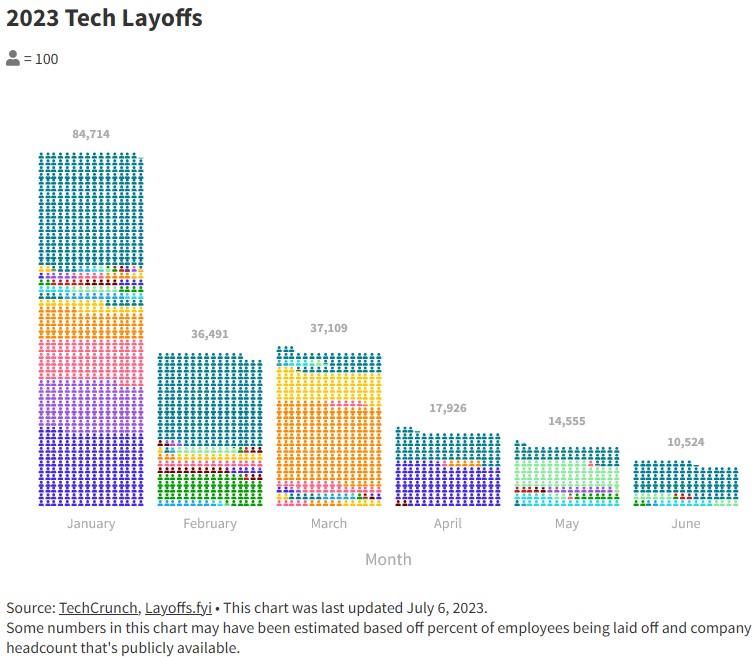
    • Tech Layoffs Lessen
  • US & International Stock & Bond Performance
  • Looking Ahead – Low Volatility This Year

Economic Overview
At the end of last year, many economists forecast a recession in 2023. In fact, 63% of economists surveyed by The Wall Street Journal believe one would happen.

While there is still plenty of time left this year, those predictions seem unlikely, as the US and global economy have done very well:

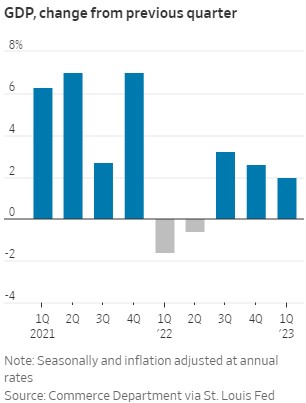
  • US gross domestic product grew at a 2% in Q1 (revised up from 1.3%) (source)
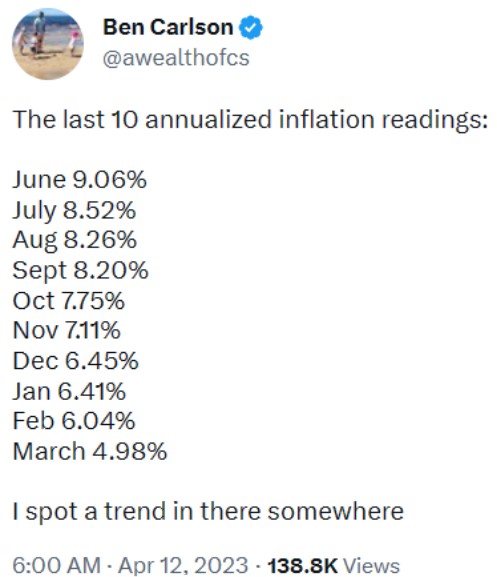
  • Inflation has declined 12 consecutive months, from a peak of 9% in June, 2022, to 3% in June, 2023. 
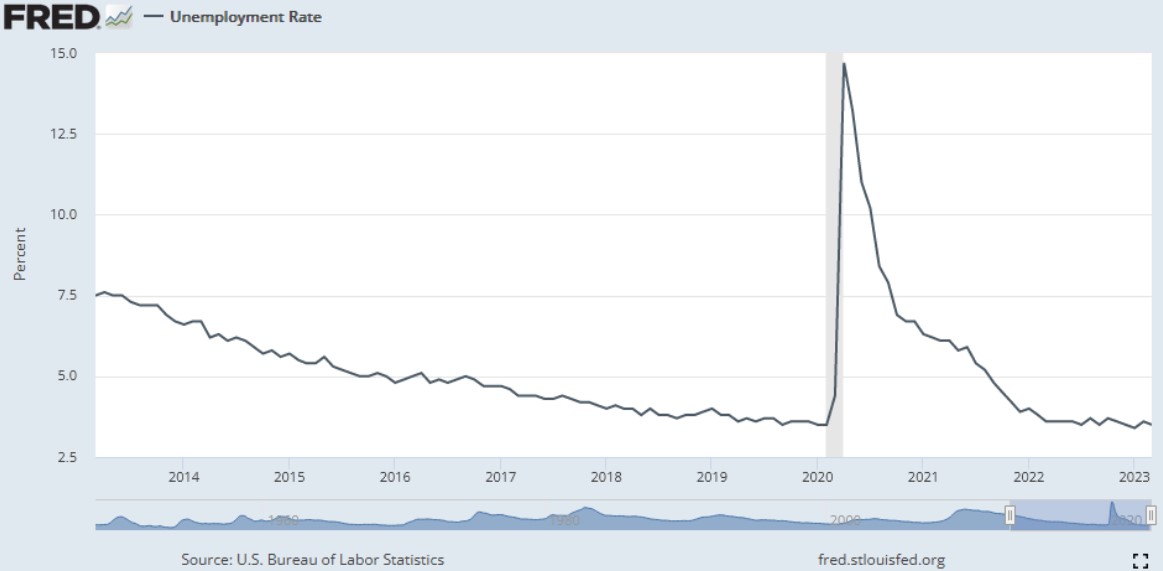
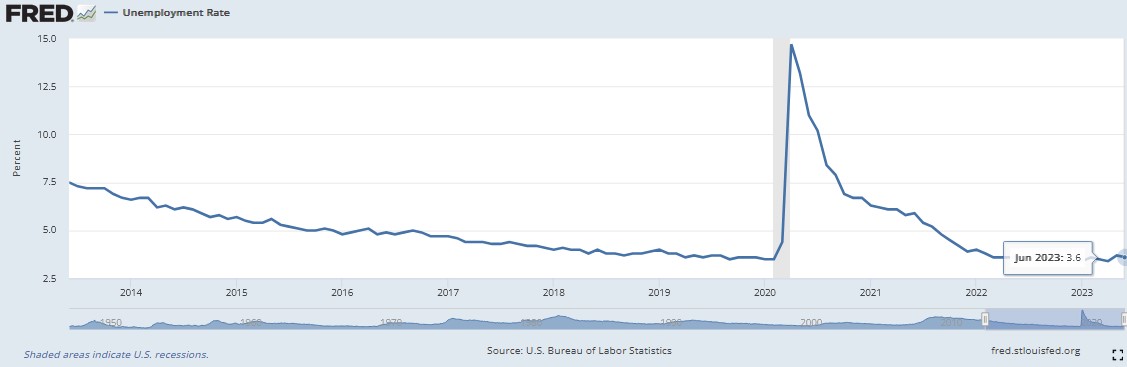
  • Unemployment remains low, at 3.6%, down from a high of 14.7% during the pandemic.
  • Layoffs in tech are on the decline.

Economic risks remain, of course, but investors who stuck with –  or added to – their portfolios have been rewarded.

US Stocks
US stocks rose 8.4% during the second quarter, and are up nearly 19% over the past year:

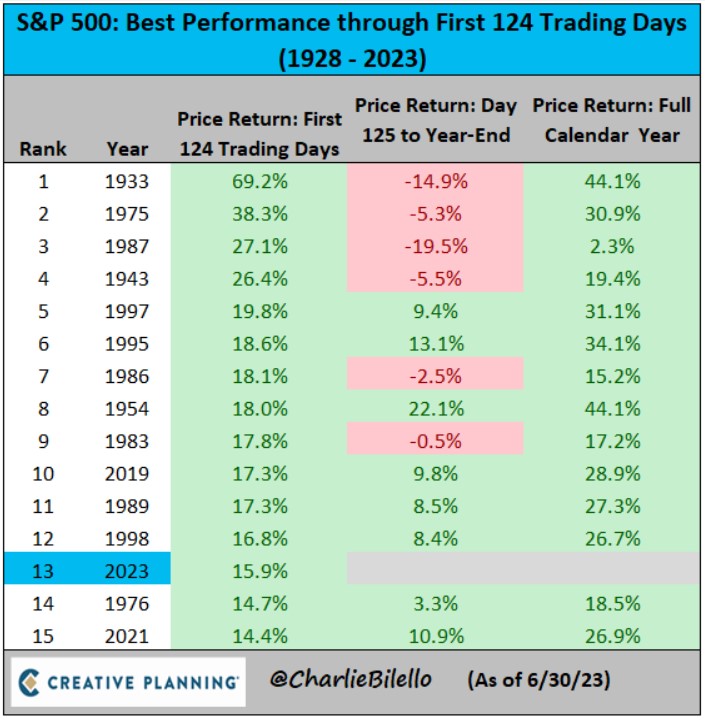
Looking at the S&P 500 (the largest 500 stocks in the US), that index had the 13th best start to a calendar year on record (source):
International Stocks
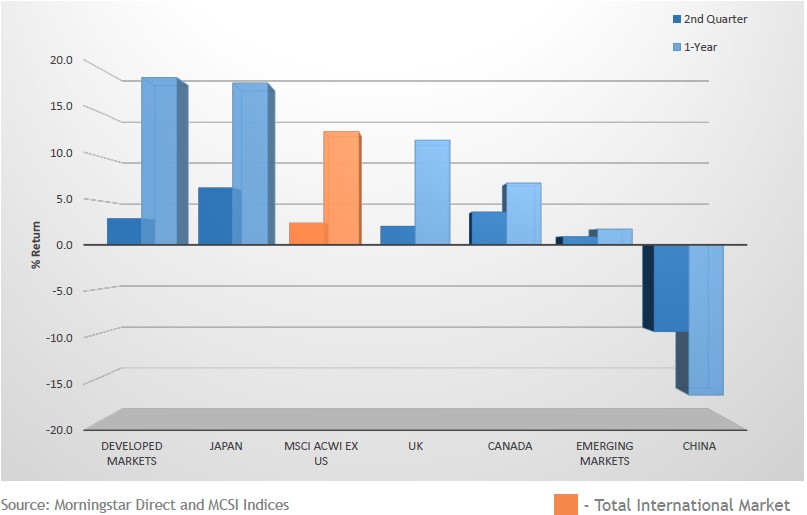
International stocks were up during the quarter, but not as much as the US market.

Over the past year, returns for developed international stocks (countries like Canada, Germany, and Japan) and US stocks have been virtually identical.

Emerging Markets (countries like Brazil, India, and Mexico), weighed heavily by weakness in Chinese stocks, were modestly positive over the quarter and year.
Bonds
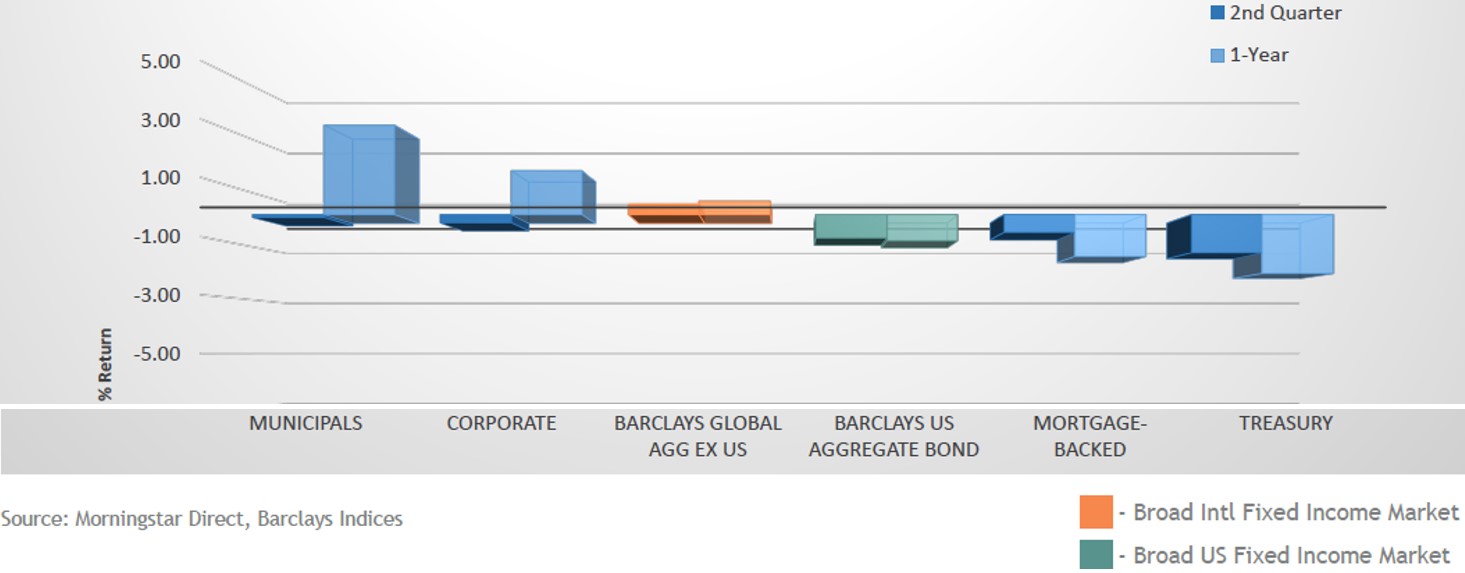
The bond markets were flat to modestly negative for the quarter.

The US bond index, the Bloomberg Barclays Aggregate Bond Index, was down just under 1%.

Overseas, international bonds eked out a small gain.

For investors holding municipal bonds, those have been one of the strongest sectors over the last year.
Looking In The Rear View – Low Volatility in 2023
Despite major geopolitical headlines, bank failures, debt ceiling tensions and more throughout this year, if you feel like things have settled down a little bit and volatility has declined, you’d be right.

The illustration below shows how many days the S&P 500 has moved up or down more than 1% each year:
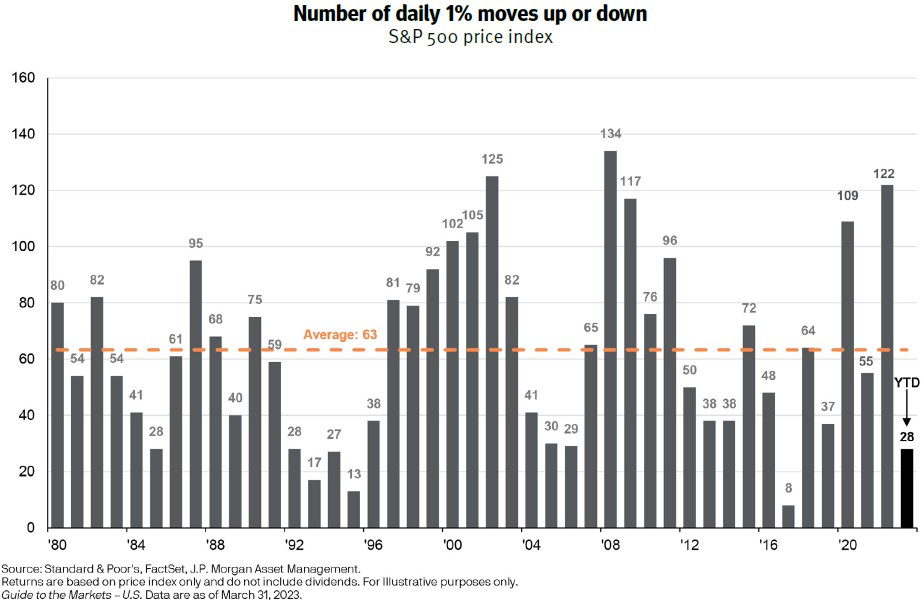
We’re on pace to experience less than half of the number of big daily moves that occurred last year.

Given that we have roughly 250 trading days in a year, in 2022 the market moved by more than 1% nearly every other day.

As always, please reach out if you have any questions or would like to connect.

How Much Can You Give Away without Paying Tax?

How Much Can You Give Away without Paying Tax?

During Memorial Day, many people spend time with their friends and family. With that in mind, I wanted to share a financial tip to those who are considering gifting, or perhaps receiving, financial gifts. I know that there are many misunderstandings about gifting rules, so I hope this helps.

Each year, the government sets a specific amount of money you can give, currently $17,000. This is called the Annual Gift Tax Exclusion, and it allows people to give away money without paying tax or informing the IRS.

This means you can give up to $17,000 to anybody, whether they are a friend or a family member, and do so without tax consequences. If you are married and your spouse also wants to give up to $17,000 to the same person, that’s fine. No one would need to notify the IRS.

Basically, you can give up to $17,000 per year to as many people as you want, all without gift tax liability.

What About Gifts of More Than $17,000?
Let’s say you want to give someone $50,000. Since this is $33,000 more than the annual gift exclusion of $17,000, you – but not the recipient – would need to report this to the IRS when you file your taxes. It’s a simple form.

Many people think that if they give more than $17,000 they will owe tax, but that is not likely the case.

If you give gifts exceeding the annual $17,000 limit, it counts toward your Lifetime Exemption. This is the amount an individual can give over the course of their life – including what you pass on at death – without incurring federal gift tax. That lifetime exemption amount is currently $12.92M per person.

Going back to your $50,000 gift, $33,000 of that would count towards the $12.92M max. That means you’ve used $33,000 of the lifetime exemption, and can “only” give $12,887,000 more before you are subject to that tax.

Exception for Spouses
There is one exception for gifting money to your spouse. You are allowed to give as much to your spouse during your life or at death without tax consequences, as long as your spouse is a U.S. citizen.

If your spouse is not a US citizen, there is an annual gift cap of $175,000 for 2023.

If you have any questions regarding gifting, please reach out.

Thank you and enjoy the weekend!


First Quarter Investment Commentary, 2023

First Quarter Investment Commentary, 2023

Investment returns during the first quarter were positive across the board: stocks and bonds, both domestically and abroad, were all up.

Q1 Investment Commentary – Overview

  • Q1 Economic Overview
    • The Value of Diversification
    • Labor Market Update
    • Inflation Trending Down
  • Q1 Stock & Bond Performance
  • Looking Ahead – Encouraging News on Inflation

Q1 Economic Overview
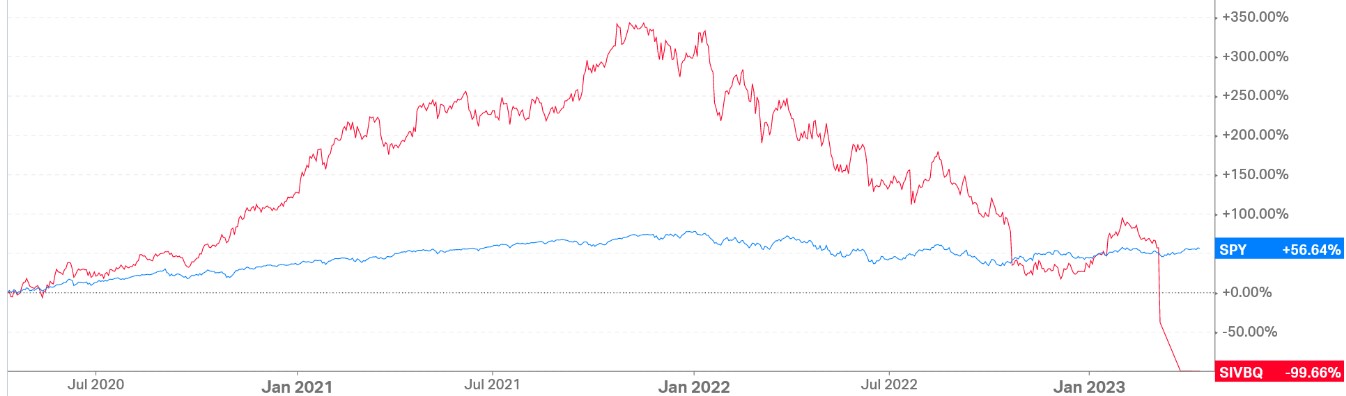
The first quarter gains occurred despite turmoil in the banking sector. With both the failure of Silicon Valley Bank and the collapse of Credit Suisse, it’s understandable that many were pessimistic and/or worried.

These events are a great reminder for why diversification is critical. Below is a screenshot showing the performance of Silicon Valley bank’s stock (in red) versus a diversified US benchmark, the S&P 500 (in blue):

At times, SVB stock was outperforming the US benchmark by more than 4x. Silicon Valley Bank employees receiving company stock must have been happy with these results, but unfortunately anyone that did not sell before the quick collapse lost all their money.

This is why diversification is the #1 rule in investing. It is also a good reminder to reassess how much of your own company stock you are comfortable holding.

Elsewhere in the economy, the labor market remained tight: The US added more than one million jobs, and the unemployment rate remains low at 3.5%:

In other good news, the biggest economic headwind from 2022, inflation, has also been trending down:

5% inflation is higher than we’d like – the target is 2% – but the downward trend is encouraging (more on that at the end of this article). This trend is also occurring around the world.

Taken together, these positive indicators point to momentum in the economy.

US Stocks
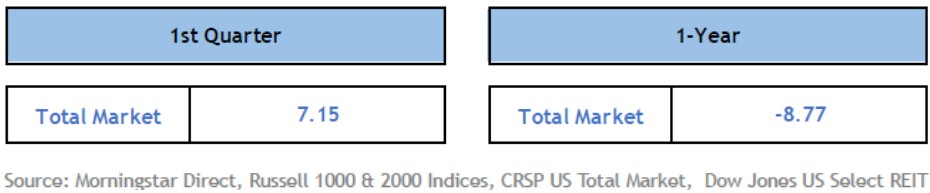
The US stock market returned 7.15% in Q1.

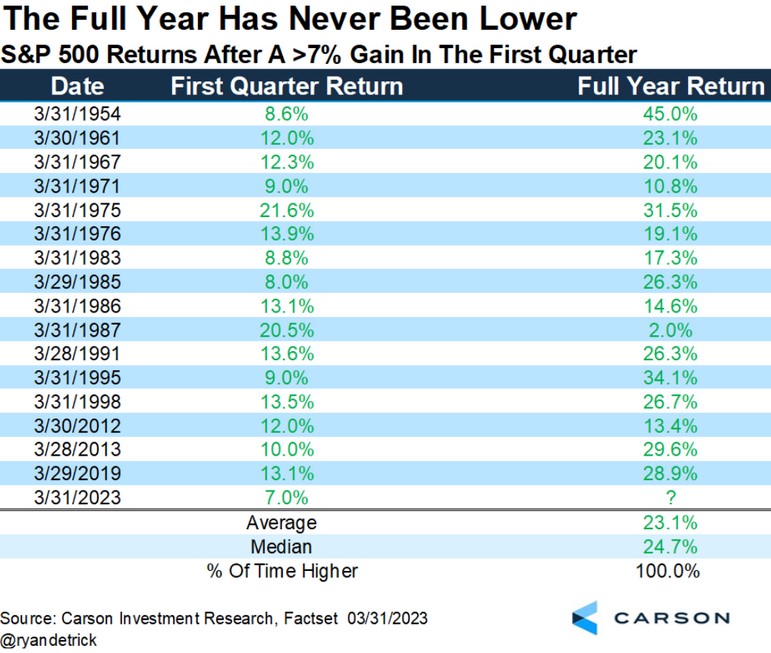
One interesting data point: When the S&P 500 has gained 7% or more during the first quarter (which has happened 16 times since WWII), the year has never been negative:

International Stocks
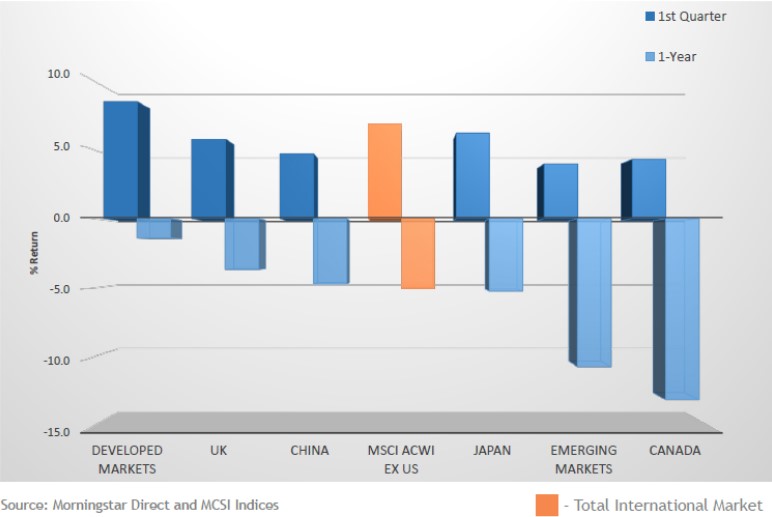
Developed International stocks (countries like Canada, Germany, and Japan) outperformed the US market, up 8.5%.

Emerging Markets (countries like Brazil, India, and Mexico) were up 4%:

If you go back to September 1st, 2022, Developed International stocks are up even more: 28% versus America’s 15%. This is another reminder on the benefit of diversification.

Bonds
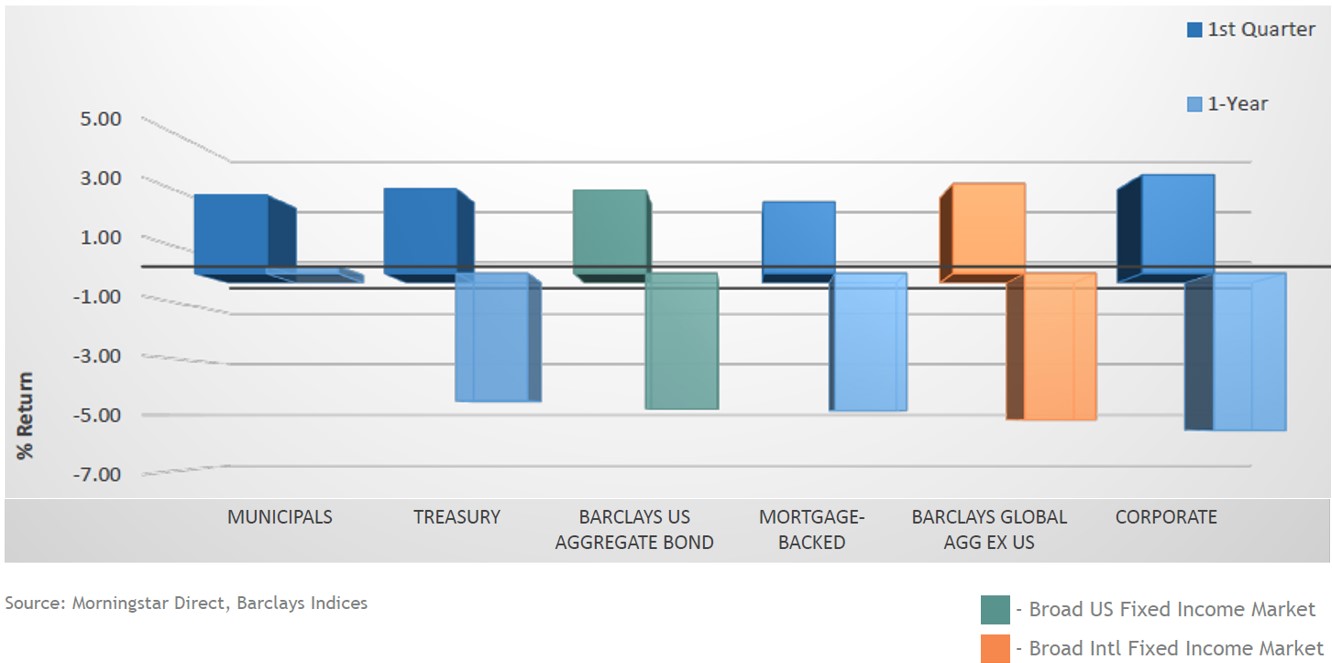
Positive returns were seen across nearly all bond categories. US and international bonds both appreciated roughly 3%.

Looking Ahead – Encouraging News on Inflation
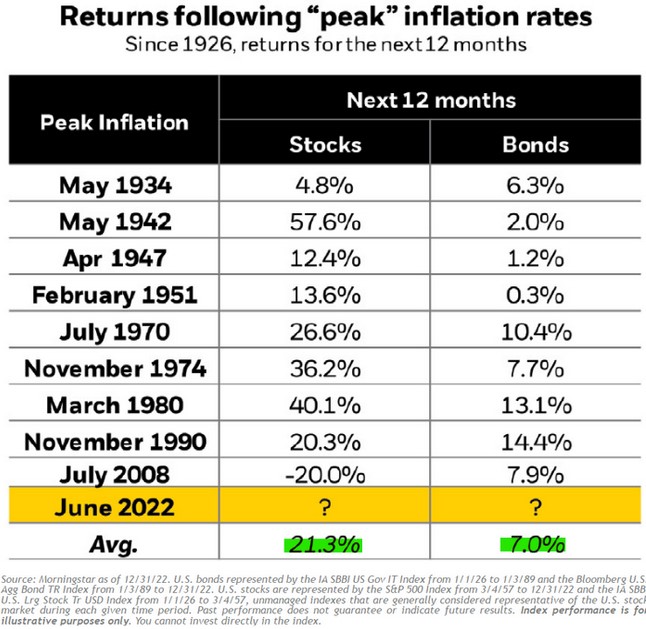
The illustration below shows that returns for stocks and bonds tend to be quite strong after inflation has peaked.

It appears that the US hit that peak back in June of 2022. Since then, the US Stock Market is up about 10% and Bonds are roughly flat:

The message here is about the forward-looking nature of markets. Positive returns tend to arrive well in advance of the data hitting the desired levels.

As always, please reach out if you have any questions or would like to connect.

It Can Pay to Hold Cash

It Can Pay to Hold Cash

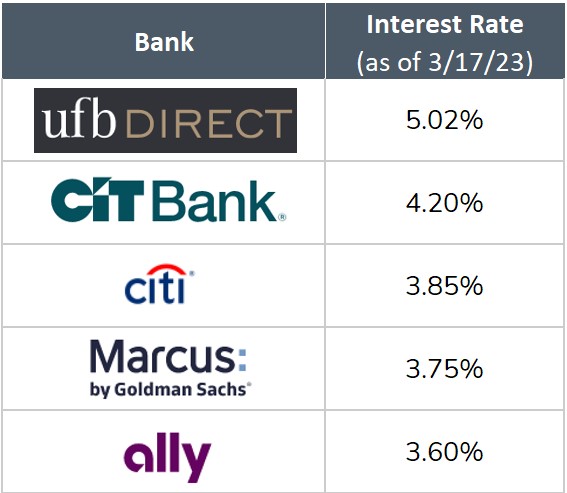
Happy Saint Patrick’s Day! The color of the holiday is green, and with that in mind we wanted to share good news on something else green: cash. Specifically, getting paid by banks through savings account interest rates.

As a result of rising interest rates, some banks now pay 5%:

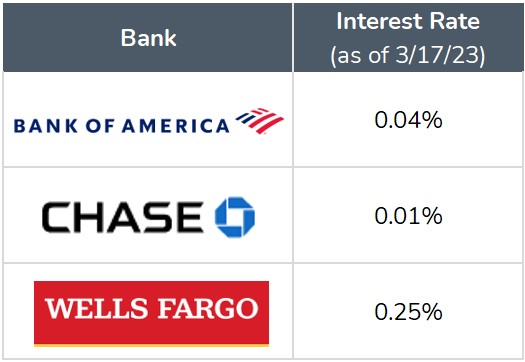
The bad news is that many still pay low interest:

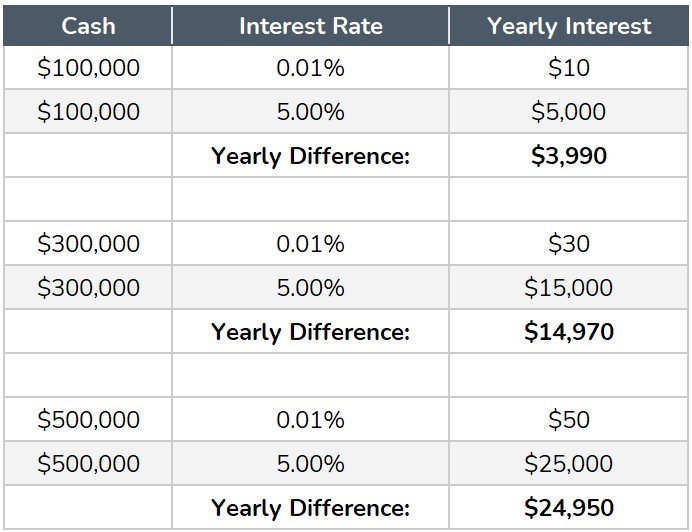
If you have a lot of cash it pays to shop around. The table below highlights the potential difference in interest earned on $100,000, $300,000, and $500,000:

If you do not want the hassle of opening a new bank account, consider a money market fund. These can be bought in an investment account, which most people already have. One example is Schwab’s Value Advantage Money Fund (ticker symbol SWVXX). It has paid an annual rate of 4.49% over the past week.

Keep in mind that most interest payments are taxable. If you are in a high tax bracket, consider a tax-free fund. One example is Schwab’s California Municipal Money Fund (ticker symbol SWKXX). The interest is exempt from California and federal tax, and has paid an annual rate of 2.27% over the past week.

If you have any questions about maximizing the return on your cash, please reach out.

Subscribe

Join Our Newsletter

Sign up to receive an email when new articles are posted.

Disclaimer: Investments are not guaranteed and are subject to investment risk, including possible loss of the principal amount invested. Past performance is no guarantee of future results. All allocations and opinions expressed are as of the date of this presentation and subject to change. The information contained herein does not constitute investment advice or a solicitation. Information obtained from 3rd parties is believed to be accurate, but has not been independently verified.

The opinions expressed in this article are for general informational purposes only and are not intended to provide specific advice or recommendations for any individual or on any specific security. The material is presented solely for information purposes and has been gathered from sources believed to be reliable, however Think Different Financial Planning cannot guarantee the accuracy or completeness of such information, and certain information presented here may have been condensed or summarized from its original source. Think Different Financial Planning does not provide tax or legal advice, and nothing contained in these materials should be taken as such. As always please remember investing involves risk and possible loss of principal capital. Advisory services are only offered to clients or prospective clients where Think Different Financial Planning and its representatives are properly licensed or exempt from licensure. No advice may be rendered by Think Different Financial Planning unless a client service agreement is in place.Your content goes here. Edit or remove this text inline or in the module Content settings. You can also style every aspect of this content in the module Design settings and even apply custom CSS to this text in the module Advanced settings.

Note Regarding Recent Bank Failures

Note Regarding Recent Bank Failures

By now you have likely heard about the closure of Silicon Valley Bank and Signature Bank. These are the #2 and #3 biggest bank failures in American history, and the biggest since the financial crisis of 2008.

Despite that grim comparison, the cause of these bank failures is fundamentally different from the banks of 2008. For a good analysis of how this happened, see here.

The good news today is that the US Treasury, Federal Reserve, and FDIC have stepped in to fully support depositors at these failed institutions. That means no money from bank clients will be lost, which should go a long way towards bolstering confidence in the banking system.

Given the speed that this occurred, one can’t help but wonder if their own money is safe.

How To Protect Your Cash
The FDIC insures the cash of an individual bank customer up to $250,000. This means that if you have $250,000 or less in a bank account and the bank fails, the FDIC will reimburse you.

With a joint bank account (two co-owners) the insurance increases to $500,000.

If you have more cash than the FDIC insures at a single bank, we suggest you:

  • Open accounts at multiple banks.
  • Open an account at a bank that is part of IntraFi Network Deposits, or check if one of your current banks is already a member, and enroll. They provide FDIC insurance well above the traditional limits through a network of banks, without you having to open multiple accounts.

If you have any questions or concerns please reach out.

Subscribe

Join Our Newsletter

Sign up to receive an email when new articles are posted.

Disclaimer: Investments are not guaranteed and are subject to investment risk, including possible loss of the principal amount invested. Past performance is no guarantee of future results. All allocations and opinions expressed are as of the date of this presentation and subject to change. The information contained herein does not constitute investment advice or a solicitation. Information obtained from 3rd parties is believed to be accurate, but has not been independently verified.

The opinions expressed in this article are for general informational purposes only and are not intended to provide specific advice or recommendations for any individual or on any specific security. The material is presented solely for information purposes and has been gathered from sources believed to be reliable, however Think Different Financial Planning cannot guarantee the accuracy or completeness of such information, and certain information presented here may have been condensed or summarized from its original source. Think Different Financial Planning does not provide tax or legal advice, and nothing contained in these materials should be taken as such. As always please remember investing involves risk and possible loss of principal capital. Advisory services are only offered to clients or prospective clients where Think Different Financial Planning and its representatives are properly licensed or exempt from licensure. No advice may be rendered by Think Different Financial Planning unless a client service agreement is in place.Your content goes here. Edit or remove this text inline or in the module Content settings. You can also style every aspect of this content in the module Design settings and even apply custom CSS to this text in the module Advanced settings.