Investment Lessons from Yale’s Endowment Manager

Investment Lessons from Yale’s Endowment Manager

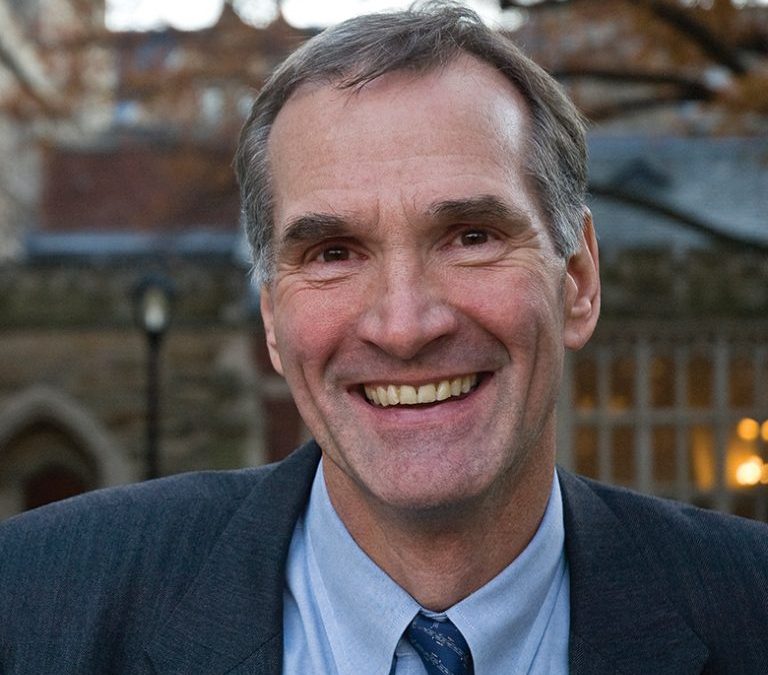
David Swensen, manager of the Yale endowment and titan of the investing world, passed away last week. While he was unknown to most, he had a profoundly positive impact on the investments of institutions and individuals around the world.

His remarkable career is both interesting and informative for our own investment approach.

Career

At age 31, David Swensen began leading Yale’s endowment. At that time its value was $1.3 billion. At the end of his 35-year career managing the endowment it had grown to $31.2 billion, returning 13.1% per year (through June 30, 2020).

He is most well known for popularizing the “Yale Model,” which is how he managed the college’s endowment. What made this approach unique was that it allocated only a small amount to traditional U.S. stocks and bonds and more to “alternative” investments. “Alternatives” is a broad term that can include venture capital, private equity, hedge funds, private real estate, and other complex strategies. The thought was that the endowment should favor  “alternative” assets that might provide additional return because they can’t be readily traded like stocks and bonds.

The investment approach optimizes around Yale’s natural advantages: a huge amount of capital to invest, connections to the upper echelons of the investment community, an amazing reputation as a patient investor, and an infinite timeline.

While this portfolio approach works well for Yale, the average individual does not have these advantages. To address that, David Swensen wrote Unconventional Success to outline how individuals, not endowments, should invest.

Lessons

Don’t Try to Copy Yale
Despite relying heavily on alternative investments, David Swensen discouraged individuals from trying to replicate his approach. He recommended low-cost passive investment funds, believing that the stock market is too efficient to benefit from active management.

Time Is Your Friend
One of Yale’s comparative advantages was their indefinite timeframe. While individuals don’t quite have an investment horizon to match Yale, they at least have a few decades. With that in mind, focus on long-term time horizons of at least 5+ years. The longer your investment timeframe, the higher the chance the investment will have a positive return.

Diversify
Despite having connections to some of the most exclusive investors in the world, Yale’s diversified across many investment managers and strategies. We should spread our bets too.

Subscribe

Join Our Newsletter

Sign up to receive an email when new articles are posted.
The information, analysis, and opinions expressed herein are for general and educational purposes only. Nothing contained in this commentary is intended to constitute legal, tax, accounting, securities, or investment advice, nor an opinion regarding the appropriateness of any investment, nor a solicitation of any type. The material has been gathered from sources believed to be reliable, however Think Different Financial Planning cannot guarantee the accuracy or completeness of such information, and certain information presented here may have been condensed or summarized from its original source. All opinions and views constitute our judgments as of the date of writing and are subject to change at any time without notice.
Weekly Newsletter: The 3-1-1

Weekly Newsletter: The 3-1-1

I hope you’re doing well and having a great week.

Please see this week’s articles, chart, and quote below, along with a bonus article I wrote about the difficulty of saving for college.

 3 Articles

7 Common Money Arguments in Marriage
Jeremy Brown, Fatherly

Common money arguments and how to address them.

My View On: ESG Investing
Cullen Roche, Pragmatic Capitalism

ESG investing (environmental, social, and corporate governance) is a hot new space in the investment world. The basic goal is to construct portfolios that are more morally acceptable. While this sounds great in theory, this article discusses the downsides.

12 Personal Finance Numbers You Should Know
Thomas Kopelman, The Long Game

When thinking about your financial future and creating a financial plan, there are some numbers that you really should know.

1 Chart

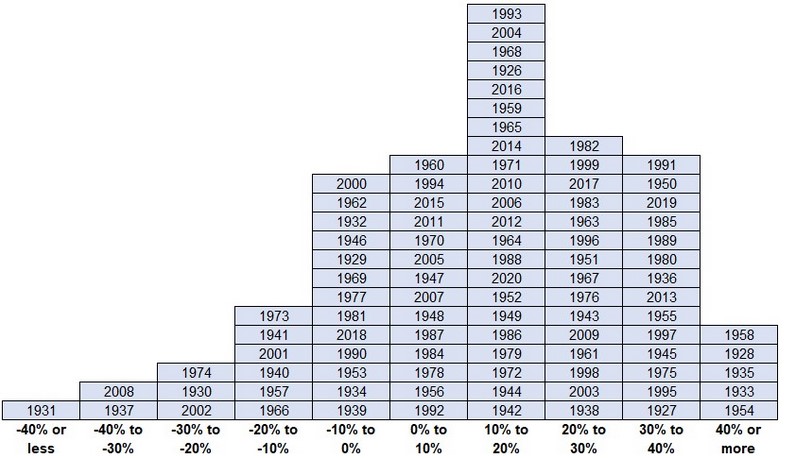
An interesting way to bucket investment returns for the past 95 years:

    Source: Stock Market Returns Are Anything But Average

    A few takeaways:

    • 74% of years were positive.
    • 36% of the years were gains of 20% or more.
    • 6% of the years were losses of 20% or worse.

      1 Quote

      “The question isn’t at what age I want to retire, it’s at what income.”

      – George Foreman 

        Written by Will This Week

          Subscribe

          Join Our Newsletter

          Sign up to receive an email when new articles are posted.

          Disclosure: The information being provided is strictly as a courtesy/convenience. When you link to any of the web sites provided here, you are leaving this website. We make no representation as to the completeness or accuracy of information provided at these websites.
          Think Different Financial Planning is not liable for any direct or indirect technical or system issues or any consequences arising out of your access to or your use of third-party technology, web sites, information and programs made available through this website.
          When you access one of these web sites, you are leaving this web site and assume total responsibility and risk for use of the web sites you are visiting.
          Think Different Financial Planning does not make any representations or warranties as to the accuracy, timeliness, suitability, completeness, or relevance of any information prepared by any unaffiliated third party, whether linked to Think Different Financial Planning’s web site or incorporated herein, and takes no responsibility thereof.
          The Difficulty of Saving for College

          The Difficulty of Saving for College

          Over the past 18 years, the price of college has increased by 125%, or 4.6% per year (source). This is more than twice as high as the overall inflation rate.

          With college costs increasing rapidly, parents who want to save for their children’s education are in a tough situation. If the price continues to increase at that rate, a school that costs $50,000 today will cost $112,000 per year in 2039. This means you would need approximately $448,000 to cover four years of college.

          To save that much you would need to put away $1,250 per month, or $15,000 per year, for 18 years assuming a 5% rate of return. Most parents cannot afford to save that much, especially with multiple children.

          This also assumes the child finishes their undergraduate degree in four years, which only 41% of students do (source). This also does not account for the cost of a postgraduate degree.

          As a financial planning professional, college funding is a struggle. While a 529 college savings account is an excellent place to save, the potential costs are exorbitant.

          Assumptions have to be made when saving for a goal, but the variability in those can be massive. What remains unclear is:

          • What will college look like in the next 10-20 years? Perhaps it will look similar to today but the price inflation will decrease.
          • Or, will lower-priced credential options arrive? Companies like Treehouse are interesting early entrants.
          • Will community college be free? The Biden administration is making a push for this to happen.
          • Will my child receive a scholarship or student aid?
          • Another interesting and evolving area is how to borrow for college. One new idea is income-share agreements.

          Within this changing landscape, “save what you can and watch what happens” is not the most reassuring financial advice. But as with all financial planning problems, the future is unknowable and we have to accept reality on reality’s terms.

          Parents should address their specific college saving goals with an advisor and revisit those assumptions and variables regularly.

          Subscribe

          Join Our Newsletter

          Sign up to receive an email when new articles are posted.
          The information, analysis, and opinions expressed herein are for general and educational purposes only. Nothing contained in this commentary is intended to constitute legal, tax, accounting, securities, or investment advice, nor an opinion regarding the appropriateness of any investment, nor a solicitation of any type. The material has been gathered from sources believed to be reliable, however Think Different Financial Planning cannot guarantee the accuracy or completeness of such information, and certain information presented here may have been condensed or summarized from its original source. All opinions and views constitute our judgments as of the date of writing and are subject to change at any time without notice.
          Weekly Newsletter: The 3-1-1

          Weekly Newsletter: The 3-1-1

          I hope you’re doing well and having a great week.

          Please see this week’s articles, chart, and quote below, along with an article I wrote about my lesson from investing in gold.

          3 Articles

          One Year Since the COVID Crash: How Far We’ve Come
          YCharts

          YCharts did a great visual summary of the past year, showing the impact of COVID-19 on the market and our lives.

          Preview of Joe Biden’s “American Families Plan” Tax Reform
          Mitchell Baldridge, Twitter

          More details are coming out about the American Families Plan tax reform. The proposed changes will impact individuals (capital gains and ordinary income tax rates), corporations, estate, gift tax, and international taxes.

          The Growth-Value Cycle
          Ben Carlson, A Wealth of Common Sense

          For the past decade, growth-oriented stocks, such as technology companies, provided great returns. In the first quarter of 2021, value-oriented stocks, their counterpart, outperformed. This article describes the cyclical nature of these two investing styles.

          1 Chart

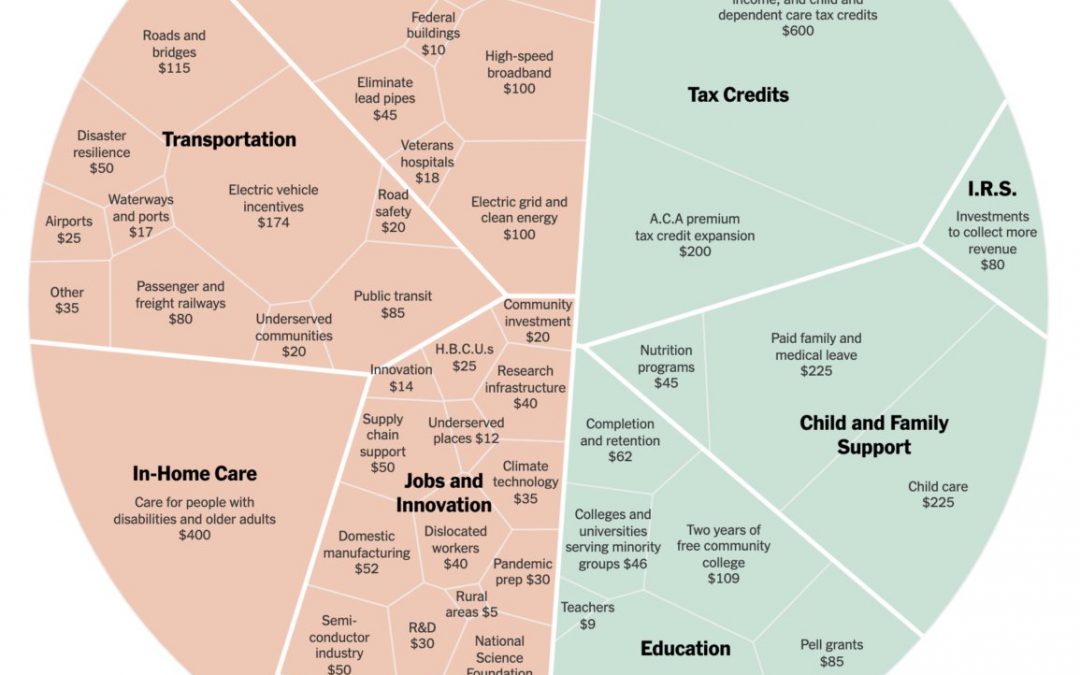
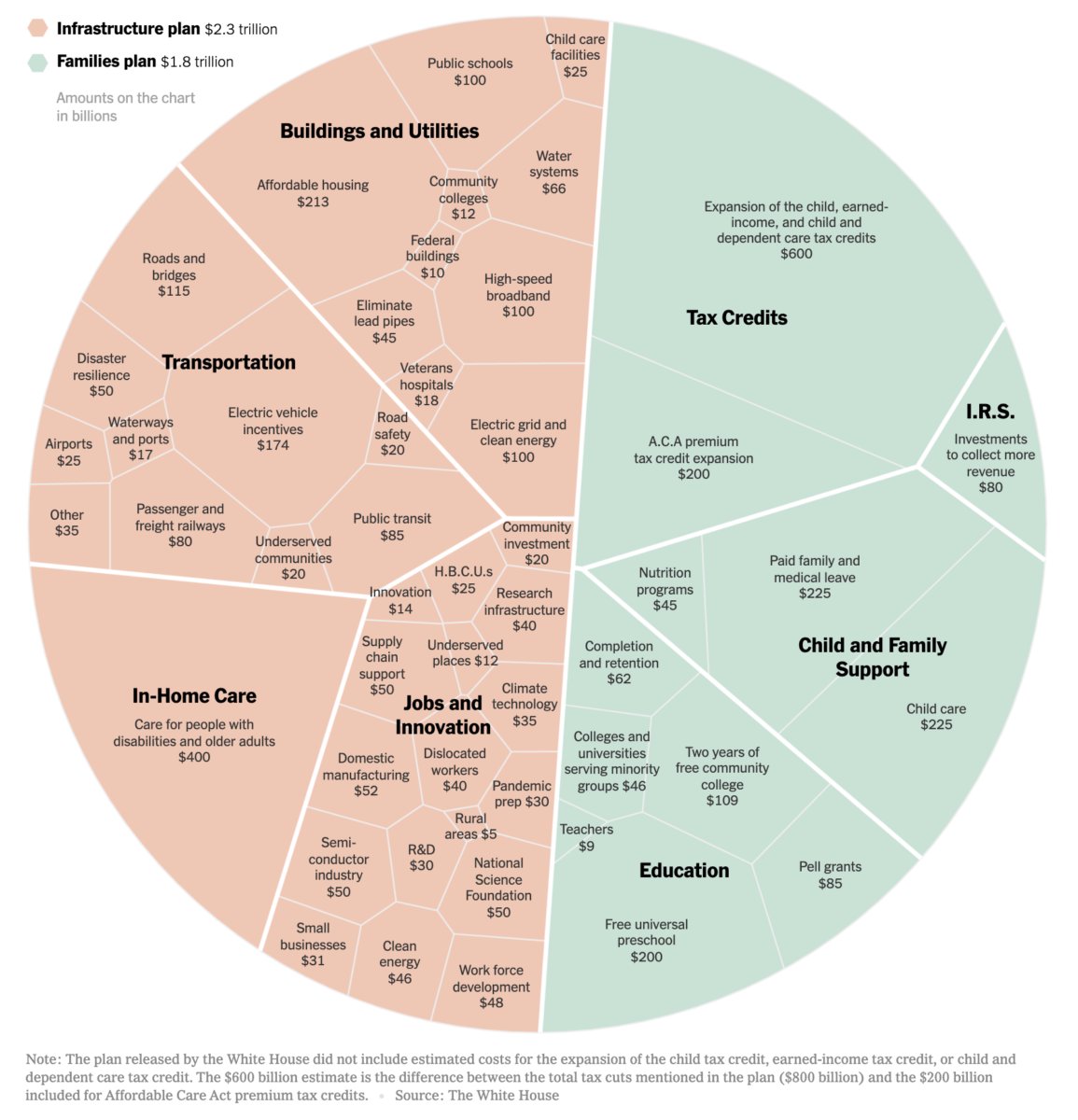
          Biden’s $4 Trillion Economic Plan in one chart:

            1 Quote

            “Being afraid to lose money will keep you from making it.”

            – Anonymous

              Written by Will This Week

              My Lesson From Being A Gold Bug
              Around 2010 I was sure gold was a great investment. While that didn’t pan out, the experience was valuable as I learned an important investing lesson.

                Subscribe

                Join Our Newsletter

                Sign up to receive an email when new articles are posted.
                Disclosure: The information being provided is strictly as a courtesy/convenience. When you link to any of the web sites provided here, you are leaving this website. We make no representation as to the completeness or accuracy of information provided at these websites.
                Think Different Financial Planning is not liable for any direct or indirect technical or system issues or any consequences arising out of your access to or your use of third-party technology, web sites, information and programs made available through this website.
                When you access one of these web sites, you are leaving this web site and assume total responsibility and risk for use of the web sites you are visiting.
                Think Different Financial Planning does not make any representations or warranties as to the accuracy, timeliness, suitability, completeness, or relevance of any information prepared by any unaffiliated third party, whether linked to Think Different Financial Planning’s web site or incorporated herein, and takes no responsibility thereof.
                My Lesson From Being A Gold Bug

                My Lesson From Being A Gold Bug

                Around 2010, I was sure gold was a great investment. I was convinced by two “gold bugs,” or fans of gold investing, Peter Schiff and Chris Martenson.

                At the time, they convinced me that the US economy was on the edge of collapse. And when that collapse occurred, owning gold would be the surest way to increase my wealth.

                As you know, that collapse never happened.

                Looking back, I accepted their reasoning and investment recommendation without question. I did none of the following:

                • Analyze the historical returns and characteristics of gold.
                • Think about the opportunity cost of holding it as my largest investment (as compared to other investment options).
                • Think about how much of my portfolio it should comprise. Instead, I went nearly all in.

                I didn’t have one “aha” moment where I changed my mind on investing in gold, but over time the repeated excuses, missed predictions, and continued rationalizations wore off. I eventually sold my position and was lucky to come out with only a minor loss.

                What I learned from this experience relates back to “asset allocation.” That simply means how much you own of each investment.

                While you can debate whether gold is good or bad (plenty of people argue each side well), you should never be so sure of your investment idea/strategy/allocation that you over-invest in a single area. Even Jim Rickards, another gold bug, suggests a mere 10% allocation.

                Summary
                No matter how excited you are for an investment, make sure that you are not overly concentrated. There’s a saying in the investment world: “If you can make a killing from it, it can also be a portfolio killer.” This doesn’t just apply to gold, but all investments.

                Continually question your investment thesis and check it against the facts. Try to avoid confirmation bias. Seek other points of view. Factor in your excitement level to gauge how much that may be factoring in. These are all much easier said than done, but hopefully my story is instructive as you consider investment options.

                Subscribe

                Join Our Newsletter

                Sign up to receive an email when new articles are posted.

                The information, analysis, and opinions expressed herein are for general and educational purposes only. Nothing contained in this commentary is intended to constitute legal, tax, accounting, securities, or investment advice, nor an opinion regarding the appropriateness of any investment, nor a solicitation of any type. The material has been gathered from sources believed to be reliable, however Think Different Financial Planning cannot guarantee the accuracy or completeness of such information, and certain information presented here may have been condensed or summarized from its original source. All opinions and views constitute our judgments as of the date of writing and are subject to change at any time without notice.
                Weekly Newsletter: The 3-1-1

                Weekly Newsletter: The 3-1-1

                I hope you’re doing well and having a great week.

                Please see this week’s articles, chart, and quote below, along with a link to my first quarter, 2021, investment commentary.

                3 Articles

                The Craziest Market I’ve Ever Seen
                Nick Maggiulli, Of Dollars and Data

                The joke as investment idea has arrived.

                Timeless Lessons From My Decades in Finance
                David Booth, Dimensional Fund Advisors

                Billionaire David Booth reflects on what he has learned and what he wishes every investor knew.

                How the Pandemic Did, and Didn’t, Change Where Americans Move
                Jed Kolko, Emily Badger, and Quoctrung Bui, The Upshot (The New York Times)

                Migration patterns during the pandemic have looked a lot like migration patterns before it. Some smaller regional metro areas and vacation hubs benefited. But in general, areas that were already attracting new residents kept attracting them. Those that were losing migrants lost more. 

                1 Chart

                Mortgage rates bottomed at 2.65% in January and have been moving higher since.

                  1 Quote

                  “Money is like manure; it’s not worth a thing unless it’s spread around encouraging young things to grow.”

                  – Thornton Wilder 

                    Written by Will This Week

                    First Quarter, 2021, Investment Commentary
                    Further economic stimulus, continued vaccination progress, and overall positive sentiment contributed to a positive start to the year.

                      Subscribe

                      Join Our Newsletter

                      Sign up to receive an email when new articles are posted.

                      Disclosure: The information being provided is strictly as a courtesy/convenience. When you link to any of the web sites provided here, you are leaving this website. We make no representation as to the completeness or accuracy of information provided at these websites.
                      Think Different Financial Planning is not liable for any direct or indirect technical or system issues or any consequences arising out of your access to or your use of third-party technology, web sites, information and programs made available through this website.
                      When you access one of these web sites, you are leaving this web site and assume total responsibility and risk for use of the web sites you are visiting.
                      Think Different Financial Planning does not make any representations or warranties as to the accuracy, timeliness, suitability, completeness, or relevance of any information prepared by any unaffiliated third party, whether linked to Think Different Financial Planning’s web site or incorporated herein, and takes no responsibility thereof.