Monthly Financial News – April 2024

Monthly Financial News – April 2024

Here are a few interesting personal finance pieces from the past month:

Artificial Intelligence

  • Nvidia CEO on 60 Minutes – A good interview with Jensen Huang. It highlights how AI is being applied across a number of industries. Examples include: developing proteins to fight cancer, weather prediction, and converting text into movie backdrops.

Investing

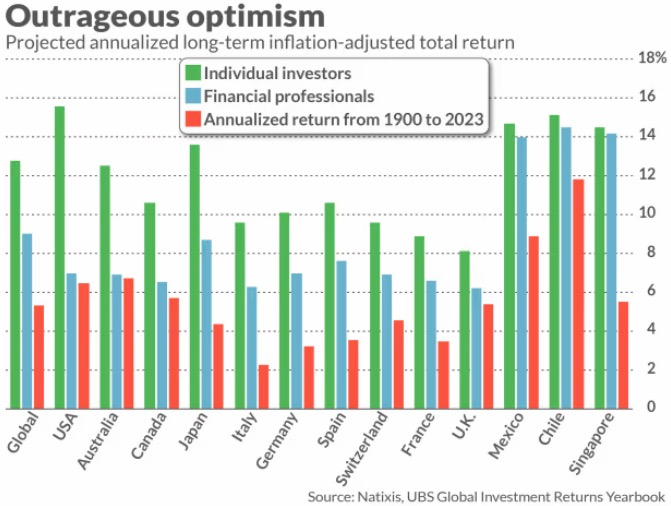
  • Optimistic Investors – US investors expect their stock market to beat inflation by almost 16% per year!
  • That’s about triple the historical result (within the US).
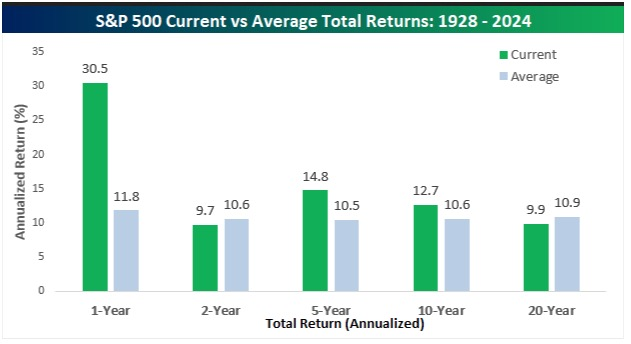
  • Below is a chart showing the returns of the S&P 500 (representing large US stocks) over different time periods.
  • Over the past 1, 5, and 10 years, performance is well above average:
  • Predicting the Future – It’s impossible to predict the future, but its fun to try.
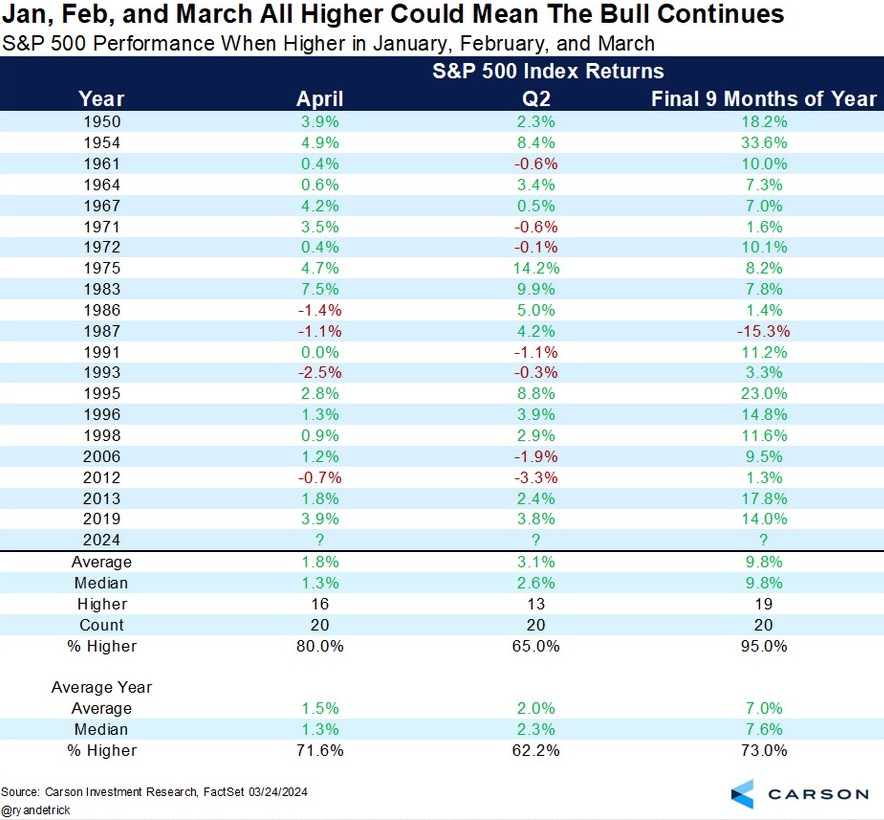
  • US stocks were positive in January, February, and March. According to Carson Research, the previous 20 times that happened since 1950, the rest of the year – meaning the final nine months – were higher 19 out of 20 times:
Inflation

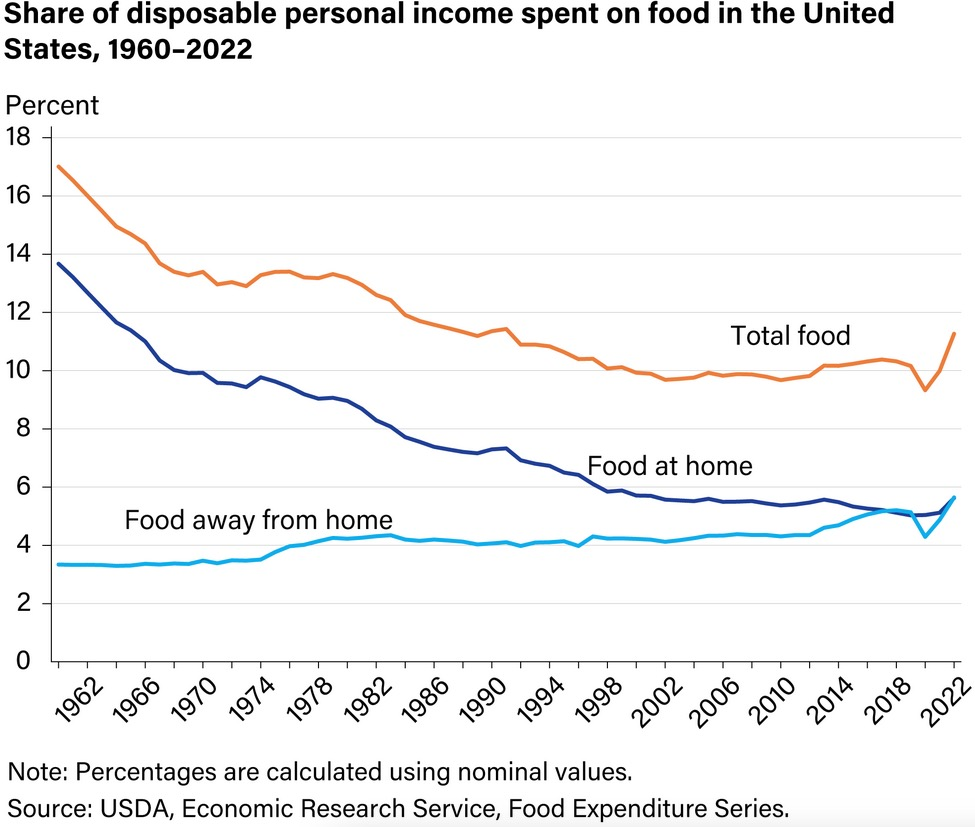
  • Food Inflation – Chances are you are spending more at the grocery store and at restaurants.
  • US consumers spent an average of 11.3% of their disposable income on food in 2022. As a share of spend, this level has not been reached since the 1980s:
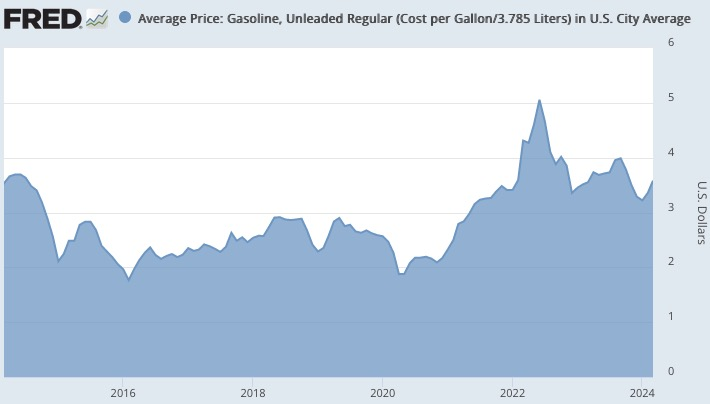
  • Gas – Another high-profile area of spend is gas. The national average is approximately $3.60.
  • That will feel cheap to Californians, where the average price of regular of $5.35.
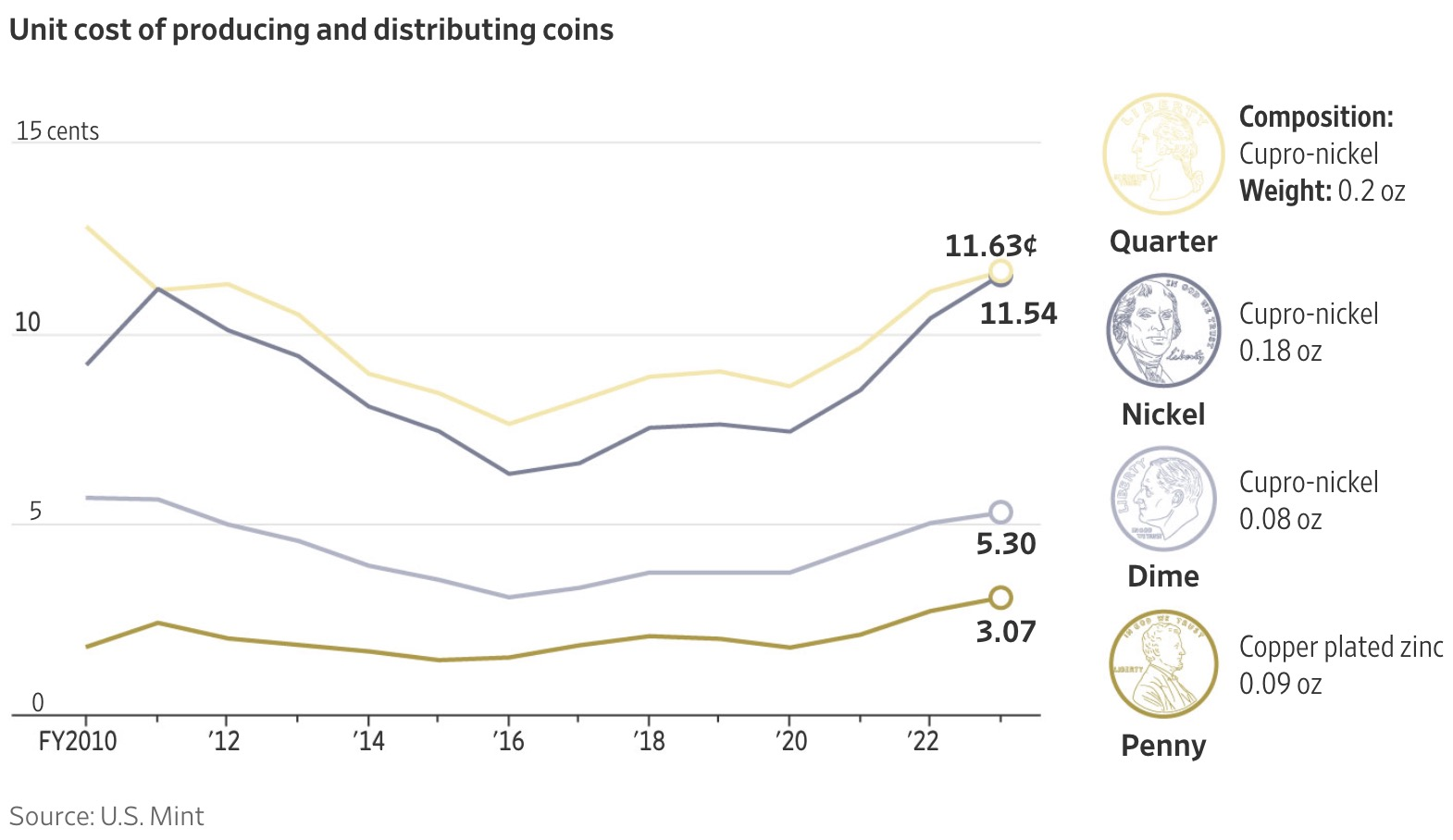
  • Dimes also cost more to make than they are worth:
College Costs

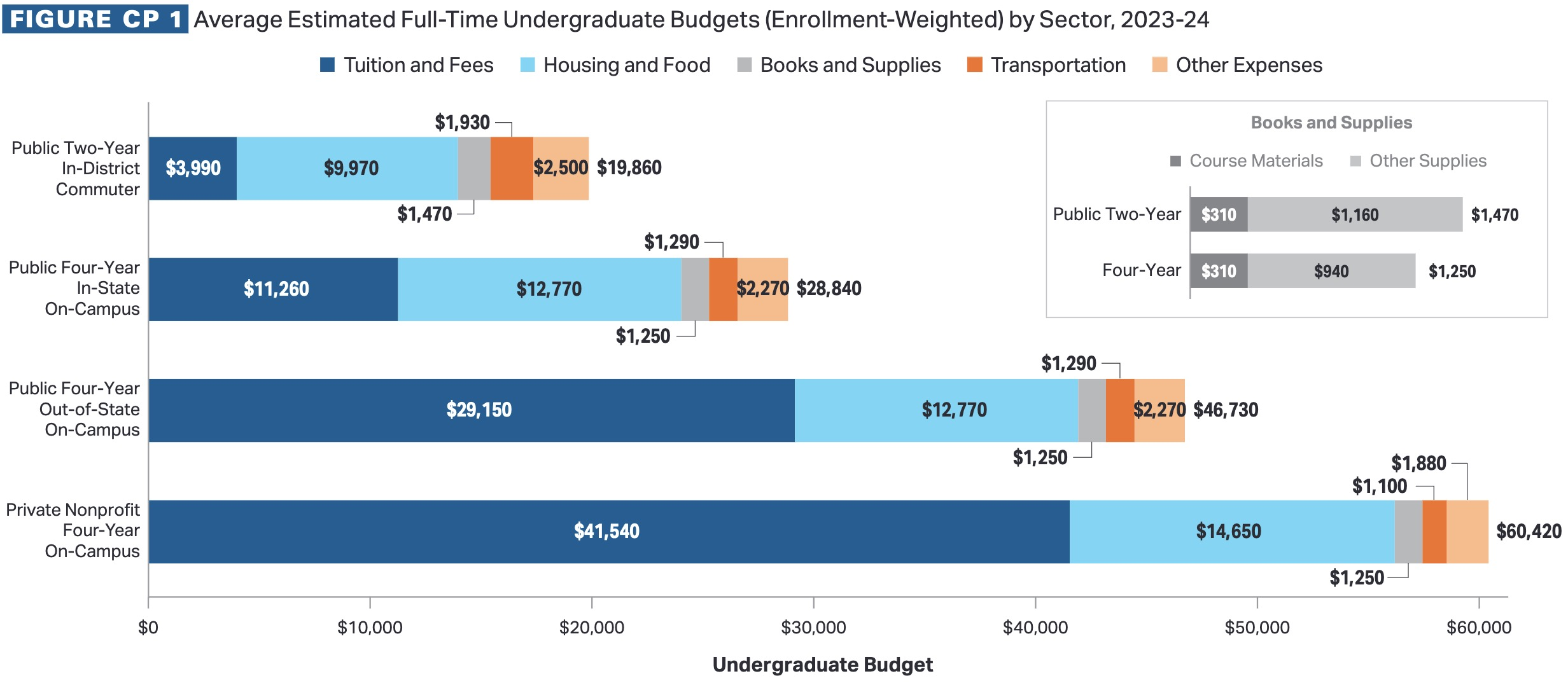
  • Average College Cost – If you have kids approaching college age, you might be interested in the following data points:
      • At private, nonprofit four-year colleges about 16% of students paid full sticker price (2019-20).
      • At in-state public colleges, about 25% of students paid the posted sticker price (2019-20).
      • Net Price: The calculator from the US Department of Education is a helpful tool. It aims to show you the amount a student will pay in a single academic year after subtracting scholarships and grants the student receives.
      • To dive further into specific college costs, some colleges offer merit estimators on their websites.
      • Or if they do not, you can check the college’s “common data set,” which among other things includes information on financial aid awarded. (Search online for the college’s name and “common data set” if you don’t find it on a school’s website).

I hope you found these interesting.

As always, please reach out if you have any questions or would like to connect.
First Quarter Investment Commentary

First Quarter Investment Commentary

Summary

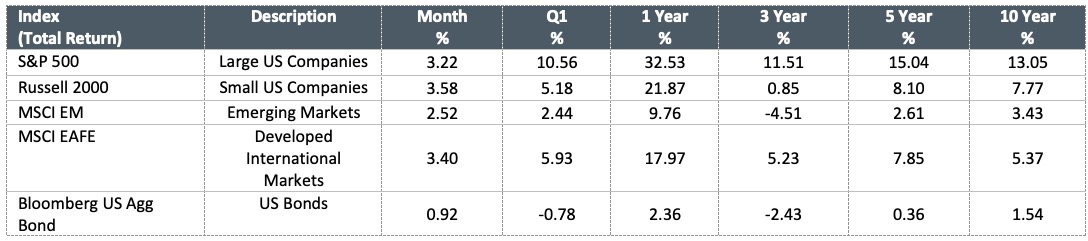
  • Markets continued to rally in March, with the S&P 500 marking its fifth consecutive month of positive returns.
  • Inflation remained higher than preferred, but overall continued in the right (downward) direction.

Market Returns

Market Overview
Stock markets performed well in March, building on prior strength.

For the quarter:

  • Developed International Markets gained approximately 6%.
  • Emerging Markets stocks lagged, but were still up 2.4%.
  • Bonds were flat to slightly negative.

The Federal Reserve & Interest Rates

Expectations from The Federal Reserve indicate that while inflation will likely cool through the year, it may not decline be as quickly as previously anticipated. The Federal Reserve’s preferred inflation measure showed that prices rose as expected in February, putting a spotlight on whether price growth will decline enough to justify an interest rate cut by midyear.

The Federal Reserve left its key interest rate unchanged during the quarter and the Federal Open Market Committee (FOMC) maintained its outlook for three rate cuts in 2024.

Parting Thoughts

Many major indexes hit all-time highs during the quarter. 

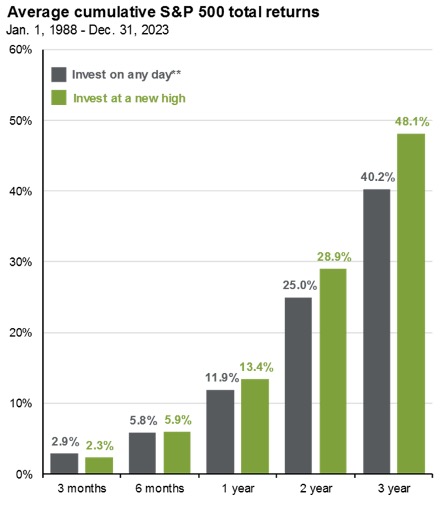
While all-time highs can often result in investors wondering if they have missed the gains of the market, and consider waiting for a pullback to invest further, the data shows that is unlikely to be a successful strategy.

In fact, according to J.P. Morgan, investors are just as well off – or sometimes better – by putting money to work on days that hit all-time highs vs other days.  

Chart source: J.P. Morgan Guide to the Markets. FactSet, Standard & Poor’s.
**”Invest on any day” represents average of forward returns for the entire time period whereas “Invest at a new high” represents average of rolling forward returns calculated from each new S&P 500 high for the subsequent 3-months, 6-months, 1-year, 2-year and 3-year intervals, with data starting 1/1/1988 through 12/31/2023.
Monthly Financial News – March 2024

Monthly Financial News – March 2024

Here are a few interesting personal finance pieces from the past month:

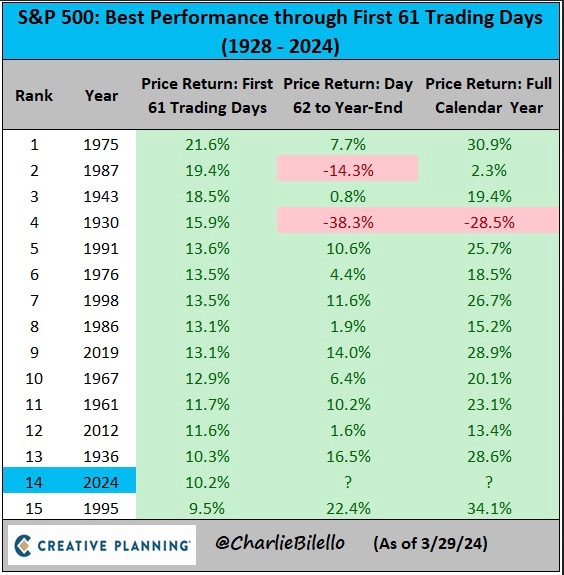
  • Great Market Returns – The stock market got off to a great start this year, finishing up 10% in the first quarter. That’s the 14th-best start to the year going all the way back to 1928:
  • Tech Layoffs: Within the technology sector, 2023 was the second-biggest year of job cuts on record, with about 260,000. This is behind only the dot-com crash in 2001.
  • With so many recently laid-off employees looking for work, it’s led to an “employer’s market.”
  • Extreme College Costs: Some colleges now costs more than $90,000 per year. Examples include: Yale ($91k), Tufts ($96k), and Wellesley ($92k).
  • One important caveat: “60% of its students receive financial aid and the average financial aid award is $67,469,” according to Wellesley.

  • Still, the cost of attending a public four-year college rose more than 200% between 1987 – 2017, while general inflation rose 122% over the same period.

Taxes

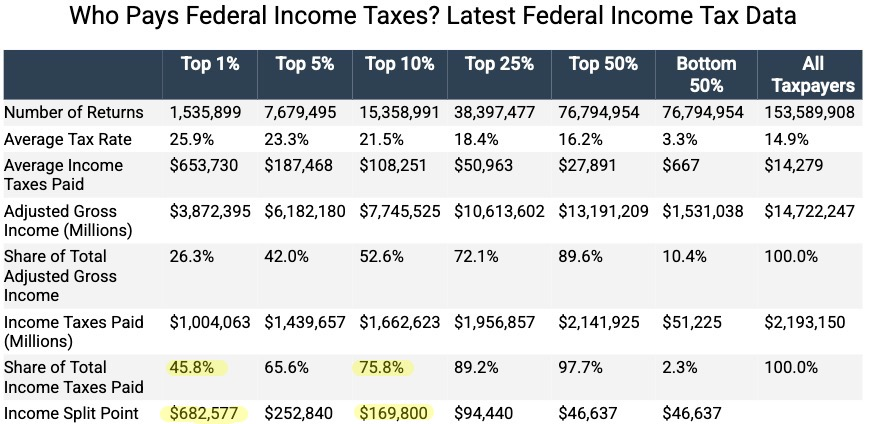
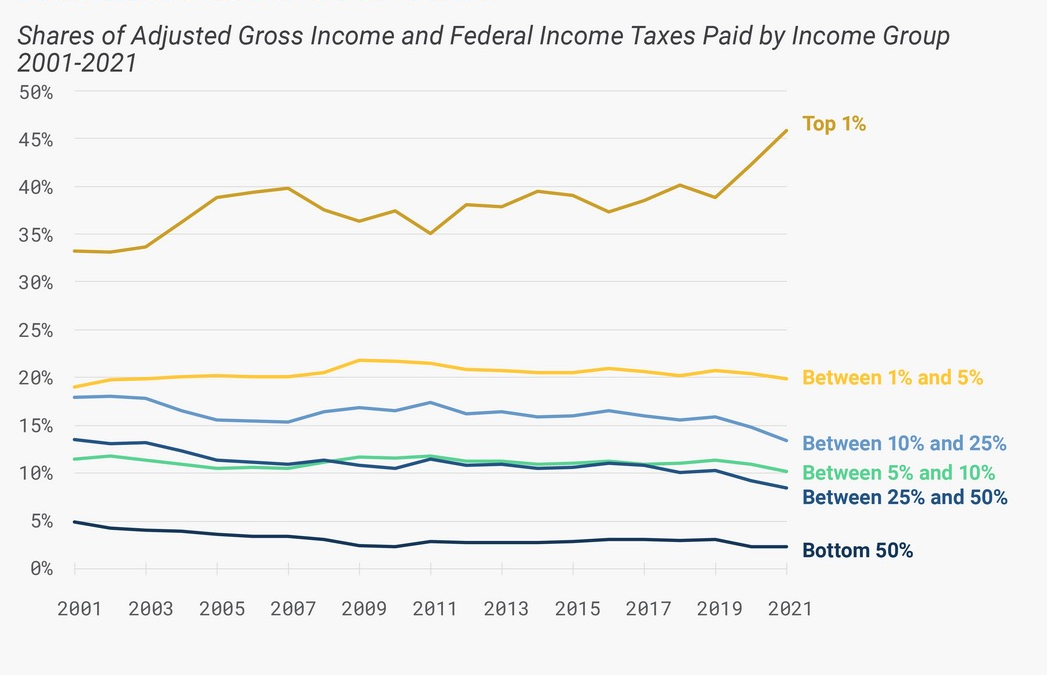
  • Who Pays Federal Income Tax: Since it’s tax season, it’s a good time to look at the breakdown of who pays how much federal tax (based on the latest available data from 2021):
    • The top 1% – those earning more than $682k – accounted for almost half (46%) of all federal income taxes.
    • The top 10% – those earning more than $170k – accounted for approximately 75% of all federal income taxes.
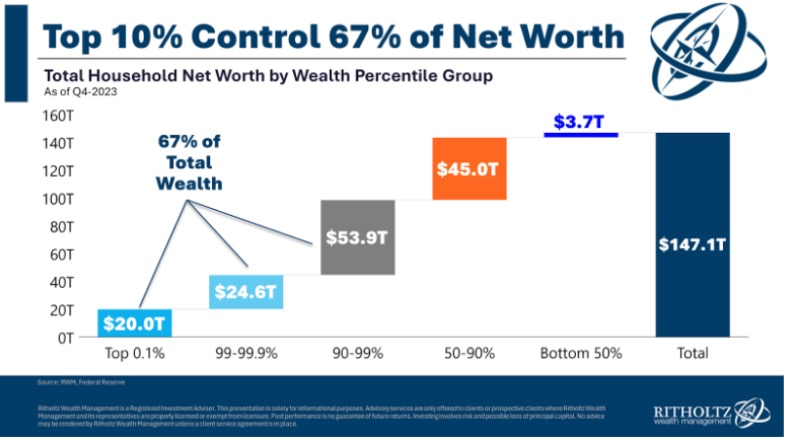
  • Another Way to Look At It:  The top 10% control two-third’s of the wealth. So for them to pay about three-quarters of the taxes feels somewhat fair?
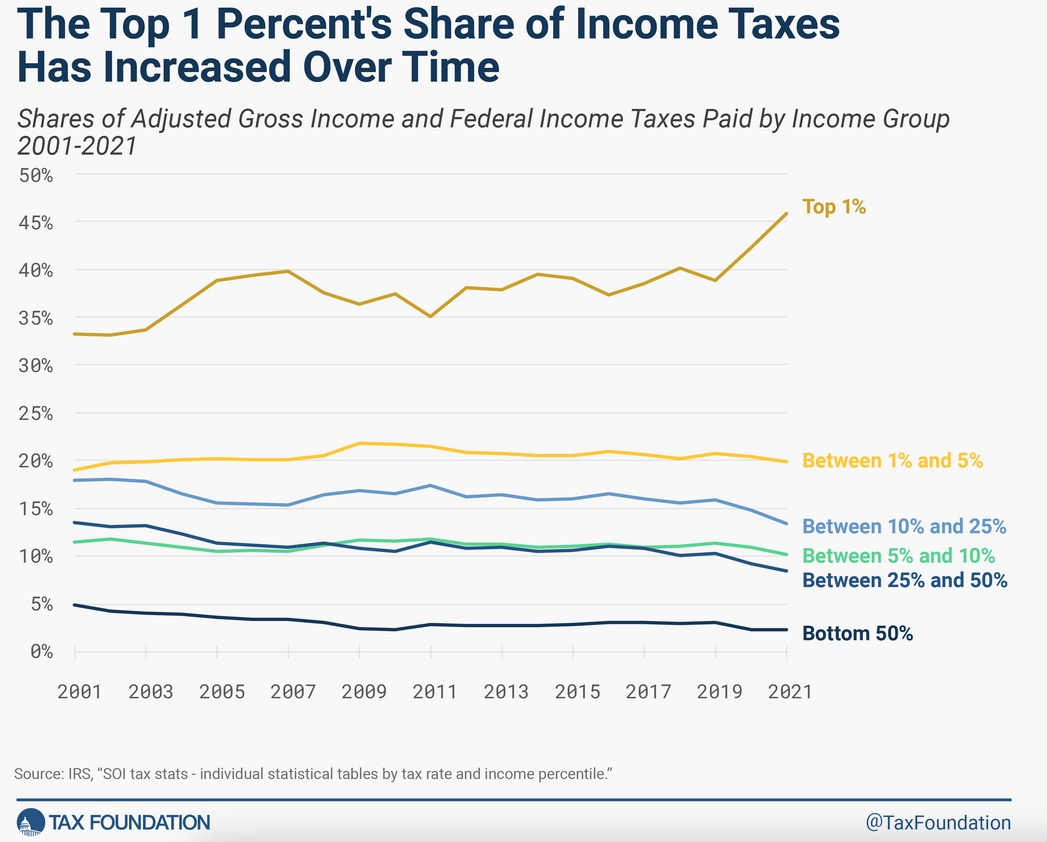
  • Tax Rates over Time: It’s also interesting that the top 1% of income earners have paid a higher share of taxes over time, rising from ~33% of total taxes paid in 2001 to 45% in 2021:

  • As catastrophic risks rise, insurance companies are backing out of specific markets. State Farm, the largest home insurer in California, announced it would pause issuing policies in the state due to wildfire risks. In Florida, Farmers Insurance deemed it too risky and pulled out as well.

  • Californians without insurance options can look to the California FAIR Plan, a state program for those who can’t obtain insurance through a regular insurance company. In 2021, the FAIR Plan accounted for 3% of the state’s policies, nearly double the share from 2018.

Real Estate

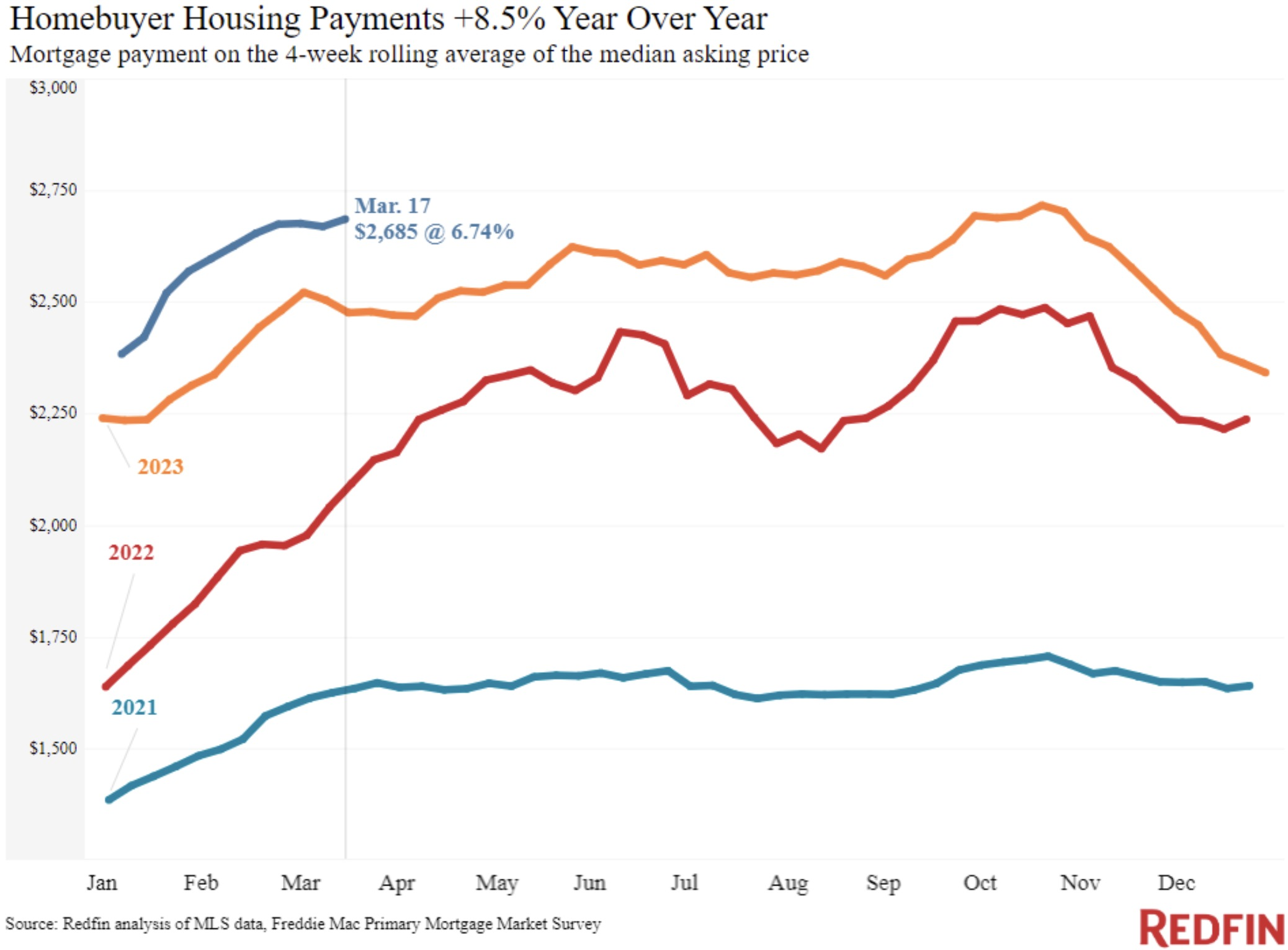
  • Expensive Housing: The monthly mortgage payment on the median-priced home in America is up 80% over the past four years, from approximately $1,500/month to $2,700/month:
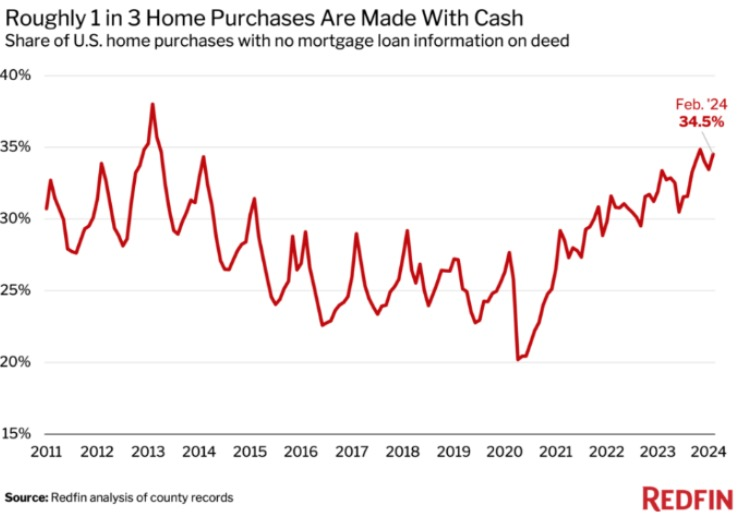
  • Cash Purchases: About one-third of homes these days are bought with cash, likely as a result of high mortgage rates and stock markets hitting all-time-highs:
  • Rent vs. Buy: If you’re considering renting versus buying a home, here is a good article on the topic.

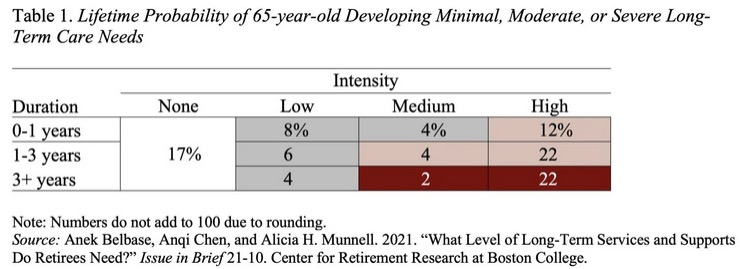
  • Long-Term Care: If you’ve considered long-term care, already have a policy in place, or are just curious about the topic, I recommend this short article from the Center for Retirement Research at Boston College.

I hope you found these interesting.

As always, please reach out if you have any questions or would like to connect.
Monthly Financial News – February 2024

Monthly Financial News – February 2024

I hope you had a great February.

I wanted to share a few interesting facts and articles I came across over the past month.

Financial News Roundup

  • I Bond Tax Forms: If you sold Inflation Bonds in 2023, make sure to source your 1099 for tax purposes. It is not mailed to you automatically. Here is how:
    • Log into your TreasuryDirect account. Click on “Manage Direct.” Under “Manage my taxes,” select “Year 2023.” Then click on “View your 1099 for tax year 2023.” Print directly from your browser save it as a PDF. If you have trouble, see this video.
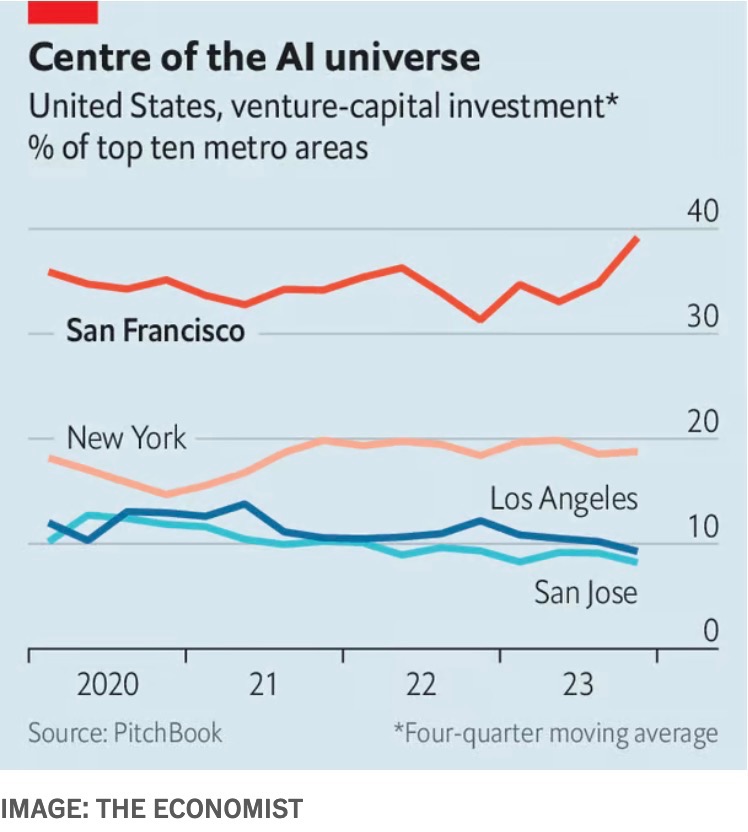
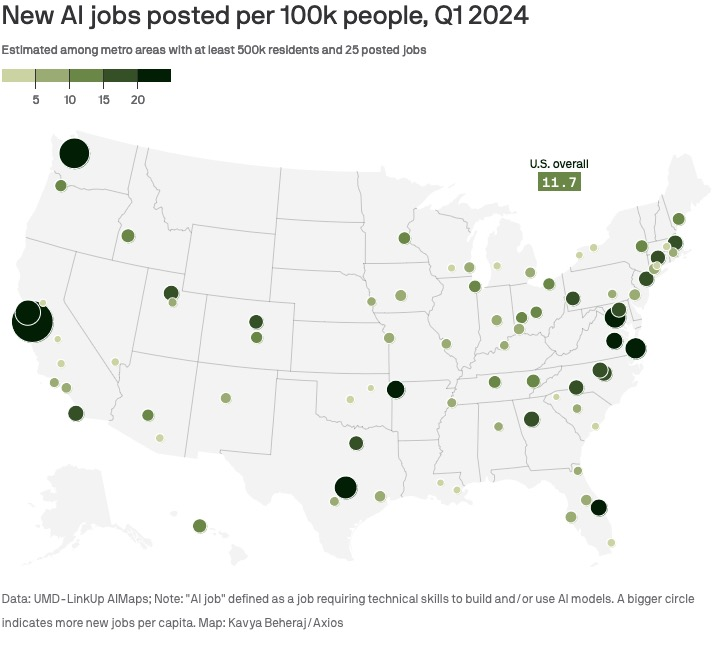
  • AI + Real Estate: High mortgage rates are not slowing down the local real estate market. In fact, listings in San Jose area are selling at fastest pace in the US. Many locals feel wealthy, especially with the influx of investment into AI and the stock market at all-time highs. In addition, the majority of AI venture capital investment — about 50%  — occurs in San Francisco + San Jose. Certainly a benefit to the Bay Area.
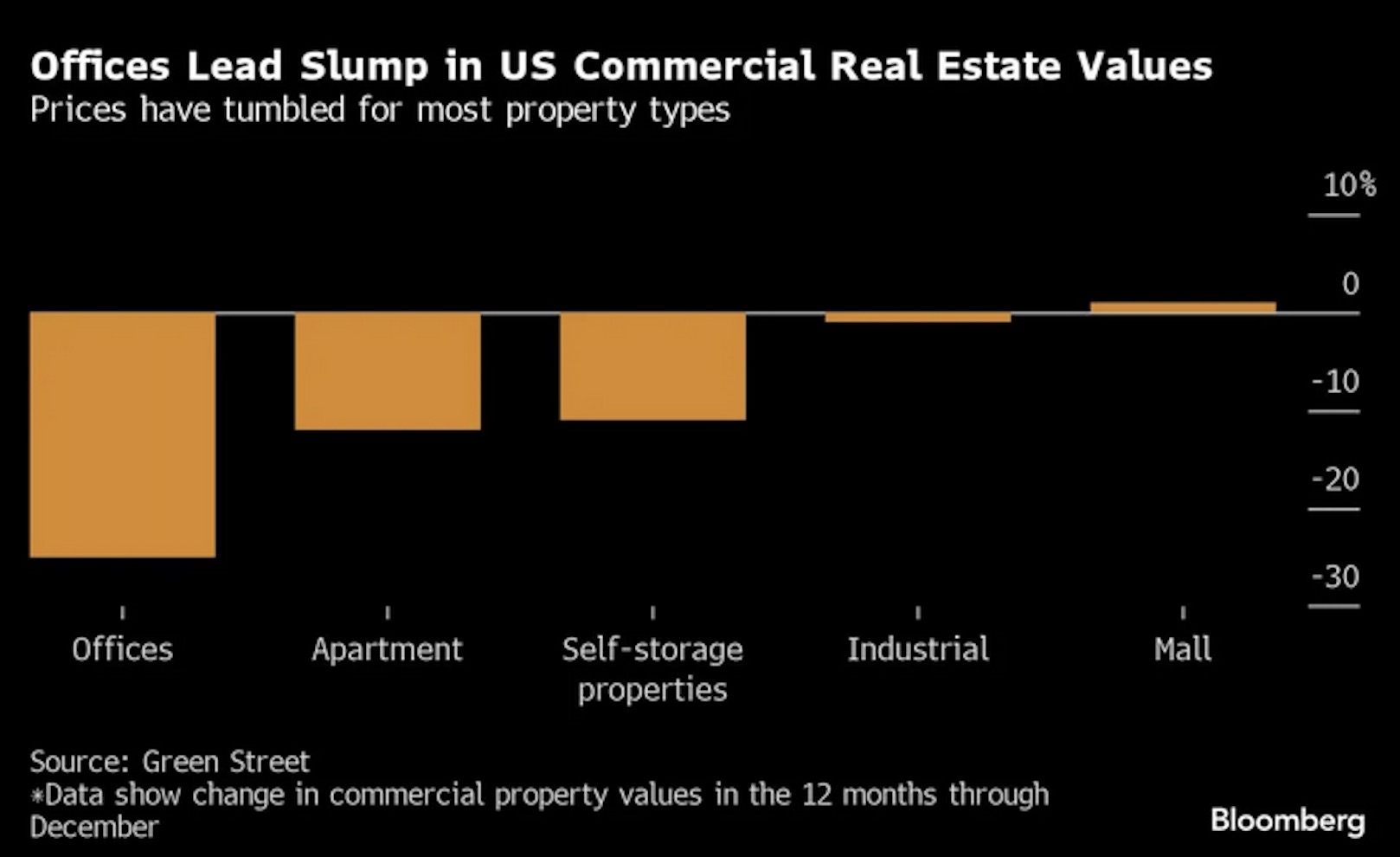
  • Commercial Real Estate: In 2023 the value of office buildings fell 23%. Other commercial sectors did poorly too, but none quite as bad as offices.
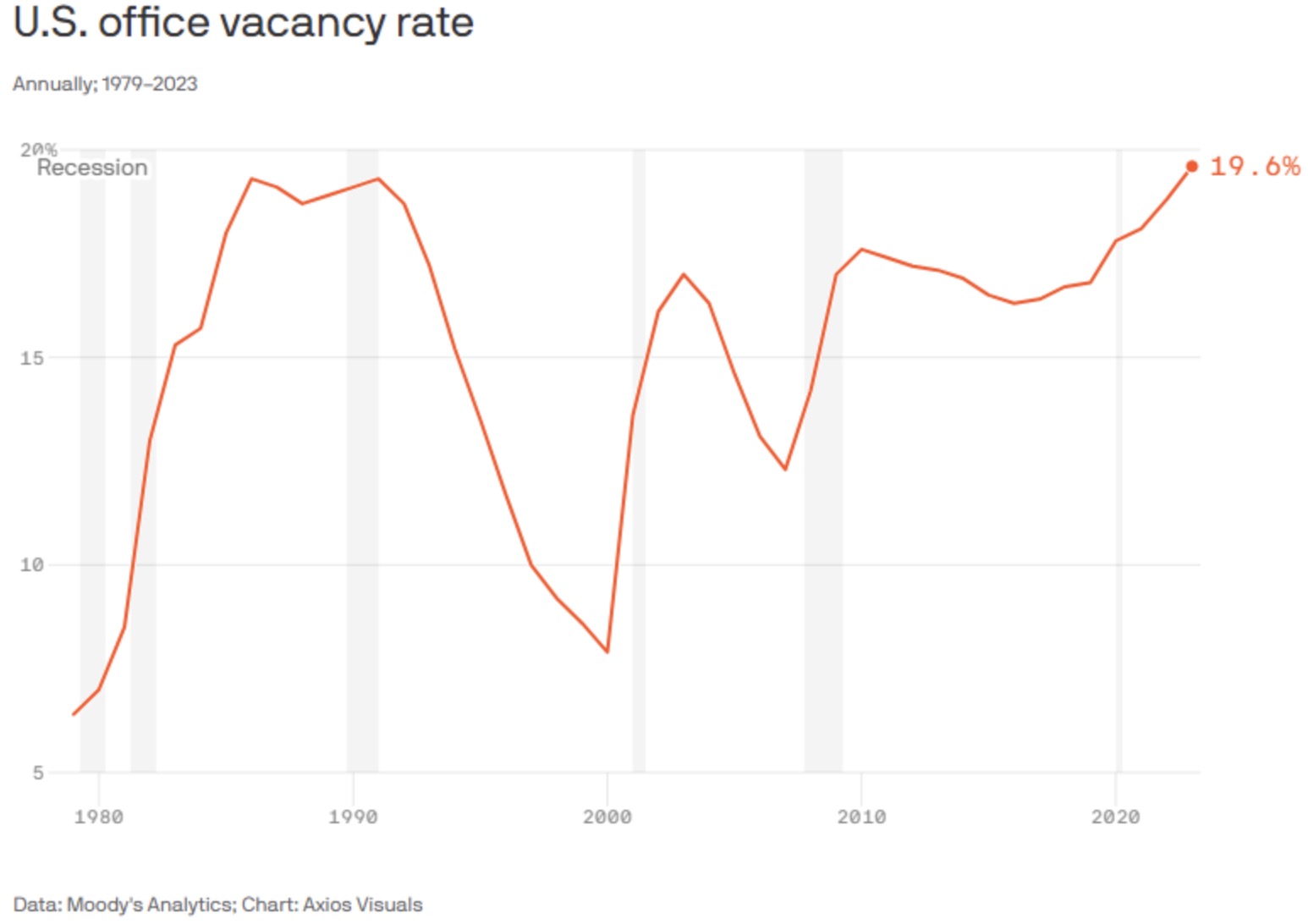
  • Office Vacancy Rate: The root cause for the decline in the value of office buildings is obvious: Not as many people work in them. The office vacancy rate is 19.6%, higher than the previous peak from the late 1980s/early 1990s.
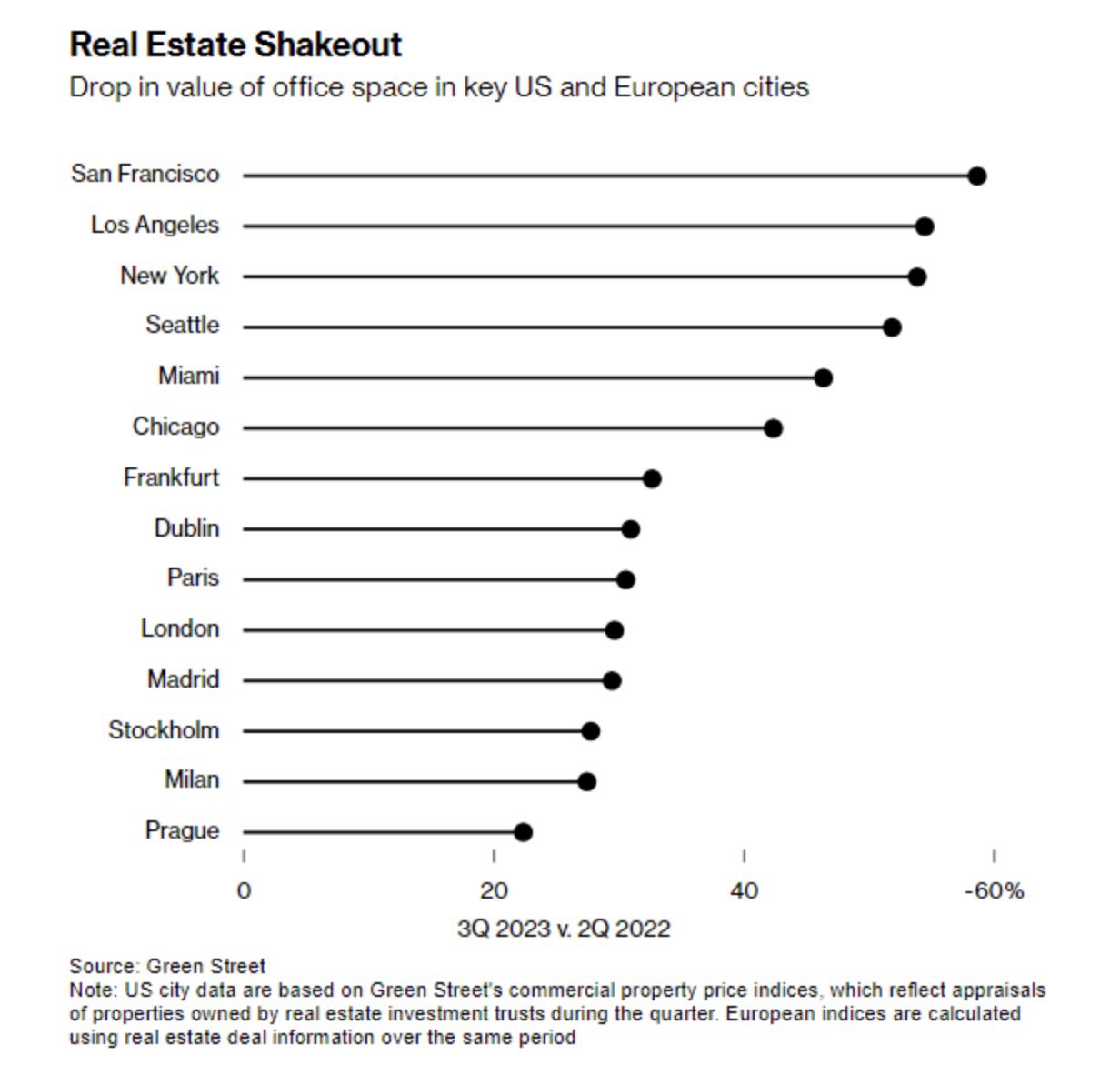
  • More on Offices: In certain cities, the value of office space has fallen a lot more. In San Francisco, office values are down nearly 60%. It’s hard to believe.
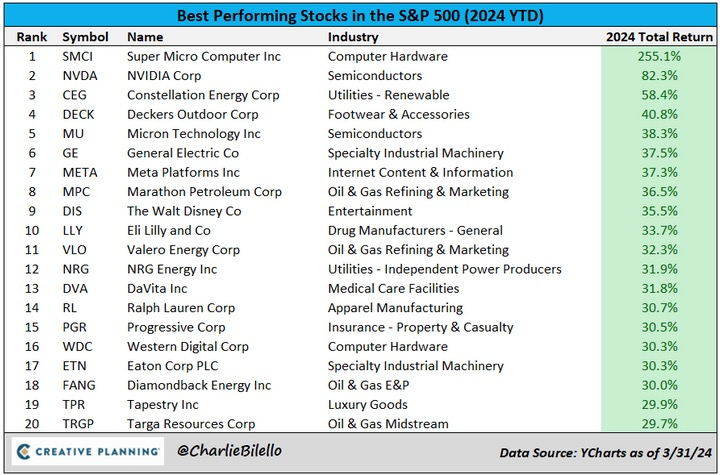
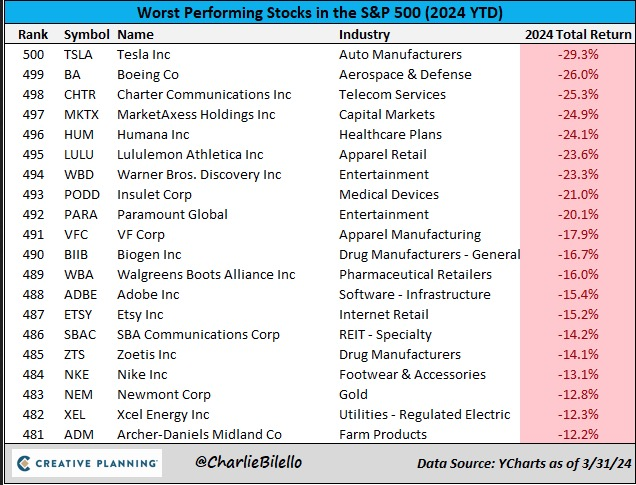
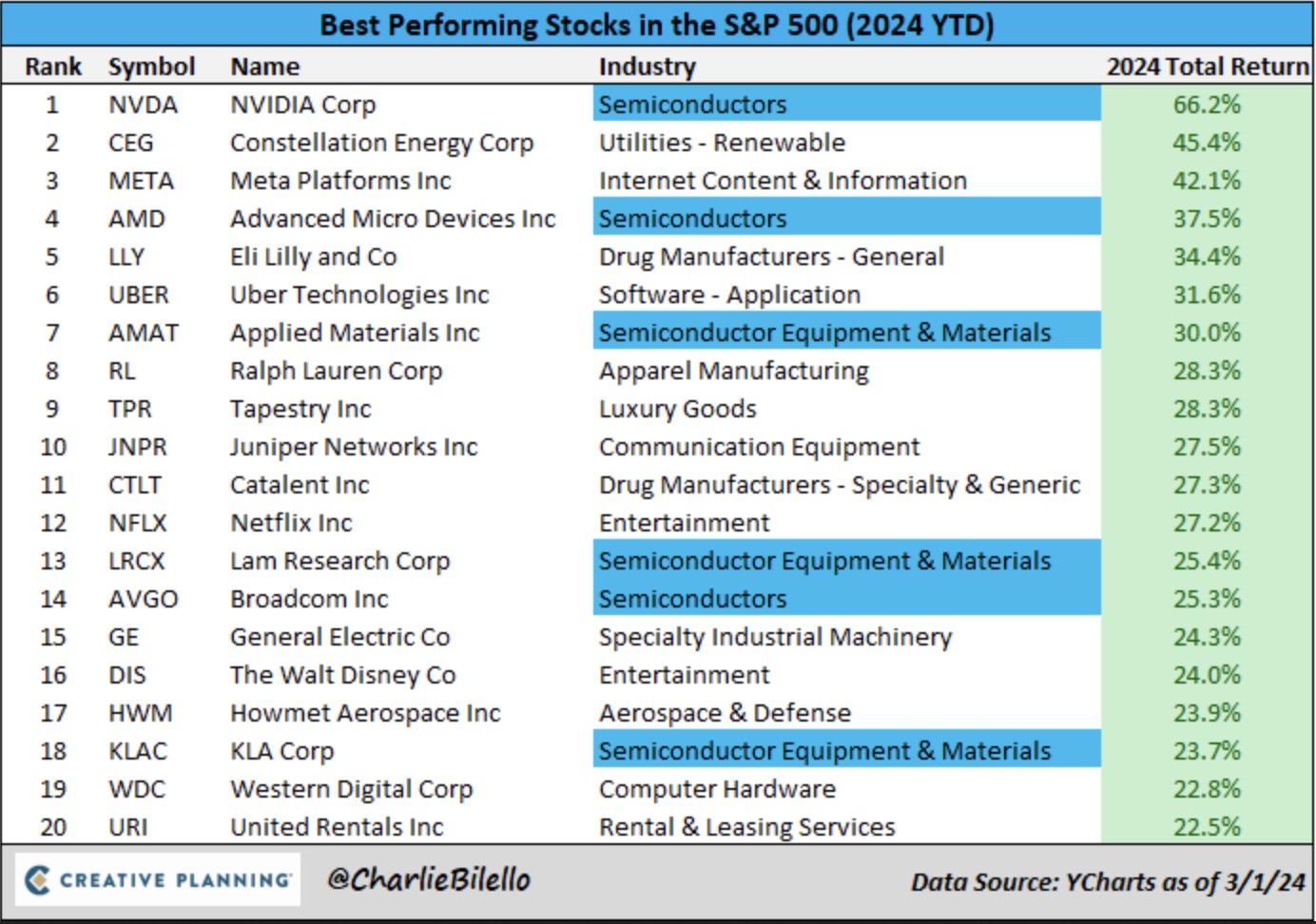
  • Best Stocks This Year: Many tech stocks, especially those in the semiconductor industry, are performing well so far this year (as of 3/1).
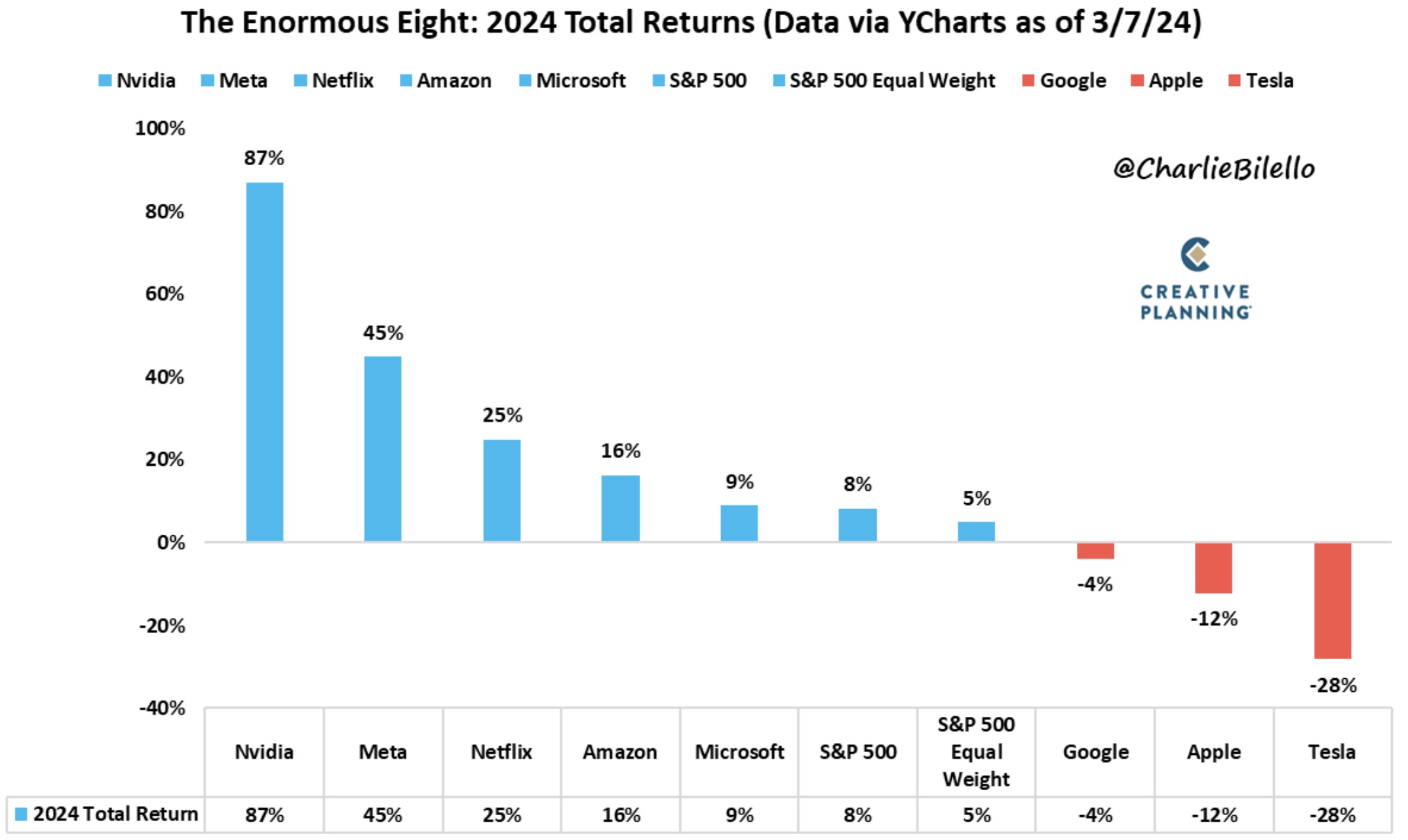
  • Tech Performance: Along the same lines, here’s a closer look at how eight of the largest and most popular tech/consumer companies have done this year (as of 3/7).
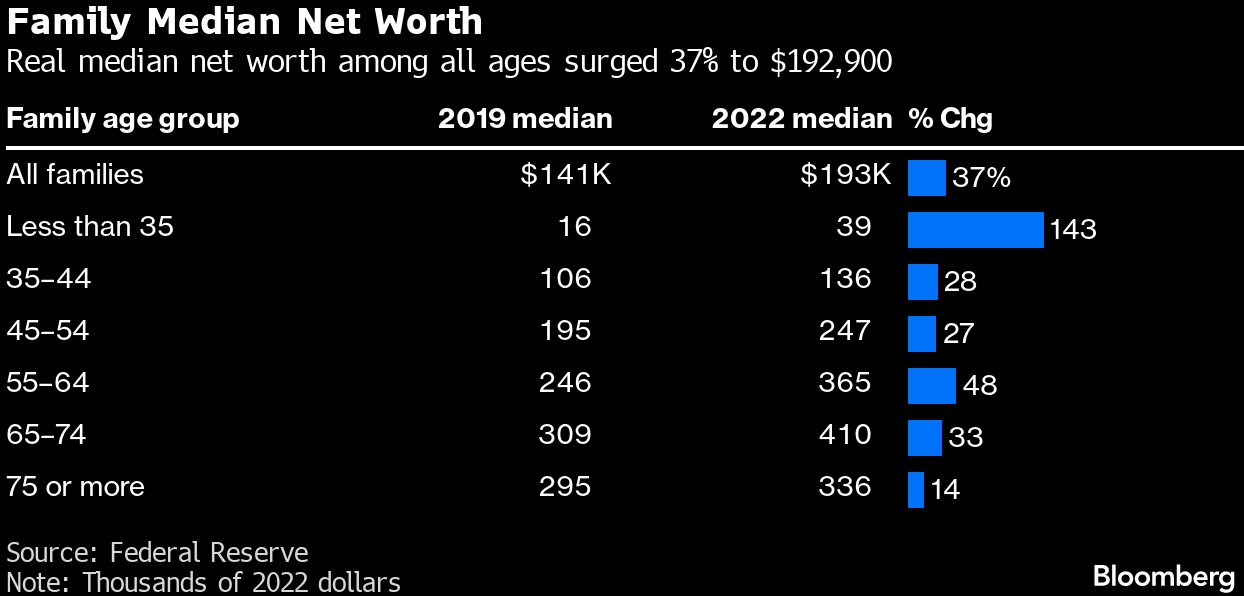
  • Increasing Wealth: As mentioned earlier, many people feel richer today than ever before. The wealth of Americans under 40 grew by 80% between 2019 and 2023. Americans between the ages of 40 and 54 saw their wealth increase just 10%, whereas those over 55 had wealth gains of 30%.
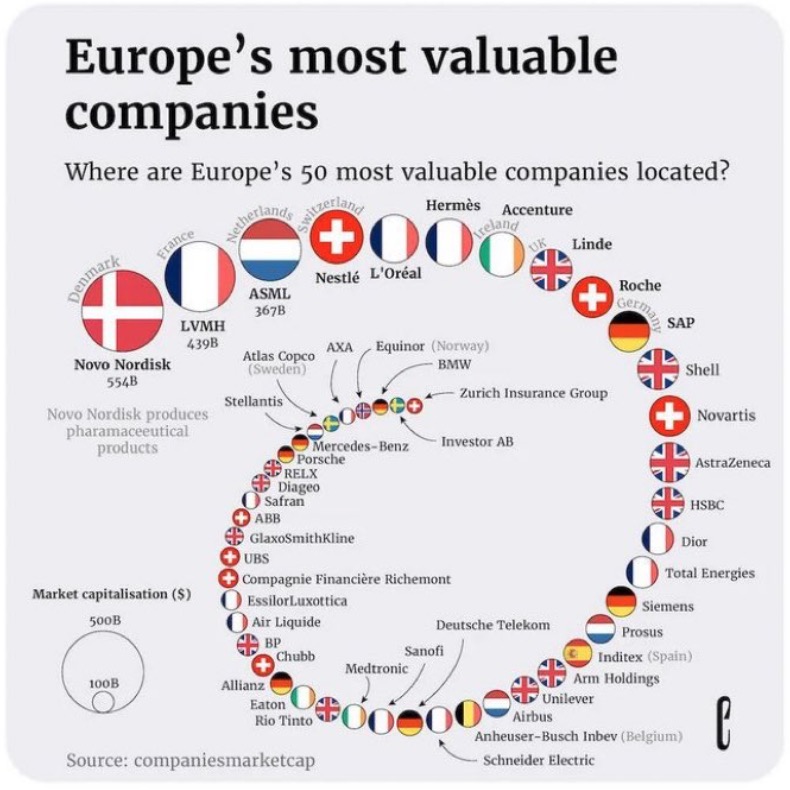
  • Diversification: I speak a lot about the benefit of diversifying. The chart below does a nice job summarizing some of the great brands and companies in Europe:
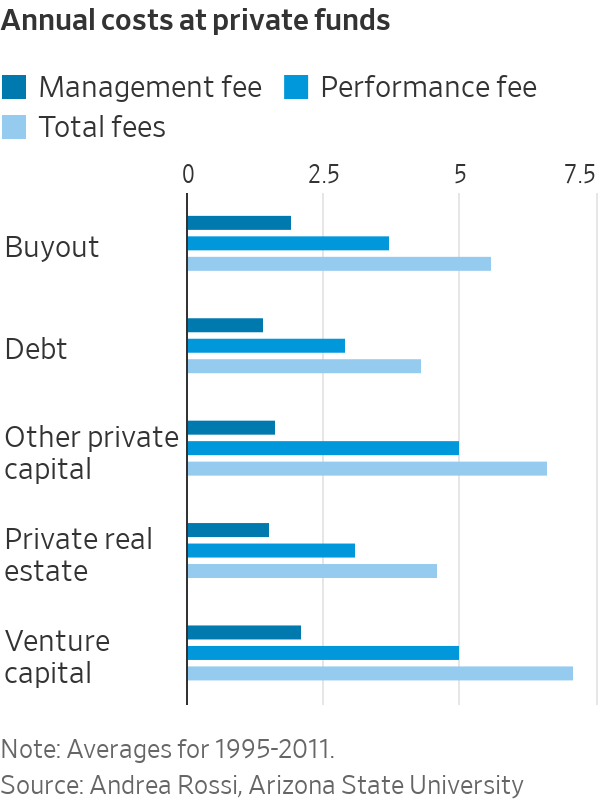
  • Fees at Private Funds: Thinking of investing in VC, a hedge fund, private equity, or other private investments? Make sure to know the fees. They can easily reach 5% or 6%, a tremendous hurdle.

    “Let’s say you expect the stock market to return an average of 6% annually over the next decade. If you’re considering a private-equity fund that effectively charges 6% in annual fees, do you think its managers can double the return of public markets? Can the managers of a venture-capital fund more than double the return of public markets?

    Maybe.

    But probably not.

    Remember: Future returns are uncertain, while fees are inevitable.”

    Jason Zweig

    The Wall Street Journal

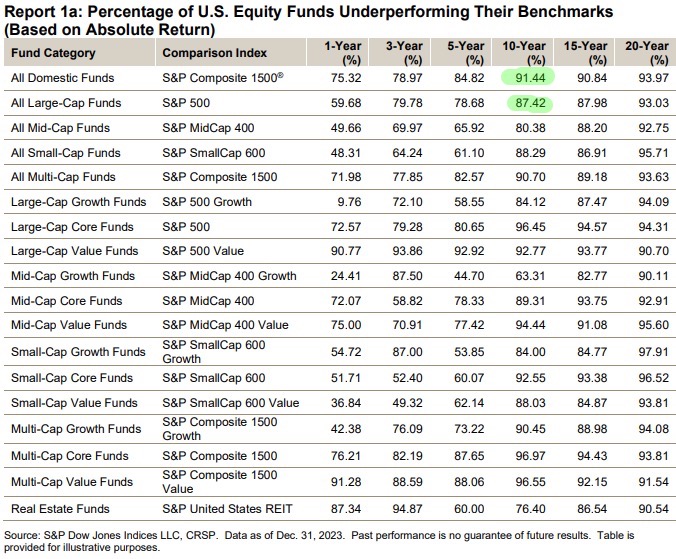
    • Index Funds: S&P Global comes out with an annual report summarizing how active fund managers performed against their investment benchmark. For professionals trying to pick stocks, the results are consistently poor. Over a 10-year period, approximately 90% of funds fail to  beat their benchmark:
      As always, please reach out if you have any questions or would like to connect.
      Monthly News & Financial Updates – January 2024

      Monthly News & Financial Updates – January 2024

      I hope you had a great January.

      I wanted to share a few interesting facts and articles I came across over the past month.

      Financial News Roundup

      • California Quietly Raises State Income Tax Rate to 14.4%. Starting this year, California workers earning more than $145,600 will pay an additional 1.1%.
      • 529-to-Roth Conversions. I’ve had a few questions about converting college-savings accounts to retirement accounts, which became an option in 2024. If you’re curious about the rules, here is a good article on the topic.
      • The Four Phases of Retirement. An interesting and entertaining Ted Talk (13:23).
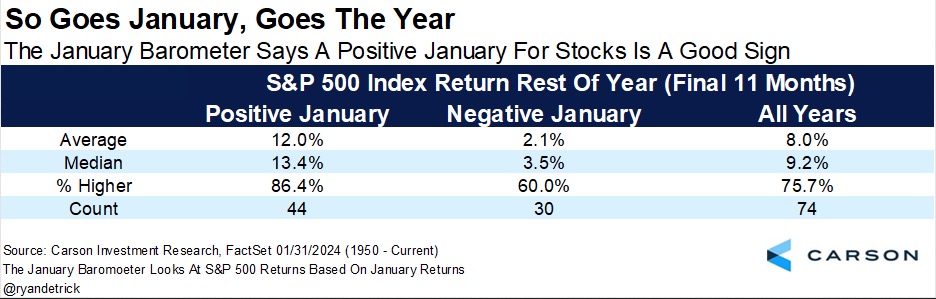
      • January Effect. This is more of a fun stat, so take it with a grain of salt. When stocks are positive in January, the remaining 11 months of the year are up 12% on average, and positive 86% of the time. Given that we just finished with a positive January, let’s hope this holds true!
      • 49ers: If you’re looking for another reason to root for the 49ers to win the Super Bowl, know this: stocks have done better when the NFC team wins. In addition, the S&P 500 is up 19% on average the past 5 years the Niners won!
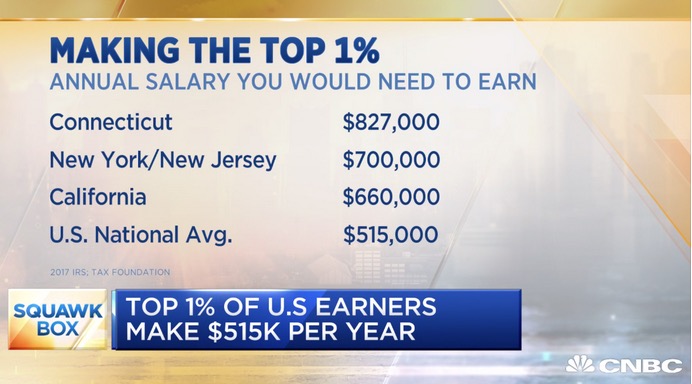
      • Top 1%: How much you need to earn to be in the top 1%:

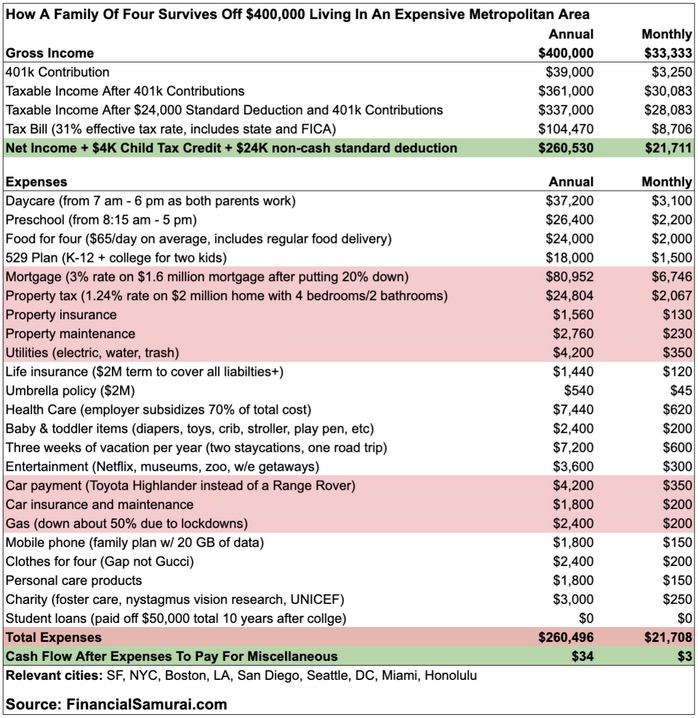
      • Budgeting: I look at how people spend their money all the time. Most people don’t, so I thought sharing this sample budget from a family of four (two working parents, two young kids) earning $400,000 pre-tax could be interesting:
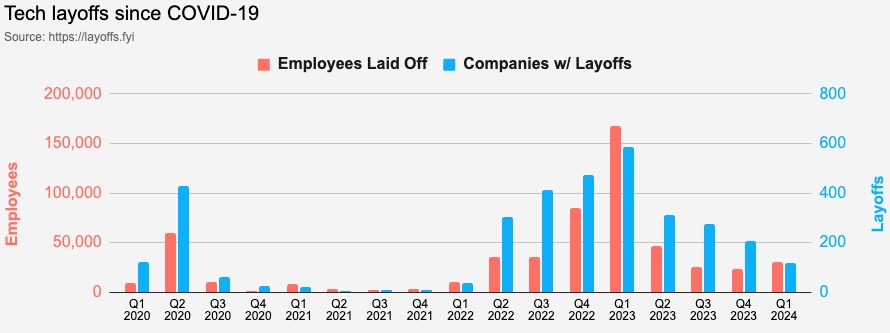
      • Tech Layoffs: Layoffs nationwide remain flat, but there have been headlines recently about layoffs in tech. For a detailed view, head to layoffs.fyi. Here’s the high-level overview:

      Monthly Economic & Market Summary for January 2024

      • Jerome Powell, Chairman of The Federal Reserve, said it best (and succinctly) this week when he said, “This is a good economy.”
      • US GDP grew 3.3% in the fourth quarter of 2023. Expectations were for 2.0% growth, so this was surprisingly good outperformance. For 2023 as a whole, US GDP grew at 2.5%, which is great.
      • All-Time Highs: The S&P 500, an index for large US companies, hit an all-time high in January. This was its first all-time high in two years. Certainly something to celebrate!
      • US and global inflation is on the decline. This is a very welcome change. Of the G10 countries, prices are rising by 5.4% per year, down from a peak of 10.7% in October, 2022. In America, the inflation rate is lower, at 3.3%.
      • Gas prices remain low. The national average of $3.15 is four cents more than a month ago, but 35 cents less than a year ago.
      • The job market remains strong, In January the US added 353,000 jobs, nearly double what was forecast. Unemployment remains below 4%.
      • Incomes are rising, especially among low-income earners.
      • Sentiment Improving: People across the country are slowly coming around to an optimistic view of the economy. An important survey of consumer sentiment among U.S. consumers climbed in January to its highest level since July, 2021.

      As always, please reach out if you have any questions or would like to connect.
      Fourth Quarter & 2023 Investment Commentary

      Fourth Quarter & 2023 Investment Commentary

      In 2023, the economy, stock market, and bond market all performed well.

      This was a very different year than 2022, which had negative stock returns, bond returns, and high inflation. Many economists  predicted those bad times would continue, with a recession in 2023.

      Luckily, that did not happen. The year did get off to a rough start, with three big bank failures: Silicon Valley Bank, First Republic, and Signature Bank. These were three of the largest bank failure in US history:

      What also served as a headwind was the Federal Reserve raising interest rates. They did so four times in 2023 in order to mitigate the risk of further inflation.

      Largely as a result of a declining inflation, resilient consumer demand, and a competitive labor market, no recession occurred. As we’ve seen before, investors who remained disciplined were rewarded with favorable returns.

      Tech of the Year: AI
      A notable theme of the year was AI, which was highlighted by the launch and popularity of ChatGPT. Despite AI’s decade-plus presence (Siri was launched in 2011), this felt like a catalyst for the industry.

      Side bar: It’s interesting to think about what other technology is available today, but not yet at its full potential. 3D printing?

      Back to AI, Nvidia showcased the sector’s strength by being the top performer in the S&P 500:

      Nvidia’s excellent year also serves to highlight the difference between 2022 and 2023.

      Below, we see how “The Magnificent Seven” – the 7 largest stocks in the S&P 500 (all tech) – performed in 2022 (poorly) versus 2023 (very well):

      Fourth Quarter Economic Highlights

      • Economic Growth: The economy continued its impressive performance, exceeding expectations with GDP growth of approximately 2.5% in the 4th quarter, more than double the analysts’ initial forecast.
      • Inflation: The Federal Reserve’s preferred measure of inflation decreased to 2.6% in November, down from 7% in 2022.
      • Interest Rates: Due to declining inflation, the expectation is that interest rate hikes are behind us, with potential rate cuts in 2024.

      Stocks – Fourth Quarter Results:

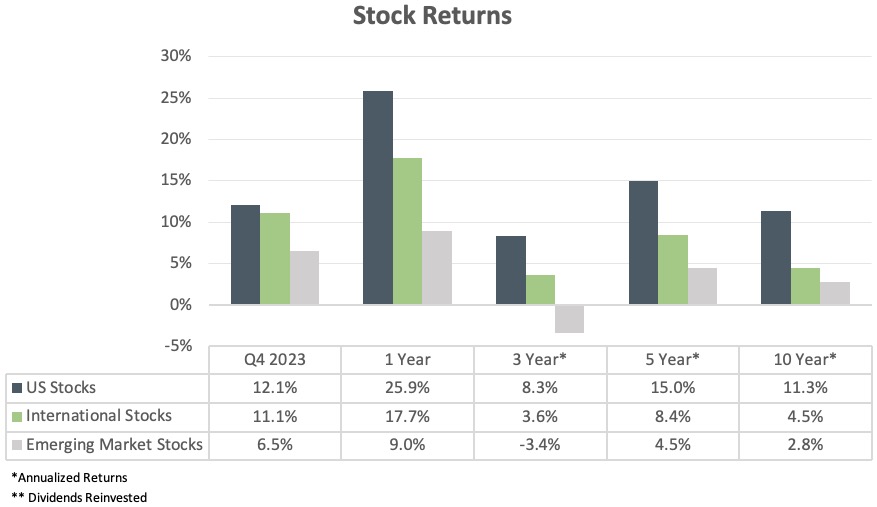
      • US Stocks: US stocks rose 12.1% during the quarter and 25.9% for the year. November through December was the 12th best two-month period for US stocks since 1950, with a gain of 13.9%. A historically good quarter.
      • International Stocks: Developed international stocks (e.g., Japan, Germany, Australia) rose 11.1% during the quarter and 17.7% for the year.
      • Emerging Markets: Emerging market stocks (e.g., India, Philippines, Brazil) rose 6.5% during the quarter (largely pulled down by China’s weaker performance) and 9.0% for the year.

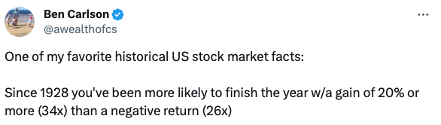
      With a year of 20%+ returns behind us, I found this stat interesting:

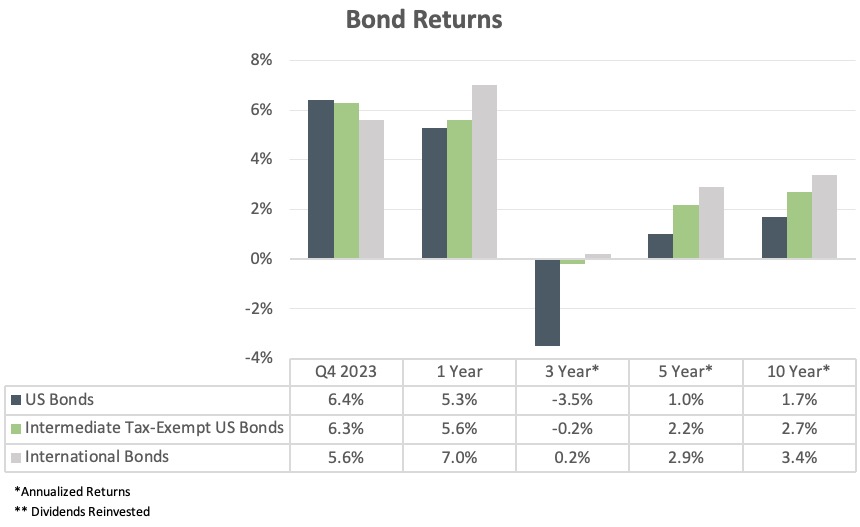
      Bonds
      After a volatile year for interest rates, the US 10-Year Treasury – an important benchmark for lending – ended 2023 almost exactly where it started. Despite briefly reaching 5%, the 10-Year yield started and finished the year just under 4%.

      This decline in interest rates drove the rally in bonds during the quarter.

      Over the past year, hedged international bonds showed the benefits of global diversification, as they outperformed US bonds.

      For investors in tax-sensitive portfolios, municipal bonds have been one of the strongest sectors over the last year, with even better relative results when compared on an after-tax basis.

      Parting Thoughts – Large Tech Stock Valuations
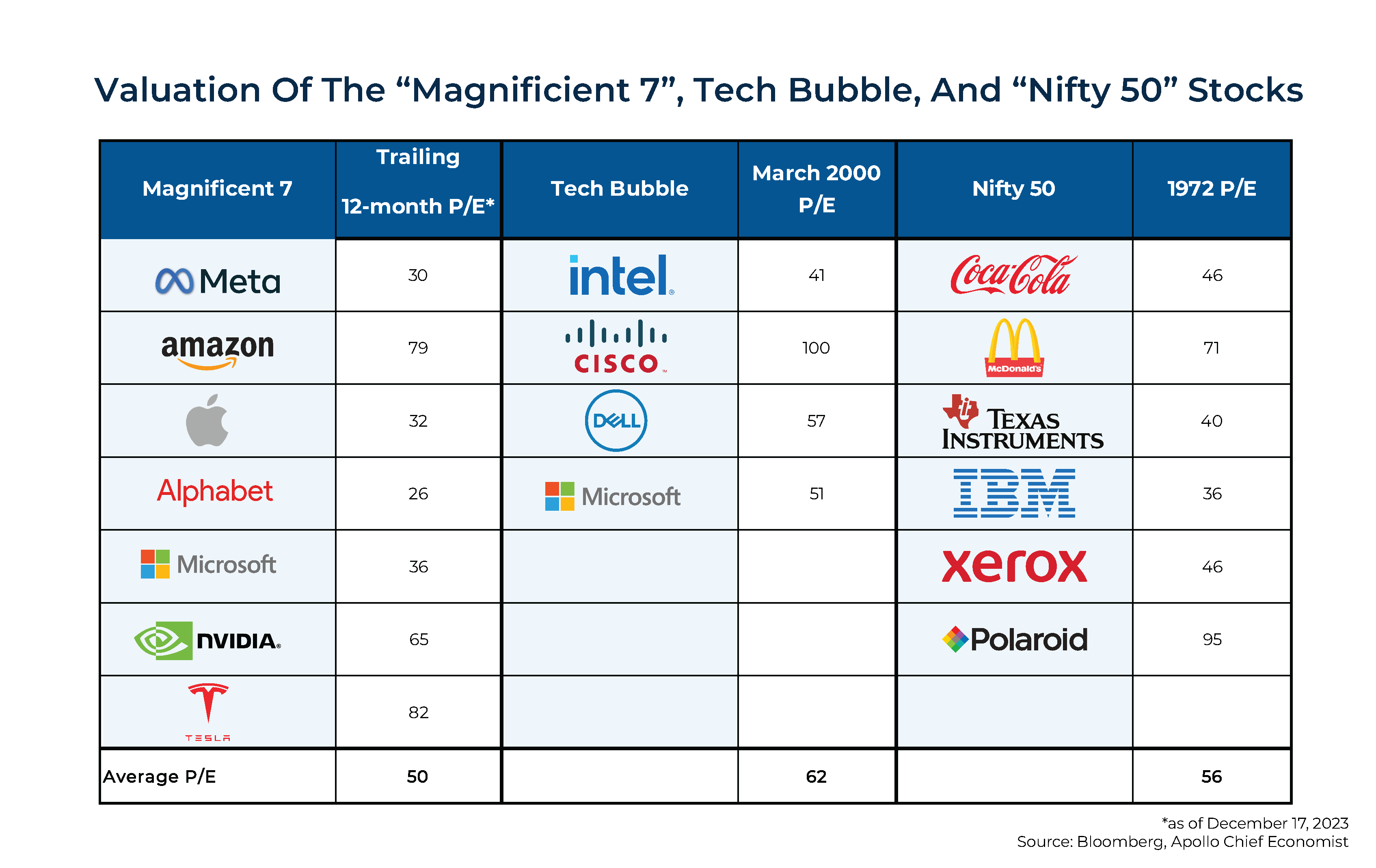
      With all the fanfare around AI, I thought this analysis from Larry Swedroe was informative:

      With an average P/E [price-to-earnings ratio] of 50, the valuations of the Magnificent 7 [the largest 7 companies in the US] are reminiscent of the high valuations of the Nifty 50 and the dotcom stocks just prior to their crashing.

      While not a forecast of a crash, it is a warning that, at the very least, these stocks…are at historically extreme valuations.”

      “For example, Vanguard’s U.S. Total Stock Market ETF (VTI) had a P/E ratio of 22.1, about its average over the last 40 years.

      In contrast, Vanguard’s Total International ETF (VXUS) had a P/E of 12.5, well below its historical average. Similarly, the Emerging Markets Stock Index ETF (VWO) had a P/E of just 11.2.

      Don’t let recency bias keep you from investing in asset classes that have performed relatively poorly, such as international stocks (relative to U.S. stocks) and U.S. small and value stocks (relative to U.S. large and growth stocks). Their valuations are now trading at historically large discounts, increasing the odds that they will outperform going forward.”

      As always, please reach out if you have any questions or would like to connect.