Recent Market Volatility

Recent Market Volatility

I wanted to share a few pieces of information regarding the recent market volatility.

The Bad News

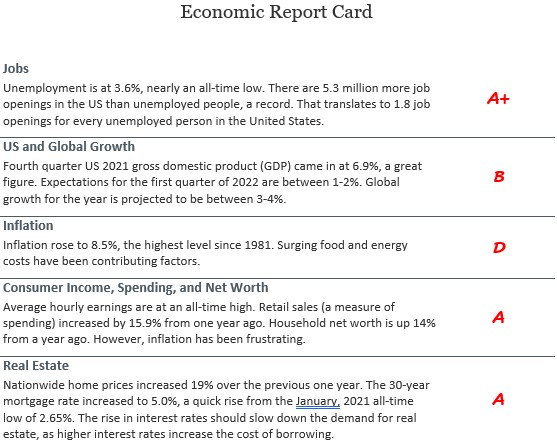
Succinctly put, it’s been a bad start to the year. The reasons are well known: inflationary worries, the Russia-Ukraine war, high oil prices, Covid shutdowns in China, and supply-chain shortages.

The S&P 500, an index of the 500 largest US stocks, is down 16%. The damage is worse in the technology sector: Nvidia (-49%), Facebook (-47%), Amazon (-41%), Microsoft (-25%), Alphabet (-24%), and Apple (-20%), are a few examples. Smaller companies that were pandemic favorites, such as Peloton (-89%), Shopify (-79%), Zoom (-78%), and PayPal (-75%), are down even more.

Usually when stocks decline, bonds cushion the blow. Unfortunately, with interest rates rising bonds are down about 12%.

The decline in stocks and bonds concurrently has led to an environment where essentially all investors are down.

The Good News

  • This is Normal: Since 1980 the S&P 500 index has had positive returns in 33 of the past 41 years. In most years, even the positive ones, there has been a significant decline at some point during the year. The average decline is about 14%, which is not too far off the 16% decline in 2022.
  • Higher Interest Rates are Encouraging: Part of the reason interest rates are rising is because the economy is doing well. Higher interest rates, relative to where they’ve been over the past few years, are normal. This will lead to more income in your bank account and higher returns for bonds.
  • Home Prices: Nationwide home prices are up 20% over the past year and 40% over the past three years.
  • Opportunity to Tax-Loss Harvest: While nobody likes losing money, the current environment is a good opportunity for tax-loss harvesting. This is exactly what we’ve done for managed accounts.
  • The Job Market is Strong: All private-sector jobs lost during Covid have been recovered. There are also twice as many job openings as there are people looking for a job.
  • Company Earnings: During Q1, earnings-per-share have grown 6.7%, much higher than the long-term average of 4.1%. While this is lower than the Q4 average of 13%, it’s not as if public companies are shrinking.
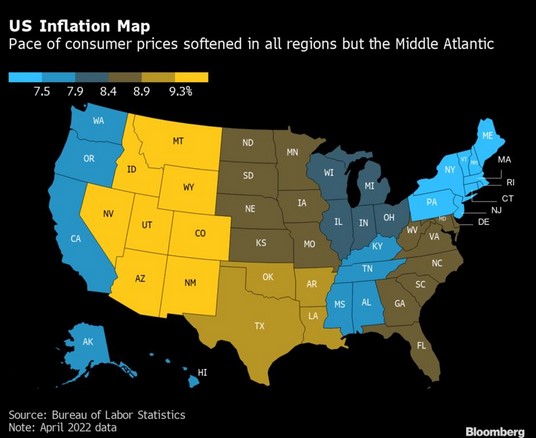
  • Inflation: While inflation is higher than it’s been over the past decade, there are signs of deceleration. The inflationary trends also depends where in the country you live (the west coast being lower than elsewhere):

If you’d like to read more, here are a couple articles and excerpts:

“Look at a chart of the S&P 500. It goes up over time. Why would you want to hop off something that has historically generated 8-10% annual returns?…You were probably expecting a pullback at some point. Well, here it is. You cannot expect a pullback and then freak out when it happens. I mean, you can, but you’re not going to have much success if you do.”

“If you buy the market [i.e., a diversified portfolio], every sell-off in history has been a buying opportunity.”

“Every time stocks fall it feels like they’re going to fall even further. It’s always much easier to look back at a long-term chart and kick yourself for not buying when stocks were falling in the past. When you know the exact bottom, investing is easy. But when you’re living through it these corrections it always feels like they’re only going to get worse.”

Subscribe

Join Our Newsletter

Sign up to receive an email when new articles are posted.
The information, analysis, and opinions expressed herein are for general and educational purposes only. Nothing contained in this commentary is intended to constitute legal, tax, accounting, securities, or investment advice, nor an opinion regarding the appropriateness of any investment, nor a solicitation of any type. The material has been gathered from sources believed to be reliable, however Think Different Financial Planning cannot guarantee the accuracy or completeness of such information, and certain information presented here may have been condensed or summarized from its original source. All opinions and views constitute our judgments as of the date of writing and are subject to change at any time without notice. Past market performance does not indicate future results.
Investment Commentary, Q1 2022

Investment Commentary, Q1 2022

Q1 Investment Commentary Highlights
The biggest event during the first quarter of 2022 was the beginning of the war between Ukraine and Russia, which caused an increase in volatility across stock and bond markets. US and international stocks ended down for the quarter, as did US and international bonds.

Apart from the tragic humanitarian impact, the effects of the war exacerbated concerns over supply chain disruptions and higher inflation, which pushed interest rates higher. Against these inflationary pressures, and with employment and economic data continuing to strengthen, the Federal Reserve increased the federal funds rate for the first time since before the Coronavirus pandemic.

As seen by the meaningful change in interest rates during the quarter, investor expectations shifted quickly to now include more aggressive tightening of monetary policy than was anticipated coming into the year. Current expectations are that the Federal Reserve will continue to raise rates throughout the year in seeking to balance their goals of stable inflation and maximum employment.

Each quarter we provide transparency and seek to clearly communicate what is driving performance for portfolios. However, as long-term investors we believe it is important to note that any single period (especially a period as short as a quarter) can be skewed or limited in informational value and stress the importance of the longer-term perspective on portfolio positions.

US Stocks
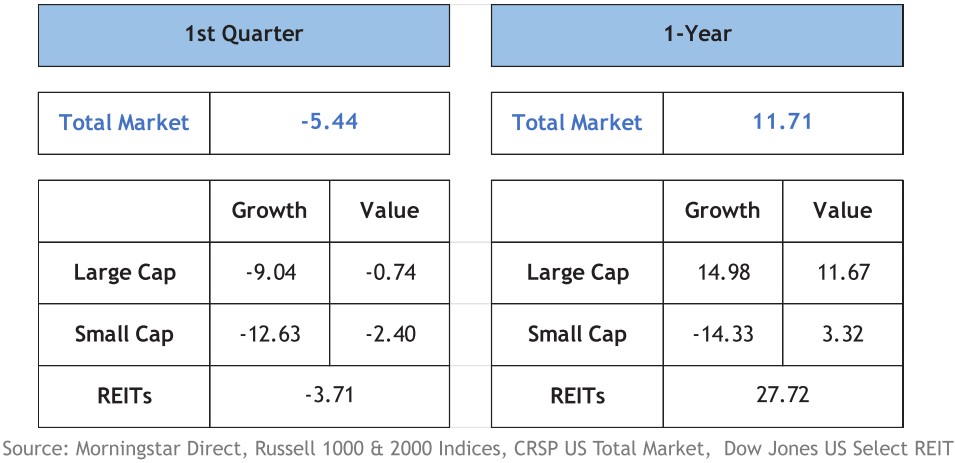
The US stock market declined during the quarter in reaction to these geopolitical events. The market was down by as much as 13% in early March before a strong rebound to finish the quarter. Among investment styles, growth-oriented stocks (including technology stocks) fared worse than the overall market. In addition, larger companies performed better than smaller companies.

After the strong results in 2021, the US market has appreciated 11.7% over the last calendar year, with real estate investment trusts (REITs) and large growth companies exhibiting the best results.

International Stocks

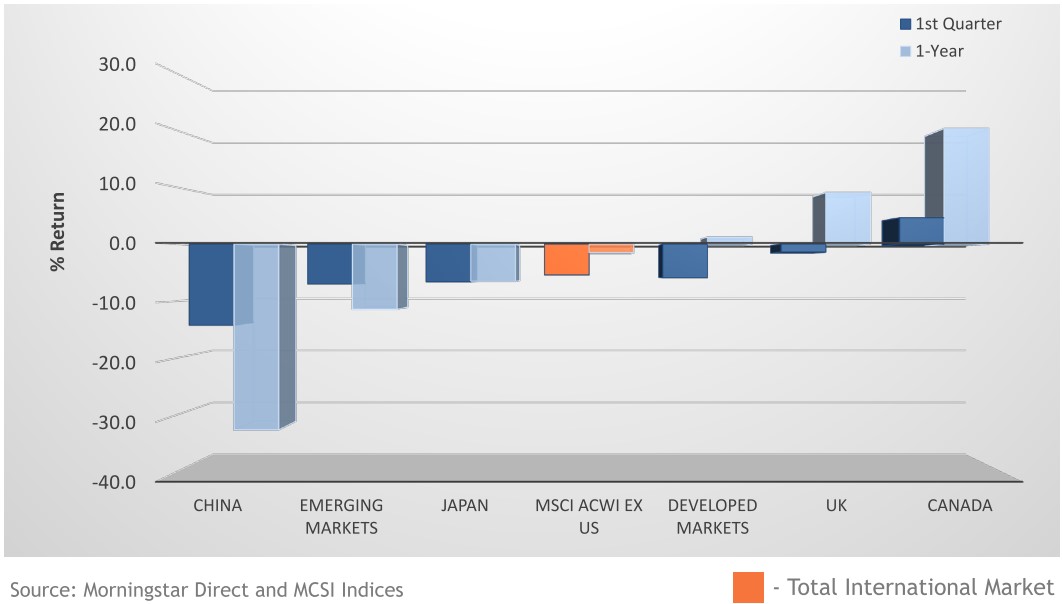
International developed markets finished the quarter down roughly in line with US markets (-5.9%), while emerging market stocks trailed slightly (-7.0%). Results by country varied greatly, as the current events positively impacted some and hurt others. For example, many net-exporting emerging markets countries gained on commodity price increases. Canada also benefited due to its exposure within the financial, energy, and material sectors.

In aggregate, international stocks have trailed the US markets over the last year, with developed markets returning 1.2% and emerging markets declining -11.4%.


Bonds
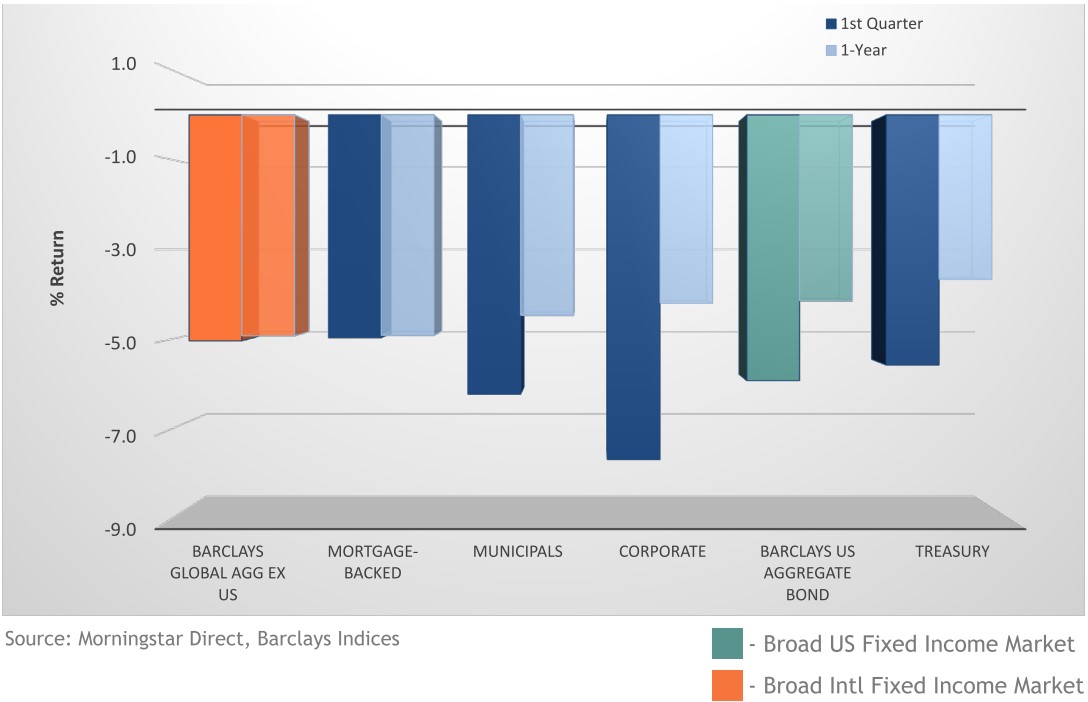
Bonds declined during the quarter, reflecting a repricing of expectations for interest rates. Coming into the year, the expectations were for a gradual interest rate increase by the Federal Reserve (and other central banks around the world). However, due to many factors in the first quarter, such as the inflation readings, added pressures from the war in Ukraine, and strengthening employment and economic data, the markets priced in more aggressive interest rate hikes.

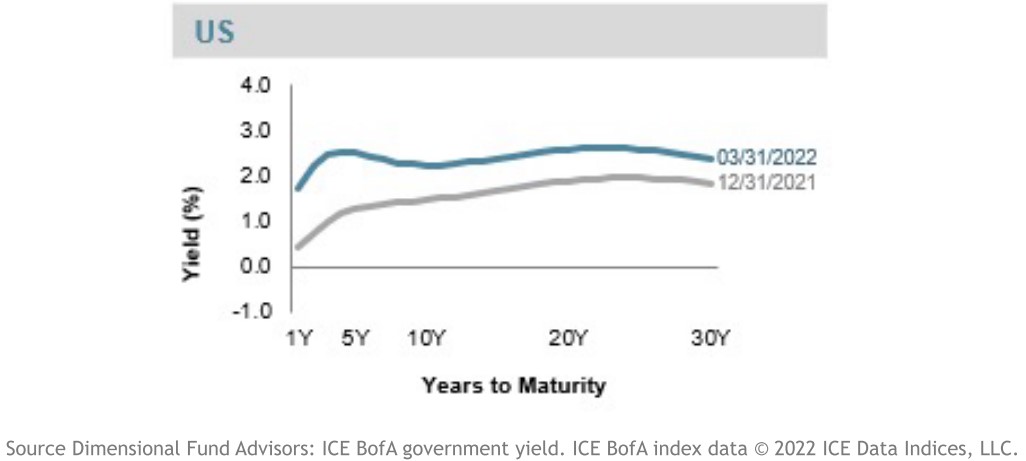
As shown below, the yield curve shifted higher over all maturities during the quarter, with shorter maturities (which are more closely tied to central bank actions) rising the most in anticipation of more and faster increases than previously expected. As bond prices move inversely to interest rates, the negative performance of fixed income investments reflected these changes in expectations.

Predicting short-term interest rate movements is as futile as predicting short-term stock market returns. We believe that markets are very efficient at pricing in new information and that the current levels broadly reflect the new most likely path forward.

Parting Thoughts

Fixed Income In Perspective
This quarter was bad for fixed income, or bond, investments. As new information came to light, markets adjusted rapidly to reflect the new reality and anticipated path forward related to interest rates. In order to stave off sustained inflation threats, central banks will have to move more aggressively to tighten monetary conditions (e.g., increase interest rates) faster than previously anticipated.

As noted earlier, while we don’t believe we can predict short-term fixed income market movements any more than we can predict equity market results, our view based on our research and conversations with many asset managers indicate that this resetting of expectations is now mostly, if not fully, priced into the markets.

At this point, it’s important to revisit why we hold fixed income in portfolios to begin with. We believe there are three primary roles:

  1. Capital Preservation
  2. Diversification (in particular, against equity risks)
  3. Generate Returns and Income

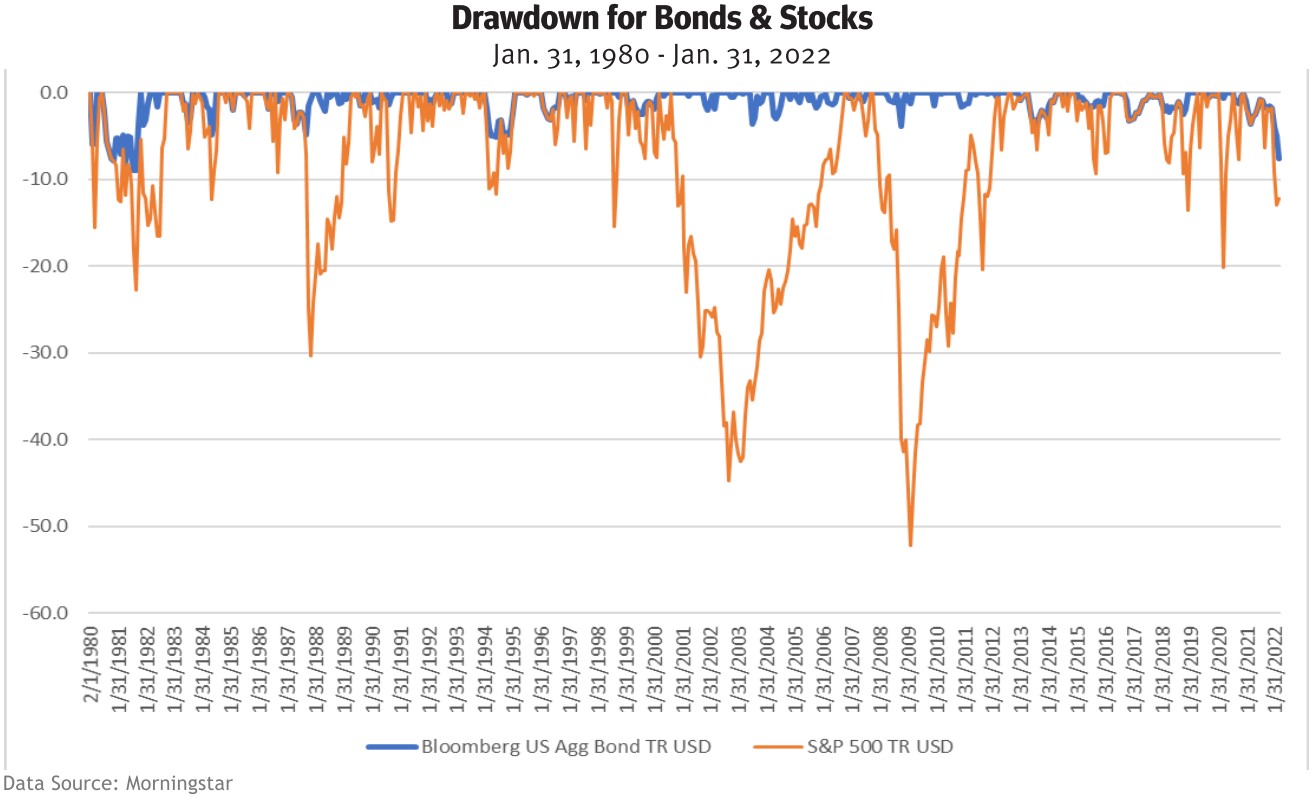
Capital Preservation. While the current decline in bonds is meaningful, it pales in comparison to the downside potential of risk assets, like stocks. As an example, the below chart shows historical drawdowns (e.g., decline) for stocks and bonds. While bonds are not immune to periodic drawdowns, over time they have performed as the ballast we expect.

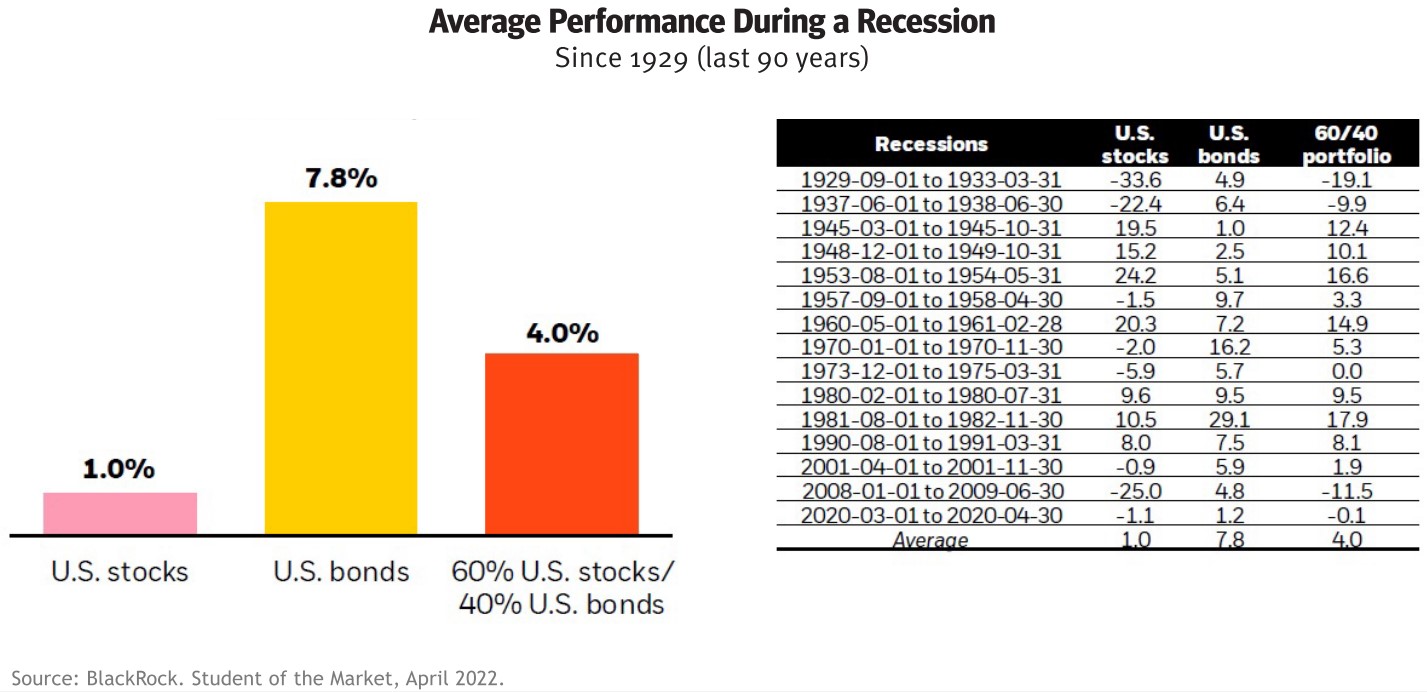
Diversification. Bonds often shine brightest during times of economic difficulty, such as recessions or market crises like the Global Financial Crisis or the Covid Pandemic decline in 2020.

The illustration below highlights the performance of stocks and bonds during recessionary periods going back to the great depression. On average, bonds have held up better and offset weakness inequity holdings during these periods and have generated positive returns in every period.

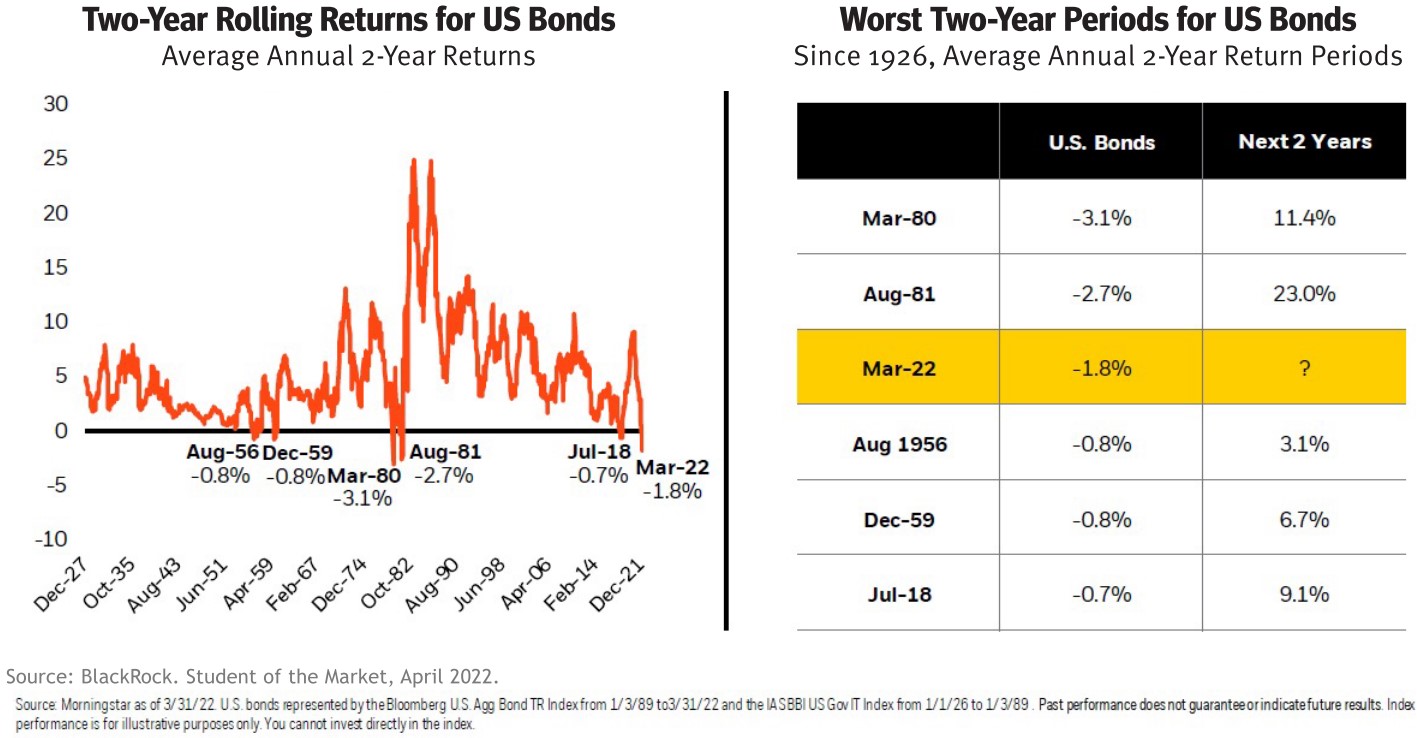
Generate Returns and Income. As shown in the illustration below, bonds have historically generated positive returns over the vast majority of 2-year periods. While the current period ranks among the worst historical periods for bonds, much like equities, periods of poor performance are often followed by better results.

One benefit of the increase in rates is that coupon payments and proceeds from maturing bonds can be reinvested at the new higher rates. This increases the expected returns of bonds going forward.

While the recent short-term bonds results have been a letdown, the long-term fundamental benefits from allocating to bonds in a diversified portfolio remain in place.

To read more about the bond market’s first quarter results and outlook, I highly suggest the following article from Schwab’s Chief Fixed Income Strategist, Kathy Jones. At Last – Income in the Fixed Income Market.

Subscribe

Join Our Newsletter

Sign up to receive an email when new articles are posted.
Disclaimer: Investments are not guaranteed and are subject to investment risk, including possible loss of the principal amount invested. Past performance is no guarantee of future results. All allocations and opinions expressed are as of the date of this presentation and subject to change. The information contained herein does not constitute investment advice or a solicitation. Information obtained from 3rd parties is believed to be accurate, but has not been independently verified.

The opinions expressed in this article are for general informational purposes only and are not intended to provide specific advice or recommendations for any individual or on any specific security. The material is presented solely for information purposes and has been gathered from sources believed to be reliable, however Think Different Financial Planning cannot guarantee the accuracy or completeness of such information, and certain information presented here may have been condensed or summarized from its original source. Think Different Financial Planning does not provide tax or legal advice, and nothing contained in these materials should be taken as such. As always please remember investing involves risk and possible loss of principal capital. Advisory services are only offered to clients or prospective clients where Think Different Financial Planning and its representatives are properly licensed or exempt from licensure. No advice may be rendered by Think Different Financial Planning unless a client service agreement is in place.Your content goes here. Edit or remove this text inline or in the module Content settings. You can also style every aspect of this content in the module Design settings and even apply custom CSS to this text in the module Advanced settings.

Investment Commentary, Fourth Quarter, 2021

Investment Commentary, Fourth Quarter, 2021

Highlights
The fourth quarter of 2021 saw no shortage of concerning headlines, including the emergence of the omicron variant, political issues globally, and more persistent elevated inflation readings. On the positive side, employment conditions continue to improve, corporate earnings look strong and overall economic data continues to show strength. As long-term investors, we try to focus beyond the short-term headlines and instead recognize that markets have rewarded a patient and disciplined investment approach.

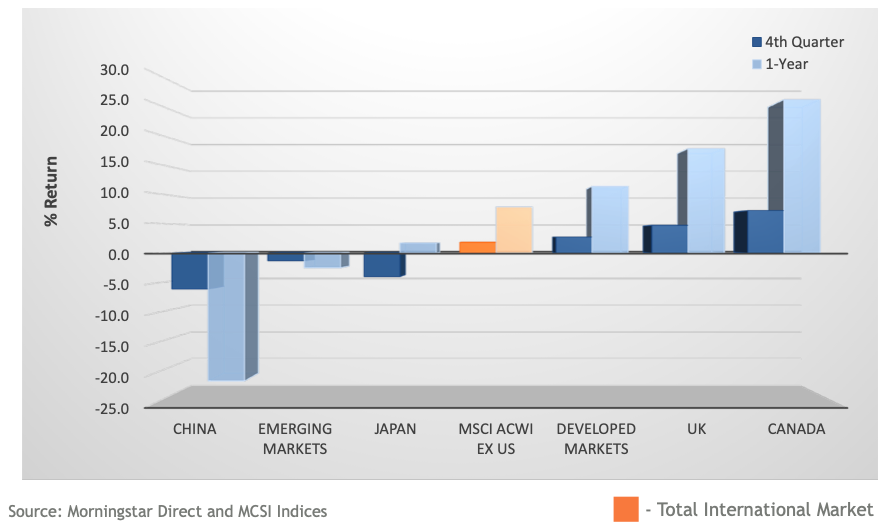
While short-term market results can be very random and will certainly not always coincide with our philosophy, this quarter the markets appeared to be looking past the short-term noise and focused on the longer-term trend of positive developments. The US stock market generated strong returns during the fourth quarter, contributing to an exceptionally strong 2021. International developed markets also appreciated for both the quarter and year, while emerging markets were down slightly for both periods.

Q4 Market Summary
Overall monetary policy remains accommodative while central banks appear focused on inflation trends and the potential economic impacts of the omicron variant as they chart their course forward. During the quarter, the Federal Reserve began tightening these conditions by slowing the pace of their asset purchase program, citing the continued strengthening of the economic and employment environment. Markets are pricing in expectations that the asset purchase program will be tapered down by March and that the Federal Reserve is likely to raise rates several times during the course of 2022.

Each quarter we provide transparency and seek to clearly communicate what is driving performance for portfolios. However, as long-term investors we believe it is important to note that any single period (especially a period as short as a quarter) can be skewed or limited in informational value and stress the importance of the longer-term perspective on portfolio positions.

US Stocks
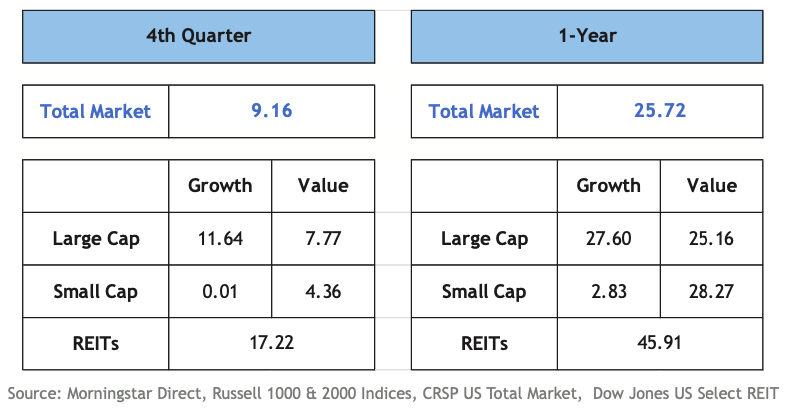
The US stock market experienced a strong fourth quarter, with nearly double digit returns for the broad market. This contributed to solid results for the entire year, with the market returning 25%. Among styles, large cap growth resumed the lead for the quarter resulting in more parity over the course of the entire year. For both the quarter and the past year, the largest difference among styles was seen in the large underperformance faced by small cap growth stocks. REITS performed well during the quarter and after several years of lagging have outpaced the broader market for the past year.

International Stocks

Internationally, developed markets also posted positive returns for the quarter and the year. Particular areas of strength included Canada and the UK. Emerging markets finished the year slightly down, which was driven in large part by weakness in China. Chinese stocks faced several challenges during the year, including regulatory changes, major financial issues in their property development sector, and more aggressive government policies in response to COVID than many other countries.

Fixed Income
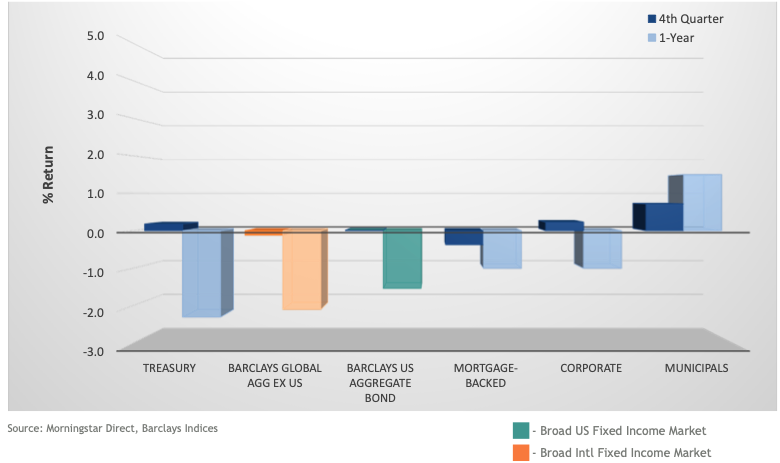
Returns were effectively flat across the major fixed income sectors during the fourth quarter, with the exception of municipal bonds. Municipal bonds outperformed other sectors over the last year, driven in part by strong demand and a reduction in concern that the pandemic would impact the credit worthiness of some municipal issuers.

After a strong 2020, when the Barclays Aggregate Bond Index appreciated nearly 8%, 2021 saw interest rates broadly rise in anticipation of tighter monetary policy. This led to modest declines for bonds in the US (Barclays Aggregate: -1.5%) and internationally (Global Aggregate ex-US: -2.1%).

Parting Thoughts

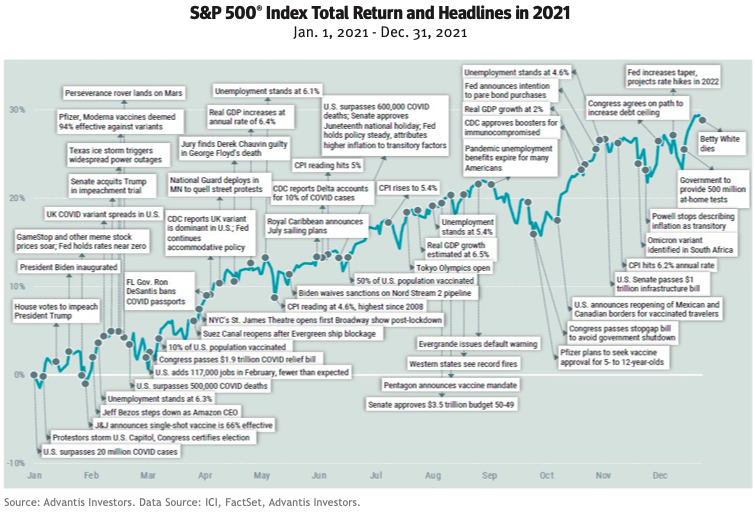
The above illustration, created by Avantis Investors, highlights a critical message we regularly discuss with investors. We have cited several similar charts over the years, often highlighting longer periods of time, but this one specifically focuses on 2021 and we felt it was appropriate for a year-end summary.

The chart shows many of the key headlines and issues that occurred throughout 2021, starting with the political unrest and impeachment vote that occurred back in January. Headlines throughout the year included the rise of the delta variant and the omicron variant. They include high unemployment readings and high inflation readings. Yet, there were many positive notes as well. Those include broad access to COVID-19 vaccinations and subsequent boosters for many, improved employment numbers and a world trying to get back to “normal.”

In many regards, it is a worthwhile exercise to reflect upon the past year and the many issues we have encountered, overcome, and learned from. A chart like this can help remind us of how far we have come.

We also think charts like this help us to see that making investment decisions based on current events or news is ultimately a futile effort. With the geopolitical unrest, constant uncertainty regarding COVID and all of the other headlines and issues we encountered in 2021, it would have been easy and seemingly justifiable to stay conservative. Believing that it would be better to wait it out until there is some clarity on these major issues. However, this illustration helps highlight the fact, as evidenced by the return pattern for the S&P 500, that the linkage between the market and the news cycle is essentially non-existent. Unfortunately, there never exists an “all-clear” signal for investors to rely on.

The market certainly can react to short-term news at times, but history has shown that following a disciplined investment plan and sticking to it through good times and bad has historically rewarded long-term investors. While the quarter-to-quarter and even year-to-year movements in the market are hugely unpredictable, the long-term compounding benefits of being invested is critical for investors seeking to reach their goals.

Subscribe

Join Our Newsletter

Sign up to receive an email when new articles are posted.
Disclaimer: Investments are not guaranteed and are subject to investment risk, including possible loss of the principal amount invested. Past performance is no guarantee of future results. All allocations and opinions expressed are as of the date of this presentation and subject to change. The information contained herein does not constitute investment advice or a solicitation. Information obtained from 3rd parties is believed to be accurate, but has not been independently verified.

The opinions expressed in this article are for general informational purposes only and are not intended to provide specific advice or recommendations for any individual or on any specific security. The material is presented solely for information purposes and has been gathered from sources believed to be reliable, however Think Different Financial Planning cannot guarantee the accuracy or completeness of such information, and certain information presented here may have been condensed or summarized from its original source. Think Different Financial Planning does not provide tax or legal advice, and nothing contained in these materials should be taken as such. As always please remember investing involves risk and possible loss of principal capital. Advisory services are only offered to clients or prospective clients where Think Different Financial Planning and its representatives are properly licensed or exempt from licensure. No advice may be rendered by Think Different Financial Planning unless a client service agreement is in place.Your content goes here. Edit or remove this text inline or in the module Content settings. You can also style every aspect of this content in the module Design settings and even apply custom CSS to this text in the module Advanced settings.

Exciting Personal News 👪 and Year-End Tips 📊

Exciting Personal News 👪 and Year-End Tips 📊

As we enter the last month of the year, I’d like to share some personal news, a few year-end financial planning tips, and an interesting observation about the US economy.

First off, the exciting personal news: I’m happy to announce that my wife is pregnant! This is our first child, and we’ll be having a baby girl. The due date is March 22nd. We’re looking forward to her arrival!

Year-End Financial Planning Tips:

  • I Bonds: If you have extra cash, I recommend looking into I bonds. The “I” stands for Inflation, so if inflation moves up, the interest rate will too. They currently pay 7.12%, a rate that is unmatched in any bank account. You buy them directly from the Treasury, and are capped at buying $10,000 per person per calendar year. One idea is to allocate $10,000 in 2021 and another $10,000 in early 2022. The interest is exempt from state and local tax, but you will still be subject to federal tax. To learn more and set up an account, visit the Treasury’s website.
  • FSA Accounts: The IRS has informed employers that for 2022, workers can carry over the full amount of their FSA savings from 2021. If you have a FSA it’s a good idea to ask your employer if they opted into this change.
  • Required Minimum Distributions: If you have not taken your required minimum distribution from your IRA or Inherited IRA, make sure to do so by the end of the year.
  • Charitable Giving: For 2021 you can deduct up to $300 even if you don’t itemize deductions (up to $600 for a married couple). These must be cash donations. Or if you itemize your deductions you should consider gifting taxable investments with unrealized capital gains (such as company stock) instead of cash. Not only can you avoid the capital gains tax, but you can take a deduction for the amount you give.

Lastly, I wanted to share an article that I found interesting:

Americans Are Flush With Cash and Jobs. They Also Think the Economy Is Awful.
The New York Times, Neil Irwin

The takeaway is: “Americans are, by many measures, in a better financial position than they have been in many years. They also believe the economy is in terrible shape.”

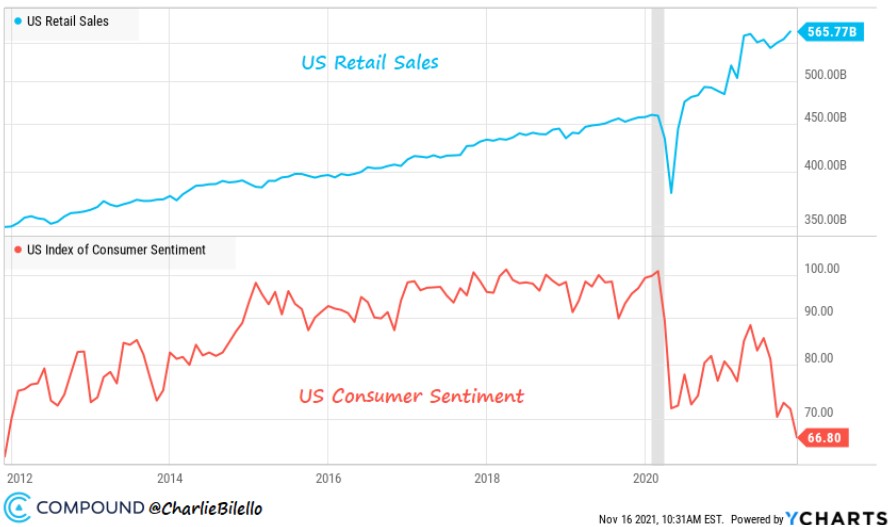
We’re seeing positive economic news almost everywhere. The following have all recently hit all-time highs: US stock markets, home prices, hourly wages, job openings, and household net worth.

Yet despite these encouraging indicators, people don’t feel that the US economy is performing well. This contradiction is summarized well in the chart below. We’re spending more than ever, but sentiment is at a level not seen since 2012:

I hope you found this content enjoyable. If you have any questions or would like to speak about a year-end topic, or anything else, please let me know.

Subscribe

Join Our Newsletter

Sign up to receive an email when new articles are posted.
The information, analysis, and opinions expressed herein are for general and educational purposes only. Nothing contained in this commentary is intended to constitute legal, tax, accounting, securities, or investment advice, nor an opinion regarding the appropriateness of any investment, nor a solicitation of any type. The material has been gathered from sources believed to be reliable, however Think Different Financial Planning cannot guarantee the accuracy or completeness of such information, and certain information presented here may have been condensed or summarized from its original source. All opinions and views constitute our judgments as of the date of writing and are subject to change at any time without notice.
Preview of Pending Tax Reform

Preview of Pending Tax Reform

The House of Representatives is expected to vote soon on the Build Back Better Act. This legislation affects federal taxes, so I wanted to share a preview of what’s to come.

Many expected to pay more tax under a Biden administration. Surprisingly, the bill will likely reduce taxes for many high-earning Californians.

Below are the high-level details from the current draft of legislation. Please note, this bill has not yet been signed into law, and last-minute changes are likely to occur.

First, what will not change:

  • Top ordinary income tax rate: 37%
  • Top long-term capital gains rate: 20%
  • The step-up in cost basis upon death ‒ Under current law, if the owner of an asset dies, the unrealized gains are not subject to tax. When the heir eventually sells the asset, they are only required to pay taxes on the increase in value from the date they inherited it.
  • Estate and gift tax exemption: $11.7M ‒ this exemption amount is scheduled to sunset at the end of 2025 and revert to $5 million per person in 2026. With that in mind, you may want to consider your own estate and gift-planning strategy.
  • Annual Gift Exclusion: Remains at $15,000 per recipient.

Here are the areas of change:

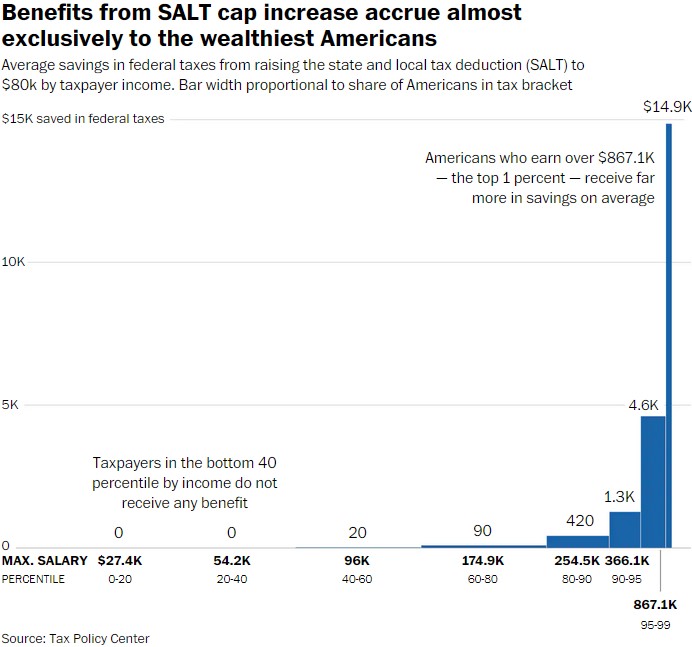
  • State and Local Tax (aka SALT) Deduction Increase to $80,000Current law limits state and local taxes (e.g., property taxes) to be capped at $10,000 per year. So if you pay $40,000 of combined state and property tax, you can “only” deduct $10,000 of that amount on your federal tax return.The revised law will allow you to deduct up to $80,000 of state and local taxes, beginning in 2021. This would be a big win for high-income households. A large portion of the benefit from such a change would go to those with earnings between $250,000 – $1 million per year, as illustrated below:
  • Changes to Roth accounts
    • Backdoor Roth Conversions are set to be eliminated, beginning in 2022.
    • No Roth conversions at all for high-income (400,000 single/$450,000 joint) taxpayers, effective 2032.
  • Increases to Maximum Retirement
    • Account Contributions
      401(k)’s and 403(b)’s: $20,500 (increased by $1,000), beginning in 2022. The catch-up contribution for those over age 50 remains unchanged at $6,500 per year.
    • The overall limit, which includes employer contributions, increases by $3,000 ‒ from $58,000 in 2021 to $61,000 in 2022. If your employer allows after-tax 401(k) contributions, you also get the advantage of the new $61,000 limit for 2022.
    • SEP IRA and Solo 401(k): Increased from $58,000 in 2021 to $61,000 in 2022
  • Additional surtaxes of 5% and 3% for taxpayers with income greater than $10 million and $25 million, respectively (applies to trusts at $200,000/$500,000).
  • Enhanced Child Tax Credit ‒ Parents earning less than $400,000 will qualify for a tax credit of $3,600 for children under the age of six and $3,000 for children under the age of 18.
  • Net Investment Income Tax (NIIT) ‒ A 3.8% surtax to S corporations or limited partnerships. Begins in 2022.
  • Wash Sale Rules ‒ Scope increased to include commodities, foreign currencies, and digital assets (such as Bitcoin). Effective 2022.

I will let you know when the bill is signed into law and inform you of any changes from the current proposals.

Subscribe

Join Our Newsletter

Sign up to receive an email when new articles are posted.
The information, analysis, and opinions expressed herein are for general and educational purposes only. Nothing contained in this commentary is intended to constitute legal, tax, accounting, securities, or investment advice, nor an opinion regarding the appropriateness of any investment, nor a solicitation of any type. The material has been gathered from sources believed to be reliable, however Think Different Financial Planning cannot guarantee the accuracy or completeness of such information, and certain information presented here may have been condensed or summarized from its original source. All opinions and views constitute our judgments as of the date of writing and are subject to change at any time without notice.
Investment Commentary, Q3 2021

Investment Commentary, Q3 2021

Highlights
The third quarter started with continued strength across equity markets, before backtracking during September. Issues that surfaced as cause for the pull back include: geopolitical concerns, economic impacts from the Delta variant, supply chain disruptions and labor shortages being linked to inflation, and messaging from the Federal Reserve that they may scale down the pace of their current quantitative easing before year end (sooner than expected).

Q3 Market Summary
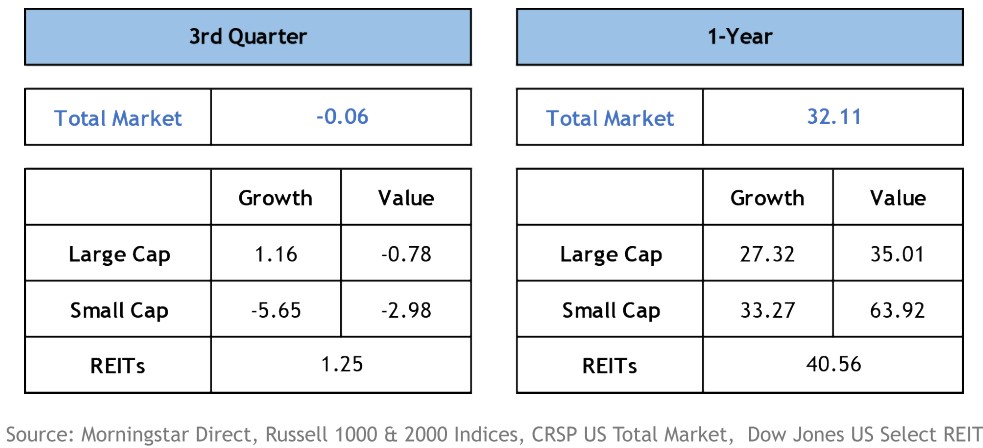
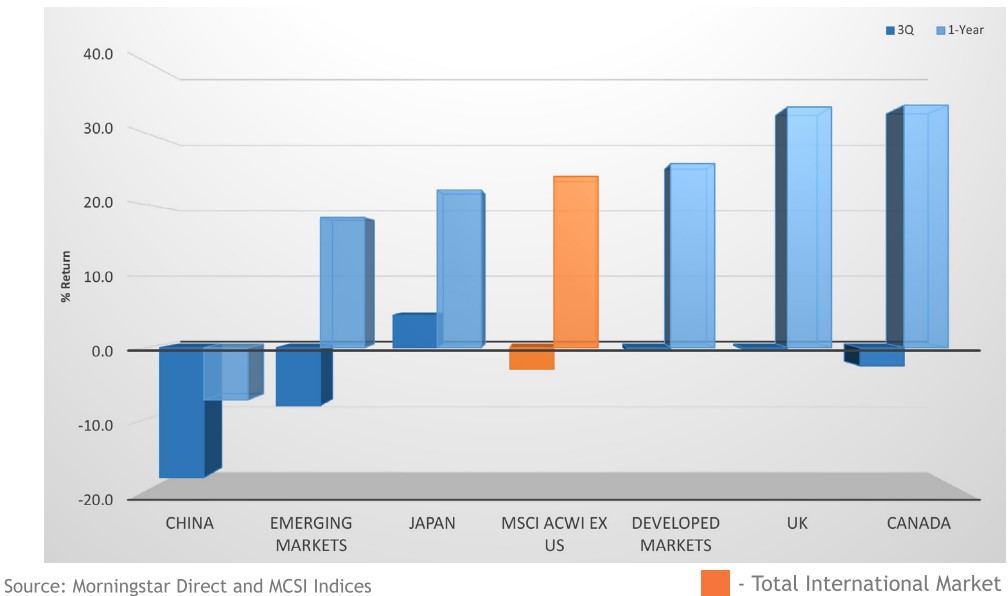
US equity markets finished roughly flat, international stocks fell about a half a percent, and emerging markets declined 8.1%.

In the bond market, yields ended with little change from the start of the quarter and returns were flat. While central banks around the world remain accommodative, recent comments from the US Federal Reserve have focused on the continued strength of economic and employment conditions. The expectations are that the Fed will begin reducing the pace of quantitative easing before year-end and that they will pursue further tightening of monetary conditions in 2022. This could mean higher interest rates on the horizon.

As long-term investors, we try to look past the headlines of the day and remember that there always exists any number of reasons to have concern. The best approach is to focus on the long term and try to tune out the short-term noise. Markets have shown a tremendous ability to reward patient investors.

US Stocks
The US stock market finished essentially flat during the third quarter, yet has appreciated over 30% in the past year. While value and smaller cap stocks performed strongly over the prior year, the trend reversed slightly during the quarter as large cap growth led the market. Real estate investment trusts (REITs) performed well during the quarter and over the past year.

International Stocks
Emerging markets faced the greatest headwinds, driven in large part by weakness in China. Chinese stocks faced several challenges during the quarter, including regulatory changes and major financial issues for the property development company Evergrande, which captured significant headlines during the quarter due to concerns about their viability.

Developed international markets outperformed emerging markets by a wide margin, declining a modest 0.5% for the quarter.

Over the past year, emerging and developed markets have appreciated considerably, gaining 18% and 26%, respectively. Progress in the recovery from COVID continues across the globe and many major economies are rebounding along with the United States. Absolute returns have generally been strong over the last year, with Canada and the UK standing out as particular areas of strength.

Bonds
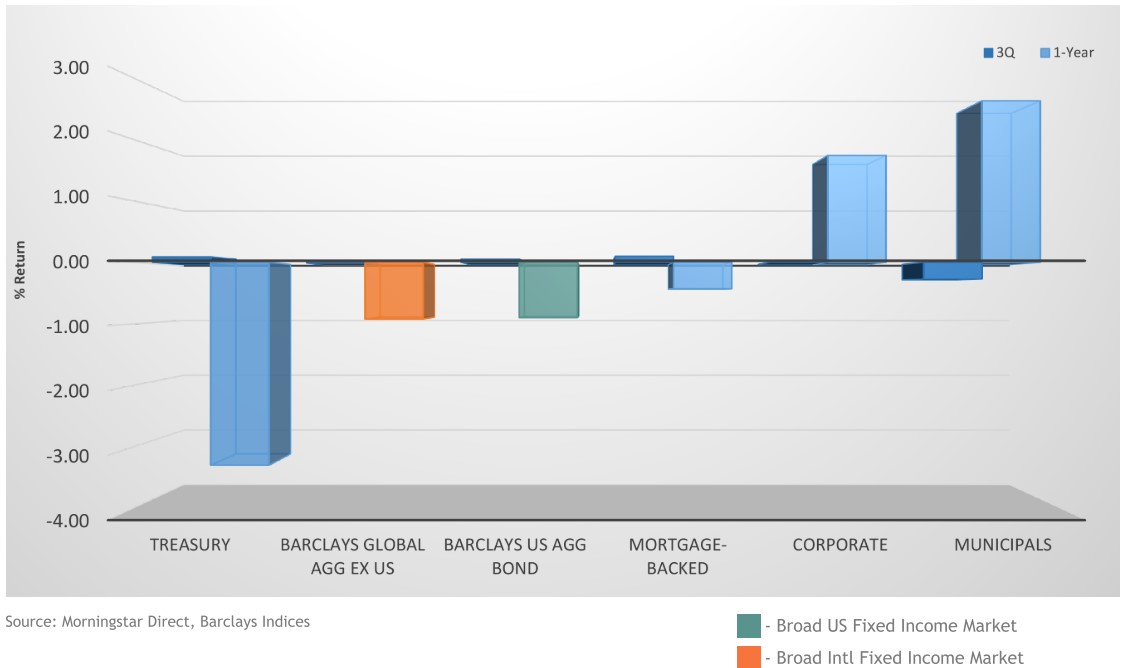
Yields were little changed from the beginning of the quarter, with returns effectively flat across the major fixed income sectors. After being bid up in the early stages of the COVID crisis, Treasuries (US government bonds) have been the weakest area over the last year.

A general increase in rates over the prior year has resulted in modest declines in the US (Barclays Aggregate: -0.90%) and internationally (Global Aggregate ex-US: -0.92%). Corporate and municipal bonds have held up better than other sectors as strong demand and tightening spreads have contributed to positive performance over the last year.

Parting Thoughts
A common question that arises during times of turmoil or high levels of negative news is, “wouldn’t we better sitting this out and waiting to invest until things are calmer/clearer?”

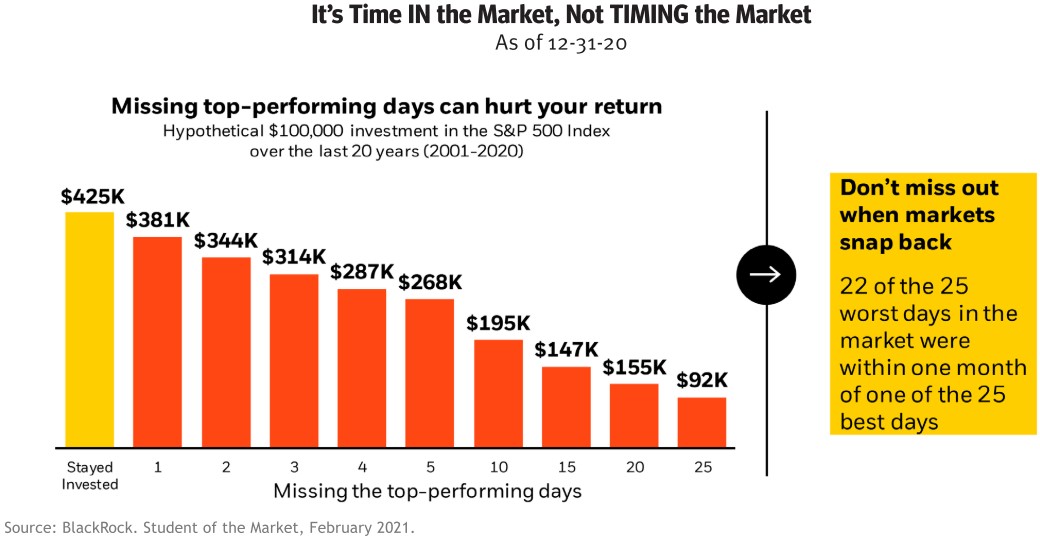
Unfortunately, the research and our experience indicate this is a futile endeavor. The below illustration highlights one of the primary reasons why. The stock market can move quickly, and being out of the market for as few as the five best days over the last 20 years would have cut an investor’s return by nearly 40%. Over 20 years, that is about 5,000 trading days, so missing the just 1/10 of 1% of those days has a drastic impact. Missing the 10 best days would result in a return less than half of that of staying fully invested.

Further, it is often after a market decline that these questions tend to become more prominent. However, the data shows that very often the best days occur within one month of the worst days. Thus, being out of the market for even a small fraction of the days can have a major negative impact on a portfolio’s return.

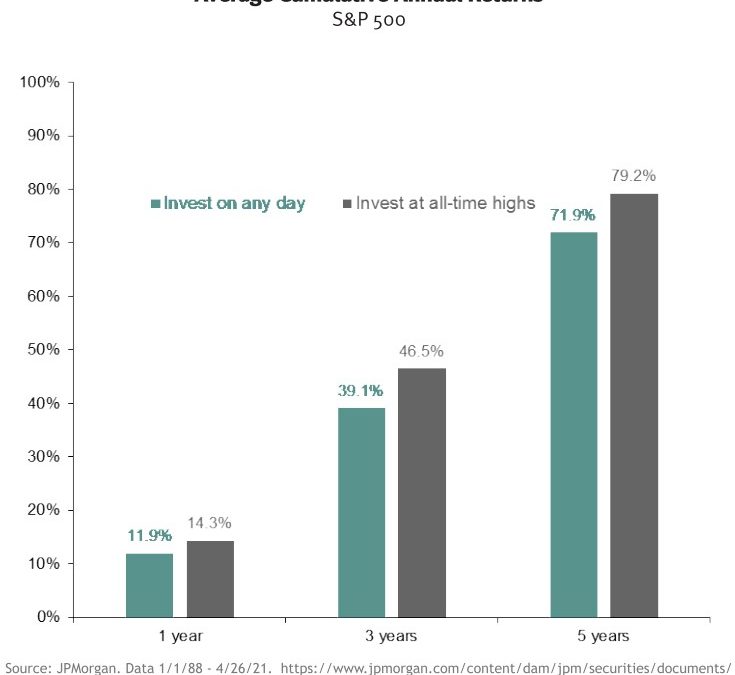
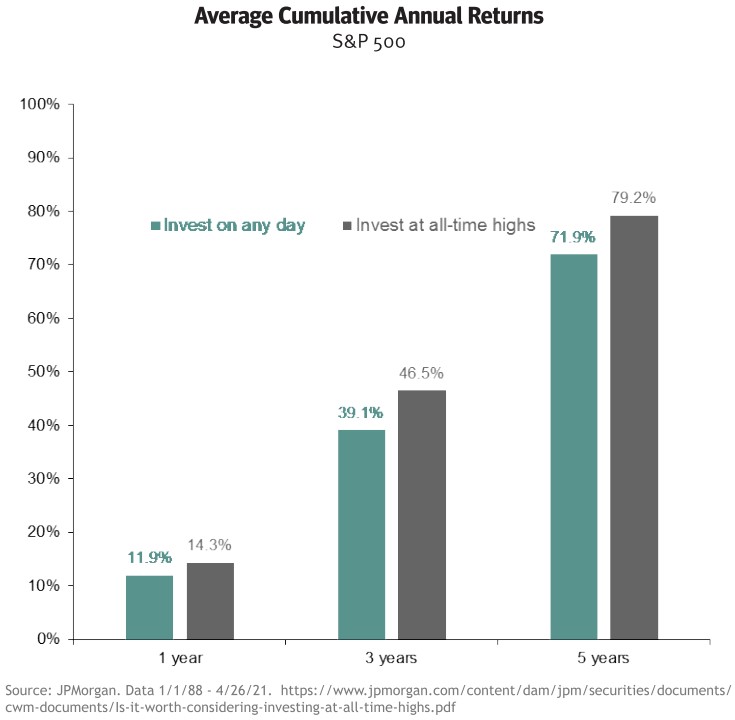
History shows that market highs are very often followed by further market highs and using this in attempting to time market entry points can actually lead to lower results. JPMorgan looked at all the days that one could have invested over the last 30 years and separated out the results from investing on days when the S&P closed at all high time highs from all the others.

Interestingly, investing on days when the S&P closed at all-time highs actually resulted in slightly higher returns over the subsequent one, three, and five-year periods. While it seems intuitive to wait for a pull back before investing, the general long-term rise in equity markets can make the opportunity cost meaningful.

Subscribe

Join Our Newsletter

Sign up to receive an email when new articles are posted.
Disclaimer: Investments are not guaranteed and are subject to investment risk, including possible loss of the principal amount invested. Past performance is no guarantee of future results. All allocations and opinions expressed are as of the date of this presentation and subject to change. The information contained herein does not constitute investment advice or a solicitation. Information obtained from 3rd parties is believed to be accurate, but has not been independently verified.

The opinions expressed in this article are for general informational purposes only and are not intended to provide specific advice or recommendations for any individual or on any specific security. The material is presented solely for information purposes and has been gathered from sources believed to be reliable, however Think Different Financial Planning cannot guarantee the accuracy or completeness of such information, and certain information presented here may have been condensed or summarized from its original source. Think Different Financial Planning does not provide tax or legal advice, and nothing contained in these materials should be taken as such. As always please remember investing involves risk and possible loss of principal capital. Advisory services are only offered to clients or prospective clients where Think Different Financial Planning and its representatives are properly licensed or exempt from licensure. No advice may be rendered by Think Different Financial Planning unless a client service agreement is in place.Your content goes here. Edit or remove this text inline or in the module Content settings. You can also style every aspect of this content in the module Design settings and even apply custom CSS to this text in the module Advanced settings.